Mindful Marketing
  • Home
    • Ethics Challenge
  • About
    • Mission
    • Mindful Matrix
    • Leadership
  • Mindful Matters Blog
  • Mindful Marketing Book
  • Mindful Ads?
  • Contact

No Shorts, No Sunglasses, No Service

10/4/2023

4 Comments

 
Picture

by David Hagenbuch - professor of marketing at Messiah University -
​author of 
Honorable Influence - founder of Mindful Marketing 

We’ve all heard that our nonverbal communication conveys more than the words we speak.  That saying is easy to embrace in principle, but it can become harder to accept when senators and sports legends seem to suggest otherwise.  How might marketing, the banner carrier for image-building, inform the current debate of what people wear at work?  
 
In his first year of service from Pennsylvania, U.S. Senator John Fetterman’s casual attire (sweatshirt, shorts, sneakers) was the apparent impetus for Majority Leader Chuck Schumer’s decision to relax the chamber’s formal dress code.  However, that choice was negated a week later when the Senate passed a resolution that formalized the requirement for business attire on the chamber floor.
 
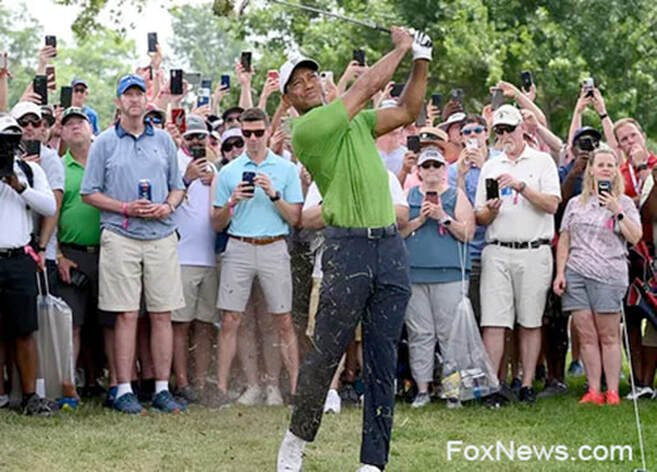
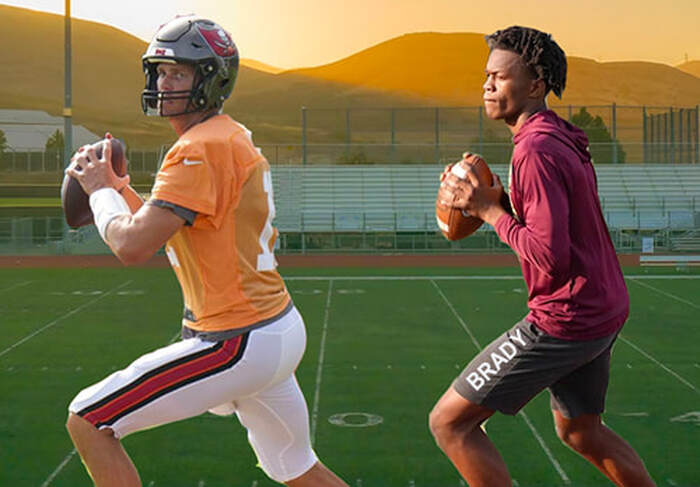
Meanwhile, Deion Sanders, former MLB player, NFL Hall of Famer, and head football coach of the University of Colorado, has grabbed headlines with his trademark attire, specifically his shades.  His propensity to continually wear sunglasses, even during interviews caused Colorado State football coach Jay Norvell to comment, “When I talk to grown-ups, I take my hat and my glasses off. That's what my mother taught me.”
 
At first glance, Fetterman spurring the Senate to button up its dress code and Sanders sporting sunglasses during interviews have little to do with each other.  However, both headlines are case studies in nonverbal communication – People’s clothes and how they wear them often portend their personalities and purposes; similarly, individuals’ eyes often signal what they’re thinking and feeling.
 
Still, what do a couple of guys wearing shorts and sunglasses to work have to do with marketing?  They’re relevant to the field in at least two ways:
  • Internal marketing:  Organizations market to their employees by trying to meet their needs, which can involve the policies they set and the procedures they follow, including ones related to work attire.
  • Personal branding: Each person has a unique brand, or identity, which is based on their character and competencies and is communicated to others through their words and actions, including what they wear.
 
Although I feel like I know something about nonverbal communication from my business, teaching, and life experiences, I wanted to talk to someone who is truly an expert, so I reached out to Mike True, a former coworker of mine who is an internationally renowned authority on career development and an in-demand speaker on many related topics, including professional etiquette.
 
When I asked for his thoughts on the U.S. Senate’s dress code decision, the main word that came to his mind was “decorum,” or setting high standards in specific settings.  He continued that in the senate setting, professional business attire “speaks of order, neatness, and structure,” while very casual dress “speaks of a breakdown in respect for order, neatness, and structure – It speaks of lower standards.”
 
Knowing the high standards True sets for himself and encourages for others, his response about Senate attire was not unexpected.  However, his analysis of Sanders’ sunglasses surprised me:
 
“Sunglasses are part of Deion’s persona and have been for many years. He has an eyewear deal with Blenders Eyewear, so it's a ‘product placement’ gig for which he is paid. The non-verbal here seems to be practical (protecting his eyes from the sun in outdoor practices and games, and from camera flashes and bright lights in interviews) and a brand of sorts. He is Coach Prime, and as such he seeks to project ‘coolness’ for himself, his players, and the whole Colorado football program. It's working!”
 
I wasn’t surprised that True knows marketing and recognized successful branding and product placement.  He’s a student of business and surely read of how within one day of announcing its collaboration with Sanders, Benders “received $1.2 million in pre-orders.”
 
I thought, though, that he might take exception with the eye contact that Sanders’ dark sunglasses eliminate.  As the saying goes, the eyes are the window to the soul. When our eyes widen and our pupils dilate, we communicate interest and excitement, whereas a furrowed brow can suggest worry or concern.
 
However, having enjoyed True’s etiquette dinners and other events in which he detailed appropriate professional behavior from handshakes to table conversation, I know he would never advocate wearing sunglasses to a job interview or networking event.  So, why the apparent double standard?  Similarly, why doesn’t he cut some slack for Fetterman or other senators who might feel more comfortable in more casual attire?


Picture
 
First, True did identify practical reasons why Sanders might want to wear glasses to shield his eyes from bright light, while also suggesting they’re not the only reasons.  In short, as True alludes, Sanders’ personal brand, even for a coach at a major college football program, is a very unique one that dates back 35+ years when he first earned the nickname “Prime Time” for his exciting play and exuberant personality at Florida State University.
 
As I'm sure True would never advise emerging or seasoned business professionals to emulate Sanders’ dark shades in their interpersonal dealings, the standards for Sanders’ nonverbal communication are in many ways are a category of one.
 
Then, why doesn’t Fetterman, who probably has a more compelling reason for wearing sweats and sneakers, get a similar pass?  After all, his battle with clinical depression led him to seek treatment at Walter Reed National Military Medical Center.  There may be a few reasons for a different standard:
 
  • No slight on college football, but the business of the U.S. Senate is more important: nation- if not world-shaping policies vs. recreation or entertainment.
  • Attire often reflects expectations for the level of quality of work.  Even in a football game, if players wear worn-out or mismatched uniforms, fans will take them less seriously, and the players may start to feel the same way about themselves.
  • Clothing needs to fit the setting and related cultural norms.  People wear bathing suits on beaches not in boardrooms.  People who work in and around football, like many sports, are accustomed to very casual attire.   
  • Dress that’s deemed inappropriate in a given situation can become a distraction.  It also could be offensive if the attire reveals body parts that others don’t care to see but can’t avoid looking at when interacting with the person.
 
So, the U.S. Senate does have reasons for maintaining a dress code that aren’t easily transferrable to football.  However, that doesn’t mean that the policies must stay the same forever:  Almost two-and-a-half centuries ago, powered wigs and ruffled shirts were the style.  Any organization’s dress code needs to evolve with the times.
 
Having a dress code also doesn’t mean that special accommodations can’t be made for specific individuals who warrant them.  Those individuals and the policy also might meet somewhere in the middle, e.g., instead of shorts, full-length open-leg sweatpants, and instead of sneakers, very comfortable, sneaker-like shoes.
 
As has happened for me many times in writing this blog, the assumptions I had at the outset of this piece are not the same ones I have at the end, which leads me to two key takeaways that extend beyond best practices in nonverbal communication:
  1. Although there are certainly generalizations that can be made for personal branding, everyone’s brand is unique and there can be special circumstances that warrant some people acting differently than others.
  2. Make your brand a malleable one, or more specifically, allow knowledgeable others to inform your beliefs such that when fitting, you are willing to adapt judgments.
 
Understanding and employing effective nonverbal communication is important whether you’re calling plays or proposing national policy.  Just as important is the ability to understand others’ perspectives and learn from them.  Both life skills are critical inputs for “Mindful Marketing.”
​
Picture
Subscribe to Mindful Matters blog.
Learn more about the Mindful Matrix.
Check out Mindful Marketing Ads
 and Vote your Mind!

4 Comments

All Play:  How Companies Can Make More Inclusive Toys

9/13/2023

10 Comments

 
A collection of play balls, some containing icons for sound, touch, and smell

by David Hagenbuch - professor of marketing at Messiah University -
​author of 
Honorable Influence - founder of Mindful Marketing 

Toss-Across, Evel Knievel, Simon, Big Wheel – the most popular toys of the 1970s offer a trip down memory lane for many of us who were kids during that unique era.  We probably didn’t think then that some children weren’t able to enjoy these common playthings because of certain physical limitations.  Over the past 50 years, the world has become more welcoming in many ways, but have toy makers kept pace with the inclusivity trend?
 
Legos have been fixtures in family rooms for at least a few decades.  The tiny bumpy bricks provide appropriate challenge and fun for children from four to 14 and beyond.  Kids who can’t see also can snap together the blocks to build shapes and structures, but they haven’t been able to appreciate the variety of colors or visualize their finished work in all the ways that sighted children can.
 
In 2019, the Lego Group conceived a creative way to bridge the participation gap by using the bricks’ raised knobs to represented braille letters.  For the last few years, the company distributed its Braille Bricks selectively – mainly to individuals and organizations teaching children with visual impairments.  Recently, the firm made the 287-piece set widely available for purchase, so blind and sighted members of any family can enjoy playing with and learning from the uniquely inclusive toys.
 
Mattel also has done a good in making its iconic Barbie doll more inclusive.  For decades, the company has added dolls of different races and ethnicities to the collection, and in more recent years, it’s introduced dolls with disabilities and different body types.
 
Product inclusivity is a great thing.  It’s hard to imagine products being ‘too inclusive,’ especially one’s targeted toward children.
 
As I’ve spoken with college students about product inclusivity, some have said they didn’t care whether their Barbies looked like them or not, but others really appreciated having dolls whose skin colors and other physical attributes mirrored their own.
 

A line of Hawaiian Barbie dolls

Jason Polansky, one of my former advisees who is totally blind, has worked in employee recruitment roles for Microsoft and Whole Foods and now has a position as an unemployment claims interviewer with the Pennsylvania Department of Labor and Industry.  We had many good conversations when he was a student and more since he graduated several years ago, but I never thought much about his childhood – what it was like to grow up blind – and I certainly didn’t think of the toys he played with, so I recently asked him about them.
 
Polansky said he mainly liked playing with tactile toys such as Legos, Duplos, and Geomags, as well as a braille/tactile Battleship game, a Connect 4 game with holes in the black checkers, and braille Uno cards.  He also enjoyed audible toys like a talking trivia globe, a puzzle map of the United States, a talking clock, and "two buckets full of dinosaurs and reptiles."
 
Sound was a mixed blessing for Polansky.  Although he enjoyed listening to cassette tapes and AM/FM/shortwave radio, the same sounds sometimes created a problem when they kept him from hearing other noises in his environment that he needed to hear.  In fact, when he was about six, he went through a stage in which many extraneous sounds scared him for that reason.
 
Sadie McFarland is one of my current advisees.  Because of optic nerve hypoplasia, she has no vision in her right eye and limited functional vision in her left one, which means she is legally blind.  Although McFarland reflects fondly on playing with Barbies and a variety of other toys and games when she was a child, her attention now as a college marketing major is drawn to the lack of playthings designed for children with disabilities, especially those with vision impairments.
 
Even as she credits brands like Barbie and American Girl for making dolls that “give beautiful nods” to individuals who have prosthetic devices, use wheelchairs, and have diverse skin tones, she laments that companies in the toy industry have done relatively little to represent blindness.
 
McFarland recommends making dolls whose eyes move sporadically, mimicking nystagmus, placing a white cane in the doll’s hand, and equipping it with a guide dog in harness. She adds that blindness also can be identified with certain types of glasses.
 
As an adult, McFarland still loves to play games but often finds them challenging because  “at least 75% contain items with text that is nearly microscopic, even to the working human eye.”  Some of her suggested fixes are to provide braille instructions and scorecards and to create tactile boards and differently shaped pieces.  She also recommends reaching out to organizations like the National Federation of the Blind and American Printing House for the Blind, which can provide useful insights into meeting the needs of blind consumers.
 
It's nice to imagine a world in which more companies heed such advice and genuinely attempt to make products, especially toys, accessible to a broader range of people; however, the reality is that companies need to pay vendors, make payroll, and provide ROI to shareholders, all of which may appear to preclude satisfying some niche markets.
 
Of course, companies can gain goodwill be serving underrepresented people groups, but is it right to expect companies to lose money doing so?  As a corollary, the law requires organizations to make reasonable accommodations for employees with special needs, unless doing so represents an undue hardship.
 
Fortunately, it doesn’t have an either-or decision.  Several years ago, Polansky and I coauthored an article titled,  “How Serving Blind Consumers Creates Competitive Advantage.”  We summarized a main takeaway in this statement:  “The same services that meet the unique needs of blind consumers often ‘delight’ other customers, thereby differentiating a brand and even offering competitive advantage.”
 
Since blind people lack at least some degree of sight, marketers must appeal to other senses like touch, smell, and taste.  Of course, most sighted people also have these senses, and they similarly appreciate things that feel good, smell nice, and taste good.  So, by integrating more senses for the benefit of blind people, marketers also increase their appeal to other consumers and differentiate themselves from competitors who don’t do the same.
 
McFarland maintains, “Play is a universal language that must be kept fully accessible for every child and child at heart.”  Hopefully, increasingly creative toy design will see the introduction of more toys that tap into multiple senses for both inclusivity and profitability, which can be considered a playful approach to “Mindful Marketing.”


Picture
Subscribe to Mindful Matters blog.
Learn more about the Mindful Matrix.
Check out Mindful Marketing Ads
 and Vote your Mind!

10 Comments

Has Tipping Reached a Tipping Point?

8/26/2023

39 Comments

 
Picture

by David Hagenbuch - professor of marketing at Messiah University -
​author of 
Honorable Influence - founder of Mindful Marketing 

There are many ways people are rewarded for good work, but few are as immediate as monetary tips.  Restaurant servers have long received confirmation and big parts of their compensation from gratuities, but recently many other service providers have started tapping the same propensity for generosity.  Given that these increasingly common appeals have become off-putting to some, it may be time to ask:  Has tipping been taken too far?
 
The New York Times recently described a case in which, after some cosmetic medical treatments, a reader’s dermatologist asked her for a tip.  If some physicians are soliciting gratuities, is it only time until other professionals start doing the same? Should professors like me put out tip jars?
 
We’ve all added a tip to a restaurant check, handed cash to a bellhop, or Venmoed a little extra money to another service provider.  While physical tip jars have become increasingly common on retail store counters, digital technology has made it extremely easy for anyone accepting electronic forms of payment, in person or from afar, to casually ask for extra cash.
 
For instance, I recently placed an online order to pick up dinner from Chipotle.  When I went to check out, just below the order total a prompt appeared: “Tip the Crew – Show some love to the team that prepares your order.”  As I’ve grown accustomed to doing, I clicked one of the tip amounts but not without thinking, “Do I really need to?”
 
Picture
 
A decade or two ago, one would usually only tip in a sit-down restaurant where a waiter or waitress took your order, brought your drinks and food, stopped by your table to see if you needed anything else, delivered the check, and processed your payment.  As the word “gratuity” suggests, your tip was a way of saying thanks for their multipronged service, and the amount you gave was a way of expressing how good you thought the service was.
 
In the case of Chipotle, no one did any of the aforementioned things for me, so it seemed reasonable to wonder, “Who exactly am I tipping and why?”  The easy answers to these questions are the restaurant staff that prepared the food and placed it in the carryout containers because they work hard for low wages, but even if those inputs and circumstances warrant tipping, how similar are they to those of other occupations that are also now panning for tips, including at least one dermatologist?
 
The complexities and potential inequities in tipping are further illustrated in examples like this one in Sanibel, FL.  A couple of years ago, Island Cow, a popular restaurant on the island, was ordered to pay $222,000 to 48 employees because it created an illegal tip pool that “required tipped employees to share earnings with non-tipped workers, including dishwashing assistants and kitchen expeditors.”
 
This incident and others like it prompt a variety of questions and concerns including:
  • Do tips always make it to their intended parties?
  • Do owners sometimes pocket tips for themselves?
  • Do workers who don’t deal directly with customers deserve to be tipped?
  • Why don’t companies just pay their employees more so they don’t need to receive tips?
 
The last question may simply seem hypothetical, but a recent visit to Europe reminded me how services can be delivered effectively with just base pay and little or no tipping.  A few times, when dining out in France, I received my check, which had no place to add gratuity.  When I asked how I could leave a tip, the waiter/waitress replied that tipping wasn’t necessary.
 
Of course, that norm is not indicative of every restaurant in France, and it’s certainly not true across all Europe, where the likelihood of tipping varies widely from rather unlikely in Norway (14.3%) and France (39.9%) to very likely in Sweden (82.8%) and Germany (96.7%).
 
​
Picture
  
Whether in the United States or abroad, the total wages that service providers earn should have some bearing on whether or not they’re tipped.  While the question of whether customers are being asked to subsidize the poor wages from employers is a fair one, it also might be moot  because when employers are forced to pay higher wages, they often pass those increased costs on to customers in the form of higher prices.
 
So why not do away with tipping entirely and just pay more for restaurant meals, etc.?  Theoretically, tipping provides value to customers because it allows them to adjust the amount they pay based on the quality of service they receive.  Meanwhile, service providers have an incentive to do their jobs better, as they gain feedback about how well they’re performing.  However, in reality, those benefits may not accrue for several reasons:
  • Feelings of obligation:  Even if service is very poor, patrons may feel obligated to offer an average tip, so they don’t seem cheap or unempathetic.
  • Product prices:  When customers believe they’re already paying a lot for something, they’ll sometimes scale back their tips – like the person who told me that while they typically tip for everything, they don’t always tip at Starbucks because they’re already paying $5.00 for a coffee.
  •  Poor timing:  As suggested by my Chipotle example above, some companies ask for tips before the service has been completed.  In those cases, your order may come out completely wrong, but you’ve already given a tip. 
 
Despite several decades of work experience, I’ve never been in an occupation that received tips, which made me eager to hear from those who have.  So, I reached out to two of my current students who have considerable food industry server experience.
 
Sarah Schall has worked in a variety of retail occupations, including as a counter-service food worker and as a waitress.  She makes the important point that particularly in a sit-down restaurant, one’s overall dining experience is a function of many employees’ contributions, which should impact how patrons approach tipping:
 
“Although the waiter/waitress is the one who may seem to be in charge of a guest’s entire experience, it’s important to remember that there are many team members who go into creating a dining experience. Therefore, it wouldn’t be right to lower the tip that’s going to the server if the food took a while due to a slow kitchen staff.”
 
“If the food wasn’t up to par, or if it took a long time to get to the table, it most likely was the kitchen staff at fault rather than the waitress. Instead of leaving a poor tip, guests should inform the waiter/waitress that they were disappointed with their meal so that way the restaurant can improve and the server can work to reconcile the problem.”
 
Josh McCleaf grew up in the restaurant industry, working in a variety of front- and back-of-house positions in his family’s multigenerational restaurant.  This experience has given him particular appreciation for the multifaceted and prolonged engagement servers have with customers in traditional dining:
 
“When you sit down at a table-service restaurant, you expect your server to spend the next 45 to 90 minutes getting you drinks, refills, meals, extra napkins, sides of ranch, and anything else you might need for your dining experience. It's also important to note that your server is not only fulfilling the needs of your table during your visit, they are also trying to fill the needs of every other table in their section at the same time.”
 
McCleaf contrasts this typical sit-down dining scenario with his own recent experience as a counter-service customer:
 
“A few weeks ago, I walked up to a Cinnabon stand in a mall to purchase two bottles of water. While the transaction was short and the water was only an arm's length away from the cashier, I was still faced with the increasingly popular iPad flip and a prompt asking me if I'd like to leave a tip. I have to admit that this put me in an odd position, and I was left to answer some questions: Was this one-minute interaction and simple order worthy of a 20% tip? Even if it wasn't, how bad would it look if I said no?”
 ​
Picture
  
McCleaf likens this incident to experiences patrons have at quick-service restaurants where interactions last for just three to five minutes and are “one and done,” i.e., people order, pay, receive their food, and leave, which is much different than the sustained engagement with servers in sit-down dining.
 
However, McCleaf emphasizes that even in these faster service restaurant formats, good customer service is vital, as servers who demonstrate dedication to their work, strong communication skills, enthusiasm, and patience may be well-deserving of tips.  He concludes:

“What's important is that you tip at your own discretion. You should never be guilted into leaving a tip at these kinds of establishments.”
 
His admonition is a good one:  guilt, fear, and other strong-handed emotional appeals represent coercion and aren’t appropriate for marketers to use.  I’d add that organizations should be sensitive to how the tipping choices they offer, or don’t, can remove customers’ control and force their decision-making.
 
For instance, our family recently ate at a sit-down dining restaurant where when paying the bill, the lowest tip listed among the iPad’s preset choices was 20%.  While I was happy to offer more than that amount, and I believe that servers deserve more for the hard work they do, it struck me as being too prescriptive – Why shouldn’t a patron be able to more easily offer any amount that reflects their satisfaction with the service they received?
 
To be true to its nature and intent, tipping must remain a discretionary thing – while it certainly should be encouraged, it shouldn’t be compelled.
 
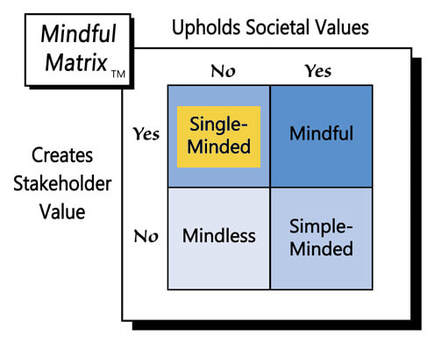
Anyone who has the ability to tip generously should do so, but ultimately, consumers deserve: 1) to decide without pressure how much they’d like to tip, 2) to make their choice, ideally, after they’ve received the service, and 3) to know, with some assurance, who will receive their gratuity.  Discounting these ingredients for equitable tipping is a recipe for “Single-Minded Marketing.”
​
Picture
Subscribe to Mindful Matters blog.
Learn more about the Mindful Matrix.
Check out Mindful Marketing Ads
 and Vote your Mind!
39 Comments

What's to Like about Twitter's Rebrand

8/6/2023

13 Comments

 
Picture

by David Hagenbuch - professor of marketing at Messiah University -
​author of 
Honorable Influence - founder of Mindful Marketing 

“There’s nothing I like about it,” said a family member after seeing a large brown sun sail I bought to shade our backyard patio.  I actually appreciated the blunt assessment because I also had misgivings about the tarp-looking sail, which fortunately was easy to return.  Many have similarly bemoaned Twitter’s unexpected rebranding, which won’t be as easy as the unappealing patio shade to retract, but are there actually things to like about “X”?
 
Like a quick-moving summer thunderstorm that seems to emerge from nowhere, Twitter’s announcement that it was replacing its acclaimed name and famous bird with the moniker/graphic “X” seemed to catch even the most astute business analysts by surprise.
 
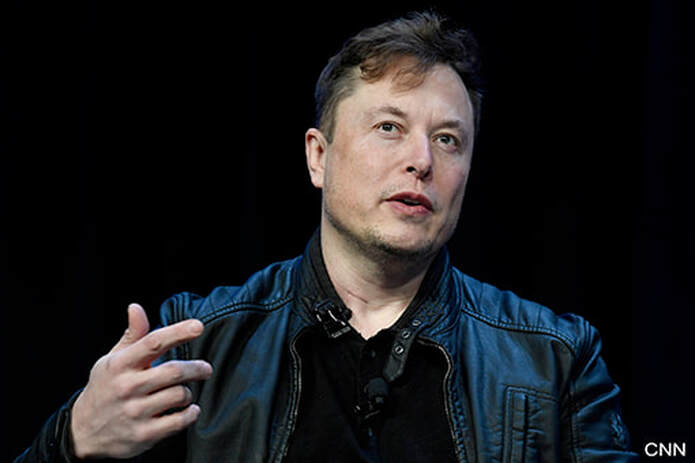
In reality, the curious move was several months, if not years in the making.  This past April new-owner Elon Musk formally changed the company’s legal name to X Corp.  He also had gained ownership of X.com six years earlier, which makes one think that the rebrand was more of a long-term plan than a knee-jerk reaction to Musk-revival and Meta founder Mark Zuckerberg’s recent launch of Threads.
 
Regardless the timing or the reason, to say the response to Twitter’s rebrand has been critical is certainly an understatement.  Some of the criticism has included:
 
  • ‘”Completely irrational’: By changing Twitter’s name, Elon Musk is wiping out $4 billion to $20 billion in brand value” – Fortune
 
  • “This sudden transformation poses a significant obstacle for marketers who had been relying on the platform as part of their social media strategies.” – Digiday
 
  • “It’s rare for corporate brands to become so intertwined with everyday conversation that they become verbs. It’s rarer still for the owner of such a brand to announce plans to intentionally destroy it.” – AdAge
 
  • “I am concerned that Musk will continue to make random changes to the platform, either alienating more casual users of the service who tend to be people my company would market to, or change the advertising tools that allow us to target users.” – Brian Chevalier-Jordan, CMO at National Business Capital
 
All of the above seem like valid criticisms; however, the last one appears to have forgotten the remarkable number of successful business innovations Musk has to his credit: 
  • The Boring Company
  • Neuralink
  • PayPal
  • Tesla
  • SpaceX
In addition, Musk founded OpenAI in 2015, and more recently he launched a new AI company xAI.
 
All this to say, Musk and those who work with him are likely extremely competent people.  You can’t build the world’s leading brand of electric vehicle and launch people into space without having significant engineering and business acumen.
 
​
Picture
 
Given Musk’s elite team members and track record, maybe the rebrand from Twitter to X is some kind of marketing rocket science that’s beyond the ability of casual observers and even most marketing professionals to understand.
 
I have no inside information on Musk’s strategy, but here are a few considerations that may have gone into the surprising decision:


1) Appeal to Gen Z:  Overtime, virtually every brand loses followers simply because its core demographic’s wants and needs change as it gets older and those consumers age out of the market.  So, companies constantly need to be making inroads with the next generation, which is about to age into the market.  
​
As someone who works with many Gen Zs, my sense is that Twitter has been falling out of favor with them, not unlike Facebook has with this young age cohort.  Maybe a younger, hipper feeling brand would help them reconsider.


2) Restore Relevance:  Even consumers whose needs haven’t changed can grow tired of a brand over time.  Most of us experience this kind of satiation effect whether it’s with the music we listen to or the food we eat.  

To avoid stagnation or worse, customers switching to other firms’ products, brands sometimes will attempt a refresh so they’re perceived as new and exciting, like Jell-O did recently for the first time in ten years.
 
Aside for some minor tweaks, it didn’t seem like Twitter had changed much over the last decade, so maybe a major brand refresh was in order, not just for Gen Zs but for every user who was growing bored with the brand.


3) Regain Attention:  Brands want to be top-of-mind, which helps in their ongoing efforts to retain and grow business.  When consumers stop hearing about them, they may stop thinking about them and purchasing from them.  

Simply slipping  out of the news cycle is bad enough; it’s even worse to be replaced by a competitor, which is what happened to Twitter thanks to Meta’s new Threads.
 
These three are realistic reasons for Twitter to consider rebranding, but as the earlier criticisms implied:  Was this refresh worth the very high costs?
 
Perhaps no cost loomed larger than this one AdAge and others identified:  Abandoning the verb to “tweet.”  Very, very few organizations are ever so fortunate as to have their brands turned into verbs, e.g., Google, Photoshop.
 
Of course, firms need to be careful that their brand names aren’t used generically to represent the entire product category (e.g., calling any brand of tissue a Kleenex), which can lead to a firm losing its legal trademark protection.

Still, there is tremendous value to having so much mindshare with consumers that they turn the noun of a company into an action.  It’s hard to imagine that any or all of the three refresh reasons would warrant Twitter abandoning that extremely unique competitive advantage.
​
There’s also a perceptual disconnect between what social media typically stands for and the psychological meaning of “X.”  Social media such as Twitter, tend to be about connecting people and having conversations, whereas “X” often represents the opposite.  For instance, an “X” is often a person with whom one no longer associates, e.g., X-spouse, X-roommate, etc. 
 
Ironically, “X” is also the tiny symbol that people often click on to close a webpage or an app.  In fact, if someone says, “X out of that,” we know they’re giving a command to close something digital.  In short, changing people’s existing interpretations of “X” from negative to positive is a very tall order.
 
Musk is among the most talented entrepreneurs of this generation, and he may deserve to be counted among humanity’s most innovative thinkers, but even business savants sometimes make mistakes, for instance:
  • Henry Ford’s first automobile firm, the Detroit Automobile Company, failed miserably, leading him to bankruptcy.
  • Walt Disney was fired from his job at a newspaper because he “lacked imagination and had no good ideas.”
  • Steve Jobs was kicked out of Apple, the company he co-founded.
 
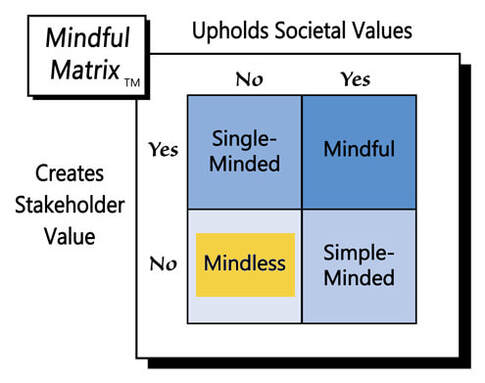
Perhaps hindsight will prove 20/20, and history will exonerate the Twitter/X rebrand a few years or more from now.  Now, though, it looks like it may go down as one of Musk’s bigger mistakes and an unfortunate instance of “Simple-Minded Marketing.”
​
Picture
Subscribe to Mindful Matters blog.
Learn more about the Mindful Matrix.
Check out Mindful Marketing Ads
 and Vote your Mind!

13 Comments

Is Extreme Tourism Worth Its Costs?

7/3/2023

11 Comments

 
Picture

by David Hagenbuch - professor of marketing at Messiah University -
​author of 
Honorable Influence - founder of Mindful Marketing 

How far are you willing to go for fun?  For some, it’s battling the traffic and crowds at busy summer beaches.  For others, it’s climbing over ice and fighting to breathe on an expedition up Everest.  Depending on one’s taste and budget, either one of these experiences can be a great time, but as extreme tourism increases, it’s time to ask, are extraordinary leisure activities worth their costs?
 
By now, most have heard of the Titan submersible’s ill-fated excursion to explore the sunken Titanic.  When I first learned that OceanGate’s record-setting sub went missing enroute to the wreckage that lies 2.37 miles below the surface of the North Atlantic, I assumed it was a scientific expedition.  Only after additional news reports did I realize that the five passengers passed away on a pleasure trip.
 
Regardless of the reason for the voyage, it’s tragic that these individuals lost their lives.  It’s frightening to think of a sub imploding; hopefully, their passing was quick and painless.  Still, the nature of the trip has caused some to question whether such a tour should have been offered, given its inherent risk.
 
Many people have jobs that require them to risk their lives each day such as: first responders, miners, loggers, construction workers, oil and gas workers, electrical power line installers and repairers.  These brave individuals are typically well-trained and well-aware of the danger in their work, which they do to serve others, as well as for income.  Leisure activities, in contrast, are by definition discretionary.
 
While everyone should have recreational time in which they can refresh their body and mind, there are many things people can do that require minimal cost and pose little or no risk, from reading, to walking in a park, to playing pickle ball.  So, why does anyone need to do extremely dangerous activities like:
  • Free climbing – climbing a rock face with no ropes
  • Base jumping – parachuting from a fixed structure
  • Bull running – jogging with horned bovines
  • Big wave surfing – boarding on swells that reach 50 ft. or more
 
Of course, everyone is wired differently in terms of the recreational activities that bring them pleasure.  While some like low-key, passive leisure (e.g., watching movies), others enjoy the physical exertion and competition that comes from playing a sport (e.g., tennis, football).  Still others crave much more, like:
  • Experiencing an extreme adrenalin rush
  • Seeing or doing something that few others have seen or done
  • Testing one’s physical and mental limits
 
Before becoming vice president for finance and administration at Martin’s Famous Potato Rolls and Bread 12 years ago, Scott Heintzelman had a successful two-decade career in public accounting, including a long tenure as a CPA firm partner.  For many people in his position and stage of life, the most leisure energy they’d expend would be on a round of golf.  However, just before the age of 50, Heintzelman ran his first marathon, then soon turned his attention to triathlons.  Over the past five years he's completed 13 Ironman races.
 
Heintzelman’s friends, family members, and others sometimes say he’s crazy to needlessly put himself through the months of grueling training followed by the body-breaking 140.6-mile competitions, which culminate with him crying upon crossing the finish line.  So, why does he choose to recreate in such an extreme way? 


Picture
 
Heintzelman says he likes testing himself mentally and physically and adds that enduring pain, delaying gratification, and overcoming negative thoughts have helped him become more disciplined, focused, and resilient – qualities that serve him well in other areas of life.
 
As the preceding suggests, participating in an Ironman certainly comes with physical costs.  It also comes with some significant financial ones such as $1,000-$5,000 for a race-quality bike, $800 for travel expenses, $150 for a 6-month gym membership, and a $600-$800 race entry fee. 
 
Still, these costs pale in comparison to an ultra-extreme sport like high-altitude mountain climbing, for which participants pay “around $100,000 or even more for the privilege to get to the world’s highest peaks.”  In the process, there’s real risk of life altering injuries and death from falls, extreme cold, and oxygen deprivation, where above 8,000 meters, “there is so little oxygen that the body starts to die, minute by minute and cell by cell.”
 
This year, 12 climbers have died on Mount Everest, the world’s highest peak, and regrettably, five more who are missing and likely dead will make 2023 “the deadliest year ever.”  One of the reasons for the increase in fatalities is overcrowding, as more inexperienced guides and climbers have made for a record number of climbing permits and caused traffic jams on already very challenging slopes.  At times, queues of climbers enroute to the summit have looked like lines of vacationers waiting for a popular Disney World ride.
​
Picture
 
There are reportedly more than 50 companies that offer guided tours on Everest.  Great supply is usually good for consumers, as added competition typically means more options and lower prices.  Those things are true to some extent for Everest, but they’ve also meant a dangerous lowering of standards for climber competence and safety, to the point that certain companies will “take absolutely anyone up the mountain, regardless of experience, and cut corners on safety standards.”
 
One company that’s particularly notorious for taking human life lightly is Seven Summit Treks.  Unlike other firms that usually limit their expeditions to 20 people, Seven Summit “is known to take as many as 100 climbers up the mountain — many of whom are unprepared for the altitude and physical exertion.”
 
The company also offers a VIP Everest Expedition “designed for those seeking to summit Mt. Everest in the utmost comfort and convenience” whether they are “an experienced climber or a first-timer for 8000er.”  The expedition includes lessons at Everest basecamp on “ice wall climbing, ladder crossing, and other techniques that will be required for the ascent” – skills you’d think anyone who hopes to climb the world’s highest mountain would have already mastered.
 
This piece has gone from the depths of the sea with the recent OceanGate tourism tragedy to the heights of the earth with lives lost seeking to summit Everest.  So, what do these two elevation extremes and all the options in between mean for those providing extreme leisure activities?  Here are three potentially helpful considerations:
 
1) It’s hard to judge what leisure is too costly and risky:  I would generally describe myself as cost-conscious and risk-adverse, which makes me want to point my finger at others spending hundreds of thousands of dollars and risking their lives to do things like deep ocean exploring and high-altitude climbing.  Then I remember that I’ve done some leisure activities that others might consider too expensive and risky.
 
More than a decade ago, when my wife and I visited Kauai, we took advantage of what seemed like a once-in-a-lifetime opportunity:  to view the breath-taking island by helicopter.  The nearly $200 we spent per ticket certainly could be considered excessive for the 50-minute ride.  Likewise, flying inside canyons on the rugged Napali coast had risk.  Then again, anyone who flies or drives anywhere for a vacation could be accused of incurring unnecessary cost and risk.
 
The point is, it’s difficult to draw a clear line between what is and isn’t excessive leisure.  That’s not to say that there shouldn’t be a line or that anything should go but rather that it might be helpful to consider factors like cost relative to the individual’s income, if not per capita income, as well as the percentage of instances of severe injuries or death for those who engage in the activity.
  
2) Leisure interest can lead to scientific discovery:  Sometimes people’s leisure leads to discoveries that benefit much larger groups of people.  For instance, amateurs have documented unique animal behaviors and even discovered new species.
 
People pursing their recreational passions also have played significant roles in advancing fields like avionics and computing.  Most recently, companies including SpaceX are leveraging what they’re learning from offering space tourism to create the potential for dramatically faster point-to-point travel on earth, such as a flight from New York City to Shanghai that might only take 40 minutes.
 
3) Consumers’ safety is critical:  Ultimately, what matters most for companies marketing recreation of any kind, including extreme tourism, is safety.  Of course, before people participate in dangerous activities, organizations must clearly communicate the risks.  It’s fine to ask participants to sign waivers; however, those releases should never become substitutes for taking every reasonable step to ensure that individuals simply looking for a pleasurable leisure experience don’t return injured or dead.
 
It seems that the two extreme tourism companies mentioned above have both fallen short of this critical standard.  Since OceanGate’s Titan submersible exploded, many have reported that there were serious safety concerns surrounding the structural integrity of the deep-diving craft.  Similarly, beyond Seven Summits Treks’ questionable onboarding practices described above, the firm’s owner resists rules for who should or shouldn’t enter into Everest’s death zone; instead, he recommends, “If [people] have enough energy, they can go.”
 
As Baby Boomers and Gen Xs look for a last hurrah and experience-driven Gen Ys and Zs gain disposable income, it’s likely that demand for extreme tourism will continue to increase.  Companies that want to capitalize on this trend should ensure that the benefits they provide to clients are proportionate to the costs they incur.  In addition, others outside the exchange shouldn't be asked to bear costs (e.g., environmental degradation, rescue costs) without receiving benefits.
 
Above all, organizations must do everything possible to ensure their clients’ safety.  In an often-unpredictable natural world complicated by periodic human error, safety can seldom be guaranteed.  However, at 3,800 meters below sea level or 29,000 meters above it, companies should have air-tight models for returning their clients safely; otherwise, they’re liable for “Single-Minded Marketing.”
​
Picture
Subscribe to Mindful Matters blog.
Learn more about the Mindful Matrix.
Check out Mindful Marketing Ads
 and Vote your Mind!

11 Comments

Why Did the PGA Stop Keeping Score with LIV?

6/20/2023

5 Comments

 
Picture

by David Hagenbuch - professor of marketing at Messiah University -
​author of 
Honorable Influence - founder of Mindful Marketing 

“If you can’t beat them join them.”  This old adage, suggesting that adversaries become allies, has been used to describe everything from Vichy France aligning with Nazi Germany to Apollo Creed training Rocky Balboa.  Now a very surprising real-life sports pairing has made ethics appear expendable or at least raised the question:  Is it okay to have a moral change of mind?
 
The Professional Golfers’ Association’s (PGA) decision to merge with LIV Golf was a move that virtually no one expected.  Even professional golfers and analysts who cover the game were shocked by the news.  The PGA’s sudden change of heart, which went from viewing LIV as a bitter rival to a bedfellow also represented for many an epic moral capitulation.

Over the past year, the PGA and LIV have been “at war.”  The PGA had threatened to suspend golfers who defected to LIV and even ban them for life.  Why such acrimony?  Of course, no organization wants a new competitor, especially one that steals its product (golfers) and commandeers its place (golf venues).
 
However, the PGA’s disdain for LIV was rooted in more than competition-fueled conflict.  Many in the veteran golf association, as well as others, took issue with LIV’s funding source – the sovereign wealth fund of Saudi Arabia, the nation of origin for 15 of the 19 hijackers involved in the 9/11 attacks and a country known for human right abuses.
 
In an interview just a month ago, the PGA’s CEO, Seth Waugh, was heard “trashing” LIV Golf ahead of the PGA Championship.  How is such a seemingly irreconcilable relationship so suddenly  repaired?  One ESPN piece, “How the shocking PGA Tour-LIV Golf deal went down” details the events leading up to the proposed merger and its players, while another describes how the unification, which also includes the DP World Tour (Europe), might solidify the sport long-term.
 
This Mindful Marketing article doesn’t pretend to know what’s best for the future of professional golf; rather, it aims to ask a more general philosophical question:  Was it okay for the PGA to have a moral change of mind?  
 
Of course, it’s not organizations but the individuals that manage them who make decisions, including ethical ones.  Most of us have experienced that our initial inclinations are not always optimal.  As evidence, we’ve all mistakes and often realized later the option we should have selected.
 
Imperfect decision-making is a thread that has run continually through human history and often involved ethics.  For instance, decisions in favor of racial segregation in the U.S. in the 19th- and 20th century are ones that most Americans now reject, as are the choices that kept women from voting until 1920.
 
​
Picture
 
Realizing the error of one’s way and self-correcting a moral stance is a good thing.  However, it’s also important to help others understand the reason for the reversal.  Intelligent, inquiring people want to know not just that a judgment that was A is now B but why it’s changed  That’s where moral reasoning helps. 
 
In a moral argument, a person first identifies a moral standard then suggests one or more alleged facts, which lead to a conclusion, or moral judgment.  A month ago, it seemed that many PGA supporters/LIV detractors morally reasoned along the lines of the following:
  • Human rights should be upheld. (moral standard)
  • Saudi Arabia has not upheld certain human rights. (alleged fact 1)
  • LIV Golf’s funding come from the sovereign wealth fund of Saudi Arabia. (alleged fact 2)
  • LIV Golf’s funding source taints the league. (alleged fact 3)
  • It’s wrong for professional golfers to play for LIV. (moral judgment)
 
Then, without notice, the PGA reversed course, announcing its merger with LIV and thereby introducing a new moral judgement:  It’s fine for professional golfers to play for LIV.
 
Again, there’s nothing wrong with having a moral change of heart, especially if it’s the result of ethical enlightenment.  However, others deserve to know what changed the moral judgment, which is where the PGA fell short of the cup.
 
A year ago, PGA Tour Commissioner Jay Monahan was invoking the 9/11 terrorist attacks as a main reason to reject LIV.  Now, he will reportedly serve as CEO of the newly created company.
 
Monahan and the PGA have offered little evidence that their change of heart had anything to do with recognition of either a more compelling moral standard or more salient alleged facts such as, ‘Saudi Arabia’s record on human rights is improving’ or ‘Where money comes from doesn’t matter as much as what’s done with it.’
 
Moreover, it appears that the PGA has made a wholesale change in its moral decision-making from principle-based ethics, or nonconsequentialism, to outcome-based ethics, or consequentialism.  Evidence of this philosophical shift can be seen in recent statements from the PGA and Monahan that focus not on upholding specific moral principles but on prioritizing outcomes for the game of golf, for instance:
 
“We are pleased to move forward, in step with LIV and PIF’s world-class investing experience, and I applaud PIF Governor Yasir Al-Rumayyan for his vision and collaborative and forward-thinking approach that is not just a solution to the rift in our game, but also a commitment to taking it to new heights. This will engender a new era in global golf, for the better.”
 
Understandably, given what’s transpired, this explanation has failed to reach the green for many of the tour’s most important stakeholders.  Many top professional golfers, have felt blindsided by the decision and left to wonder what inspired it.  Rory McIlroy, the third ranked golfer in the world, said he was surprised by news of the merger, he felt like a “sacrificial lamb,” and he hated LIV and hoped it would go away.
 
Similarly, hall of fame golfer Tom Watson sent a letter to Monahan questioning the merger Watson also acknowledged that his skepticism about the new structure has been “compounded by the hypocrisy in disregarding the moral issue.”
 
If the merger goes through, professional golf, with its strong new financial backing and consolidation will likely thrive.  However, the PGA’s pivot has left a moral divot that will not be easily replaced.
 
It’s the prerogative of any person and professional sports association, to have a moral change of heart.  However, when such happens, it’s also important to say why.  By not explaining how it so quickly arrived at a very different moral judgment about LIV, the PGA hit the ball into a bunker of “Single-Minded Marketing.”
​
Picture
Subscribe to Mindful Matters blog.
Learn more about the Mindful Matrix.
Check out Mindful Marketing Ads
 and Vote your Mind!
5 Comments

A 3D Approach to Corporate Social Media Responsibility

6/6/2023

13 Comments

 
Picture

by David Hagenbuch - professor of marketing at Messiah University -
​author of 
Honorable Influence - founder of Mindful Marketing 

Most of us receive warnings during our lives whether they’re about talking in class, highway speeding, or forgetting to pay a bill.  When the U.S. surgeon general issues a warning, it’s a serious admonition for everyone, usually about some potential physical harm.  So, when the physician in chief warns about the dangers of social media, what should the organizations that use it do?
 
The New York Times has called U.S. Surgeon General Dr. Vivek Murthy’s most recent warning “an extraordinary public advisory,” which is saying something since warnings from the nation’s top doctor are uncommon and have included some grave concerns like AIDS, drunk-driving, obesity, video game violence, gun violence, and, of course, cigarettes.
 
How could social media possibly warrant the same level of concern?
 
Gen Z uses Instagram to share fun videos, parents turn to Facebook to celebrate family milestones, and professionals leverage LinkedIn to post and find job opportunities, all of which seem like positive and productive things.  Unfortunately, though, most of us also have read about, if not experienced, social media’s negative impact.
 
I teach about sociological and psychological influences on behavior, but I don’t use social media much, so I’d like to believe I’m above its affirmation-seeking lure.  However, I have to admit, there are times I’m disappointed that my posts don’t receive the numbers of likes and shares that those of others do.
 
Putting too much weight on other people’s reactions can be problematic, but it’s just one of social media’s potential pitfalls.  As the following two lists suggest, misuse of social media can impact individuals’ well-being mentally (M), physically (P), and socially (S) in many different ways.
 
First, Entrepreneur identifies four other pitfalls in its list of five social media dangers:
  1. Real-life interaction is replaced if you allow it (M, P, S)
  2. Feelings of envy emerge based on fabricated lives (M, S)
  3. Moments are missed and memorable experiences are diluted (M)
  4. Addiction (M, P, S)
  5. It can ruin your sleep, impacting your physical health (P)
 
Picture
 
Still, others suggest many more potential perils.  For instance, McMillen Health identifies 15 social media dangers:
  1. Sedentary behavior (P)
  2. Less sleep (P)
  3. Social Media addiction (M, P, S)
  4. Cyberbullying (M, S)
  5. Missing out on face-to-face relationships (S)
  6. Less time for other activities (M, P, S)
  7. Social comparisons (M, S)
  8. Affecting self-image (M)
  9. Damaging online reputation (M, S)
  10. Harmful to mental well-being (M)
  11. Misleading information (M, S)
  12. Scams (M, P)
  13. Normalizing risk-taking behaviors (P)
  14. Misleading marketing (M, P)
  15. Inappropriate content (M, P, S)
 
Although anyone can be negatively impacted in these ways, children and adolescents tend to feel social media’s impacts most acutely, partly because they’re heavy users of the platforms but mainly because individuals’ formative years are ones in which they often look to others for validation, and they more easily feel ostracized from their peers.
 
Mayo Clinic cites many studies that found evidence of adverse effects of social media on teens, including the following:
  • 12- to 15-year-olds in the U.S. who used social media for more than three hours a day were at greater risk of mental health problems.
  • For 13- to 16-year-olds in the U.K., using social media more than three times a day was associated with poor mental health and well-being.
  • Various studies have found links between social media use and symptoms of depression and anxiety.
 
Even with this evidence, it’s important to note that social media is not inherently bad.  As suggested at the onset of this piece, platforms like Facebook, Instagram, LinkedIn, and others provide very worthwhile services that range from connecting people, to offering entertainment, to delivering education.
 
It also bears emphasizing that ultimately people are responsible for their own social media use.  Even in the case of so-called ‘addictive’ apps, like TikTok, people have the ability to stop using them without experiencing physical withdrawal symptoms associated with trying to stop smoking or doing drugs like cocaine and heroin.
 
One qualification, however, is that parents share some responsibility for the social media use of their children, especially younger ones.  Unlike adults, children can’t necessarily comprehend the potential risks because they lack life experience and knowledge of social  and psychological phenomenon.  It’s up to parents to help moderate their children’s social media use.
 
Notwithstanding the preceding points, if companies care about their own consumers and people in general, they should want to contribute to their well-being and help them avoid harm.

Here are three “Ds” every organization should do to make their social media use more responsible.
 
1. Discourage divisive content:  This is understandably a difficult phenomenon to police, but companies from the largest social media platforms to the smallest should work to eliminate content that unnecessarily pits people against each other.
 
While social media platforms shouldn’t be in the business of monetizing such content, all businesses should model civil dialogue and discourage polarizing posts.
 
2. Don’t allow abusive behavior:  The social media communication that likely weighs heaviest on young people’s mental health is the communication that involves bullying and/or shaming.  Yes, freedom of speech is important, but it shouldn’t mean that anything goes, particularly when that anything involves demeaning dialogue and personal attacks.
 
Smaller companies also can monitor their social media pages for abusive posts, removing them as they see them and banning users who make them.
 
3. Decrease overuse:  Bars stop serving patrons who have had too much to drink.  Social media platforms can at a minimum notify users of their time on the platform, similar to Apple’s screentime notifications.  Beyond that, platforms could also ask people to set their own time limits, before they start using the app, when they’re still thinking about their use rationally and objectively.
 
Of course, most business that use social media aren’t platforms or major apps.  Still, even small businesses can discourage social media overuse by limiting their posts to reasonable numbers, e.g., one or two a day versus four or five, which communicates to followers that they can and should have lives outside of their interactions with a single business.
 
Companies don’t need to stop using social media because of the U.S. surgeon general’s warning, but they should reassess how their use may be impacting people.  The three Ds described above don’t represent a comprehensive plan for responsible social media use, but they are important steps toward more “Mindful Marketing.”


Picture
Subscribe to Mindful Matters blog.
Learn more about the Mindful Matrix.
Check out Mindful Marketing Ads
 and Vote your Mind!
13 Comments

Is it a Sin to Advertise Religion?

5/21/2023

7 Comments

 
Picture

by David Hagenbuch - professor of marketing at Messiah University -
​author of 
Honorable Influence - founder of Mindful Marketing 

In casual interpersonal conversation, two topics have long been taboo: politics and religion.  By contrast, in advertising, politics are usually fair game, but religion has largely remained off-limits, until now.   So, have two widely broadcast religion-related campaigns changed an age-old mass communication commandment? 
 
By now, most people have driven by billboards or viewed videos online for “He Gets Us,” the omnipresent ad campaign aimed at changing people’s perceptions of Jesus.  The campaign even aired ads during last February’s Super Bowl.
 
More recently, another campaign, which represents religion for some but with a very different objective, also has been broadcast in national media: #StandUpToJewishHate aims to stop antisemitism.  The need for such an initiative stems in part from the sobering statistic that the American Jewish community represents just 2.4% of the U.S. population, but Jews are victims in 55% of the country’s religious hate crimes.

Given my past and present advertising-related roles, people sometimes ask my opinion about ads, and because I teach at a Christian University, my views on marketing that involves religion has some extra appeal.
 
However, as much as I enjoy sharing my thoughts, I really appreciate hearing others’ perspectives, from which I always learn.  So, in the current case of these two high-profile campaigns, I reached out to a few wise friends and asked for their insights on the ads.
 
One person is a Christian church pastor; the others are Jewish – a software project manager and an executive coach.  For the sake of brevity but at the risk of some awkward acronyms, I’ll refer to these kind contributors anonymously as CCP, JSPM, and JEC, respectively.  Here are their reflections on the ads.
 
He Gets Us
 
In light of ongoing critiques of Christians and Christianity, CCP admitted having mixed feelings about the He Gets Us ads.  Still, he was grateful for the campaign’s positive portrayal of Jesus.
 
JSPM and JEC also appreciated the ads.  JSPM was particularly impressed by the campaign’s inclusivity, emphasized through third person plural language.  He reflected, “Our world could certainly use more ‘us’ than ‘them’ . . . When we allow people to dehumanize others, bad things happen.”
 
Picture

Likewise, JEC was very impressed by the He Gets Us ads, which he found to be “incredibly open-minded” as they presented an accurate picture of Jesus, who was not close-minded.
 
Notwithstanding these positive attributes, CCP posed an important bottom-line question about the ads:  Are they effective?  More specifically, he wondered:
 
“The ads’ portrayals of Jesus highlight his love and grace, but do they clearly communicate to their audience who He is?  Also, are those short dramatic snippets enough to cause someone to explore more about Jesus?”
 
Furthermore, knowing that purchasing national media isn’t cheap, and a 30-second Super Bowl spot can cost as much as $7 million, CCP asked the very reasonable question of whether taking practical actions would be more meaningful than words:
 
“While our Christian witness is important, do television ads or addressing the needs of people who are hurting provide a better representation to our world of who Jesus is and what He and his followers value?”
 
Still, CCP remained circumspect, “Maybe the fact we’re having this discussion is proof the ads are accomplishing their purpose.”  He’s right:  This kind of general image/brand-building is very difficult to quantify, and so much free press is likely helping, at least to some extent, to offset the costs.
 
#StandUpToJewishHate
 
As mentioned above, JSPM denounced dehumanizing actions and the acrimony that often underlies them.  He added, “The abundance of hate in our society is crowding out love and is dangerous on many levels.”  The hateful words and actions the #StandUp campaign seeks to discourage exemplify some of the more advanced forms of that abuse.
 
JSPM appreciated how each campaign, though very different in their focus, aimed to replace the prevailing narrative with a better one, i.e., Jesus was about loving others, and it’s wrong to radiate hate.

​
Picture
 
JEC supported the #StandUp ads’ goal of combatting hate and protecting people.  He also fittingly differentiated the two campaigns, pointing out that while He Gets Us focuses squarely on Jesus and highlights specific spiritual disciplines He demonstrated like self-control, unconditional love, and hospitableness, #StandUp makes no mention of a deity or reference to specific tenets of faith.
 
In addition, JEC raised two good questions:
  • How should the funding sources for both campaigns affect the ways their respective ads are interpreted?
  • Do the #StandUp spots really represent religious advertising?
                                                                                            
Admittedly, the second question surprised me as it challenged the fundamental framing of this piece and the logic:  ‘Because the #StandUp campaign encourages rejection of acrimony aimed at Jews, and because Judaism is a religion, the ads are religious advertising.’
 
However, JEC reminded me that not all Jews consider themselves as adherents to Judaism, i.e., Jewish religion.  For some, being Jewish is about cultural/and or ethnic identification, not necessarily religious beliefs and practice.  So, although antisemitism may involve religious bigotry, it’s more broadly discrimination against specific people who are identifiable outside of their theological beliefs.
 
JEC’s analyses of the campaigns were also a good reminder that people, including me, see ads through the lens of their own worldviews and experiences, which can lead to very different interpretations of the commercial content.  Those potential discrepancies are why it behooves those creating ads to step outside themselves and truly try to understand others’ perceptions.
 
The three interviewees provided some excellent analysis of the two specific campaigns, but what about the general idea of religion using paid-for mass communication?  Is it right for religious organizations to advertise?
 
Considering this question, JSPM and JEC both pointed to the First Amendment’s protection of free speech.  Outside of hate speech and a few specific requirements like truthfulness, individuals and organizations of all kinds do have great liberty to publicly disseminate information and to attempt to persuade people to believe and act in certain ways.
 
Still, the messages of religion-related ads cut deeper than most, which means religious organizations should strive to:
  • Promote in proper situations:  Ensure that ads appear at appropriate times and in appropriate places.
  • Be inclusive:  Use language that’s welcoming rather than exclusionary.
  • Seek common ground:  Emphasize points of agreement.
  • Avoid offending:  Don’t disparage others’ beliefs.
  • Be compassionate:  Understand the difficult challenges that many people face each day.
 
Not surprisingly, these are many of the same principles that the three contributors to this piece have identified and implied.  Furthermore, following these principles doesn’t mean abandoning the tenets of one’s faith; rather the principles suggest not leading with antagonism.
 
It’s also helpful to recognize that most religious organizations’ advertising does routinely uphold these principles.  These organizations are not necessarily using national television campaigns like the ones discussed above but rather promotional tactics like these:
  • A synagogue buys newspaper space to advertise an annual flea market fundraiser.
  • A church runs radio spots to promote its Christmas-themed musical.
  • A new mosque uses outdoor signage to announce its opening.
 
This kind of religious advertising commonly accomplishes the organizations’ objectives and upholds values that virtually everyone understands, like decency, fairness, honesty, respect, and responsibility.
 
There are examples of good and evil mass communication in every sector.  Religious advertising isn’t always pious, but when done in the right ways, it radiates “Mindful Marketing.”
​
Picture
Subscribe to Mindful Matters blog.
Learn more about the Mindful Matrix.
Check out Mindful Marketing Ads
 and Vote your Mind!

7 Comments

AI Ethics Need Time

4/8/2023

6 Comments

 
Picture

by David Hagenbuch - professor of marketing at Messiah University -
​author of 
Honorable Influence - founder of Mindful Marketing 

At the same time Major League Baseball (MLB) has made a revolutionary rule change to speed up America’s pastime, some renown business leaders have called a timeout to slow down the planet’s hottest new technology.  In a world that places a high priority on time, is it fair to ask organizations to hit pause on artificial intelligence (AI)?
 
With many believing that notoriously long baseball games have outlasted the attention spans of fans now conditioned for shorter bursts of entertainment, MLB made the game-changing addition of a pitch clock, which already seems to be serving its purpose of expediting play.
 
However, sports don’t always imitate life.  Concerned about the meteoric rise of AI and its potential abuses, over 18,000 people have signed the Future Life Institute’s open letter that asks all AI labs to “immediately pause for at least 6 months the training of AI systems more powerful than GPT-4.”  Among the notable signatories are tech leaders Elon Musk and Steve Wozniak and 2020 presidential candidate Andrew Yang.
 
Most of us have heard of at least some ethical infractions attributed to AI that range from the art tool Midjourney slyly outfitting Pope Francis in a longline white puffer coat to complaints that an uncensored chatbot continually offends human decency.
 
In light of such concerns, some marketing professionals have joined ranks with their tech colleagues and said that the proposed pause on AI development is, akin to Keebler cookies, “an uncommonly good idea.”  On an even larger scale, Italy recently became the first western nation to ban ChatGPT.
 
However, not everyone agrees that an AI pause is necessary.  While major brands like Coke, Duolingo, and Expedia are increasingly leveraging the power of ChatGPT for their digital marketing, Microsoft has gone much further, making multimillion dollar investments in Open AI, the app’s owner.
 
Also questioning the prudence of the open letter and proposed AI pause are “some prominent AI ethicists” and Microsoft co-founder Bill Gates, who has said, “I don’t really understand who they’re saying could stop, and would every country in the world agree to stop, and why to stop.”
 
Gates’ issue with the AI pause doesn’t seem to be so much that he believes it’s a bad idea in principle as he fears its unilateral implementation, i.e., many around the world won’t honor the halt.  As Microsoft’s largest single stockholder, Gates understandably doesn’t want the company to fall behind in the AI race. 
 
Gates elaborated on his AI perspective saying, “Clearly there’s huge benefits to these things… what we need to do is identify the tricky areas.”
 

Picture
 
Coming from someone who is a prolific reader and arguably one of humanity’s greatest intellects, “tricky” is a very interesting choice of words.
 
Gates probably didn’t mean “tricky” in the sense of sly or deceptive, but rather he chose the adjective to convey that AI issues are complex, delicate, and intricate.  Either way, the word is very informative for the approach to ethics that should be taken with AI.
 
When a bomb squad comes upon an unrecognized incendiary device that it needs to deactivate, and one of its members says, “This is going to be tricky,” it’s probably not code to pick up the pace and rush headlong into the defusing process.  Instead, “tricky” would likely signal to everyone on the team that they should slow down and think, “How exactly do we want to go about this?”
 
Based on the educated opinions of tech experts who know much more about the potential risks and rewards of AI than do most of us, the transcendent and ever-evolving technology is potentially explosive, or “uncommonly” “tricky.”  Some of the potential pitfalls include information accuracy, privacy, intellectual property, offensive content, attribution, and impact on humans' livelihoods.
 
When it comes to tricky ethical issues, it’s not only okay to pump the brakes, hit pause, and take a beat – it’s desirable.  Moral choices shouldn’t be rushed; rather, they often benefit from more time to allow for:
  • Consideration of other opinions: Any given person’s, organization’s, or industry’s perspective is naturally limited and usually biased to some extent.  It’s very helpful, therefore, to engage other stakeholders who can offer divergent views, or at least ask good questions.
  • Better projection of likely outcomes: A danger of rushing through a product trial is that some consequences only become known over time, after they happen.  Such a long-term delay of launching may not be practical, but additional conceptual testing is usually possible and is likely to identify other probable occurrences.
  • Deeper reflection on pertinent principles:  Identifying what specific moral issues are at play in a given situation requires very intentional analysis.  Determining what particular courses of action are decent, fair, honest, etc. requires even greater contemplation.
 
Unfortunately, a MLB pitcher facing a full count on a prolific home run hitter can no longer take extra time to gather himself before throwing the next pitch.  However, even though the game of high tech is moving at a very rapid pace, there is no pitch clock on AI ethics.
 
Gates is right that not everyone in the world will hit pause on AI development at the same time, which is concerning.  But why, then, not apply the same logic to an issue like greenhouse gases?  Certainly not every organization or nation is working to reduce their CO2 emissions; yet, Gates is, thankfully, a vocal advocate and large financial supporter of mitigation efforts.
 
In ethics, it’s not only tenuous to try to think too fast, it’s also ill-advised to reason: “Others won’t take a stand, so why should I?”  Pumping the brakes on new technology is not always needed, but given AI’s life-altering potential, some extra time to talk and reflect equals “Mindful Marketing.”


Picture
Subscribe to Mindful Matters blog.
Learn more about the Mindful Matrix.
Check out Mindful Marketing Ads
 and Vote your Mind!
6 Comments

Higher Ed's Big Gamble on Sports Betting

3/26/2023

 
Picture

by David Hagenbuch - professor of marketing at Messiah University -
​author of 
Honorable Influence - founder of Mindful Marketing 

For centuries, universities have been places where students study philosophy and sharpen professional skills.  Are colleges now becoming locations where young minds learn to place prop bets and parlay their winnings?  As more schools find gambling partners, those educational outcomes seem less like longshots.
 
By now most basketball fans’ March Madness brackets have been busted, which is not a big deal, provided they didn’t put down dollars on those picks.  Of course, the risks of such bets increase with the amount of money wagered, but they also rise as gamblers’ ages decline.  So why are some universities encouraging their own students to try sports betting?
 
According to the New York Times, schools that have established such partnerships include Michigan State, Louisiana State University (LSU), Maryland, University of Denver, and the University of Colorado.  The executive director of the National Council on Problem Gambling, Keith Whyte, claims that eight or more universities have inked similar deals, and “at least a dozen athletic departments and booster clubs have signed agreements with brick-and-mortar casinos.”
 
Why would institutions that families trust to guide the next generation down paths of enlightenment and prudence, expose their students to activities that may strain relationships, double debt, and spell insolvency?  The simple answer is money.
 
Many colleges and universities have long felt the pinch of revenue lost from declining enrollment and rising costs, including meeting expectations for best-in-class facilities and services.  Corporate sponsorships often have helped bridge such fiscal divides, but when the U.S. Supreme Court legalized sports gambling in May of 2018, the doors swung wide open for all kinds of institutions to enter partnerships with oddsmakers.
 
In 2020, the University of Colorado Boulder signed a $1.6 million contract to promote sports gambling on its campus, and the deal that LSU inked with Caesars Sportsbook in 2021 is worth seven figures. Higher education may have been a little late to the gaming table, but now that some schools have gone all-in, others are likely to follow.
 
​
Picture
 
Of course, money is also a motivator for gaming companies.  The ability to realize untapped revenue is understandably attractive to them.  However, compared to other demographic groups, the young and green-to-gambling college-age market has special long-term appeal.
 
I remember years ago a client of our family’s promotional products company, a local bank, had created a special savings account for children called “Mega Bucks.”  It featured a variety of kid-friendly incentives, the unambiguous intent of which was to forge relationships with young savers before their bank loyalties could be deposited elsewhere.
 
“Get ‘em while they're young” is a common mantra among marketers.  Given that consumers are creatures of habit, constrained by switching costs, it’s often hard to persuade people to try a new product, especially when they’re satisfied with what they have.  So, it’s understandable that organizations from banks to bookstores to bars want to reach the youngest age cohorts able to use their services.
 
Gambling companies want to do the same, i.e., reach young gamblers for the sake of current and future profits.  One of the best ways to do so is through sports since most young people have no history with horseracing or blackjack, but many are avid fans of football, basketball, etc.
 
In all but four states, these firms can’t target consumers below age 21, but as with alcohol advertising, spillover into younger demographics is inevitable.  It’s impossible to keep ads from Caesars Sportsbook and BetMGM that air during televised sporting events from influencing viewers who are 20 or, for that matter, 12, especially when they employ popular celebrity endorsers like Jamie Fox and former NFL quarterbacks Peyton and Eli Manning.
 
Moreover, actual gambling for those underage isn’t hard to accomplish, as many betting firms provide little resistance thanks to very loose screening processes.  For instance, FanDuel Sportsbook PA’s $1,000 No Sweat First Bet, which promises new customers “Up to $1,000 back in bonus bets,” provides the following easy entry:
 
  • When you click on “JOIN NOW,” a list of about 20 states appears.  Choosing Pennsylvania produces a “Create an Account” form that asks for an email address, username, and password but not a birthdate or age.
  • A sentence in small type, just above the “Create and Account” button reads, “Users must be 18+ (21+ in MA) to play Fantasy and 21+ to place bets on Sportsbook.”  There’s nothing more on the page to prohibit underage gambling beyond that soft admonition.
  • If someone is inquisitive enough to click on Terms of Use, they’ll find a 161-page document with more than 76,000 words, which does state that underage gambling is a critical offense and FanDuel reserves the right to “to request proof of age documentation from any applicant or customer.”  Still, what are the chances that anyone, let alone teenagers looking to try something new and exciting, will find the buried disclaimers or be dissuaded by them?
 
The experience in Apple’s App Store is similar.  Three of the top betting apps (FanDuel, Draft Kings, and BetMGM) have age ratings of “17+ Years Old.”  Granted, it’s a standard measure that applies to all kinds of apps; still, it’s easy to imagine how an 18-year-old who wants to bet could interpret the rating as a green light to begin gambling.
 ​
Picture
  
When a potential user clicks on “GET,” there’s no prompt to enter an age or birthday before being served the “Install” button.  On BetMGM’s website, potential users are prompted to enter their email address and last four digits of their social security number before they’re asked their age.  Human nature suggests that the further someone goes in the process, the less likely they’ll be to abort and the more likely they’ll be to rationalize and possibly lie.
 
However, this targeting of young people for sports betting is pedestrian compared to what some college and universities permit through partnerships that “allow sports betting companies to advertise on campus, in athletic venues and, in some cases, directly in students' email inboxes.”  LSU’s contract with Caesars Sportsbook has seen students under the age of 21 receive an email encouraging them to place their first bet.
 
It’s unimaginable to think that a college or university would send its students any kind of invitation to gambling.  As someone who’s worked in higher education for more than two decades, I know that students intrinsically trust communication from their school, which they believe is looking out for their best interests.  For many undergrads, a partnership with a betting firm would seem like the Good Housekeeping Seal of Approval on gaming.
 
Of course, gambling can be exciting entertainment, but at what cost, particularly for those who are still developing their understanding of risk/reward, debt, and addiction?  As just a college sophomore, Saul Malek found himself in “tens of thousands of dollars in debt after two years of betting on sports.”
 
Unfortunately, Malek’s gambling experience is likely to play out increasingly for others, thanks to more universities partnering with betting firms.  Even worse, these youthful indulgences may be setting up the gamblers for a lifetime of financial hardship and relational stress.
 
I recently spoke with a woman who witnessed her father’s gambling addiction firsthand and saw it break up her family.  At age nine, she thought it was normal to go to the racetrack on a school night.  After her dad drained her mom’s bank account and left her stranded outside her work for hours without a ride while he gambled, her mom left him.  Unable to make it on his own, the dad now lives with his grown daughter who must take care of everything for him.
 
There’s a reason ads for betting often contain gaming disclaimers and phone numbers to call about gambling addiction:  It’s a slippery slope on which a simple $5 wager can easily spiral into regular $500 bets on point spreads.
 
It’s also worth noting that the house never loses.  Sure, individual gamblers sometimes make good bets, but overall and long-term, the gaming companies always win – their business models are based on outcome imbalance in their favor.
 
Marketers can target younger consumers for products, provided they’re properly informed and the products truly benefit them.  Back to “Mega Bucks,” There’s a big difference in risks between banking and betting.  For colleges and universities to promote sports gambling is madness any time of year, not just March.  It’s also “Single-Minded Marketing.”
​
Picture
Subscribe to Mindful Matters blog.
Learn more about the Mindful Matrix.
Check out Mindful Marketing Ads
 and Vote your Mind!

<<Previous
Forward>>
    Subscribe to receive this blog by email

    Editor

    David Hagenbuch,
    founder of
    Mindful Marketing  and author of Honorable Influence
    and
    ​Mindful Marketing: Business Ethics that Stick

    Archives

    July 2026
    June 2026
    May 2026
    April 2026
    March 2026
    February 2026
    January 2026
    December 2025
    November 2025
    October 2025
    September 2025
    August 2025
    July 2025
    June 2025
    May 2025
    April 2025
    March 2025
    February 2025
    January 2025
    December 2024
    November 2024
    October 2024
    September 2024
    August 2024
    June 2024
    May 2024
    April 2024
    March 2024
    February 2024
    January 2024
    December 2023
    November 2023
    October 2023
    September 2023
    August 2023
    July 2023
    June 2023
    May 2023
    April 2023
    March 2023
    February 2023
    January 2023
    December 2022
    November 2022
    October 2022
    September 2022
    August 2022
    July 2022
    June 2022
    May 2022
    April 2022
    March 2022
    February 2022
    January 2022
    December 2021
    November 2021
    October 2021
    September 2021
    August 2021
    July 2021
    June 2021
    May 2021
    April 2021
    March 2021
    February 2021
    January 2021
    December 2020
    November 2020
    October 2020
    September 2020
    August 2020
    July 2020
    June 2020
    May 2020
    April 2020
    March 2020
    February 2020
    January 2020
    December 2019
    November 2019
    October 2019
    September 2019
    August 2019
    July 2019
    June 2019
    May 2019
    April 2019
    March 2019
    February 2019
    January 2019
    December 2018
    November 2018
    October 2018
    September 2018
    August 2018
    July 2018
    June 2018
    May 2018
    April 2018
    March 2018
    February 2018
    January 2018
    December 2017
    November 2017
    October 2017
    September 2017
    August 2017
    July 2017
    June 2017
    May 2017
    April 2017
    March 2017
    February 2017
    January 2017
    December 2016
    November 2016
    October 2016
    September 2016
    August 2016
    July 2016
    June 2016
    May 2016
    April 2016
    March 2016
    February 2016
    January 2016
    December 2015
    November 2015
    October 2015
    September 2015
    August 2015
    July 2015
    June 2015
    May 2015
    April 2015
    March 2015
    February 2015
    January 2015
    December 2014
    November 2014
    October 2014
    September 2014

    Categories

    All
    + Decency
    + Fairness
    Honesty7883a9b09e
    * Mindful
    Mindless33703c5669
    > Place
    Price5d70aa2269
    > Product
    Promotion37eb4ea826
    Respect170bbeec51
    Simple Minded
    Single Minded2c3169a786
    + Stewardship

    RSS Feed

    Share this blog:

    Subscribe to
    Mindful Matters
    blog by email

    Illuminating
    ​Marketing Ethics ​

    Encouraging
    ​Ethical Marketing  ​


    Copyright 2025
    David Hagenbuch

Proudly powered by Weebly