Mindful Marketing
  • Home
    • Ethics Challenge
  • About
    • Mission
    • Mindful Matrix
    • Leadership
  • Mindful Matters Blog
  • Mindful Marketing Book
  • Mindful Ads?
  • Contact

Did Apple Make a Debundling Blunder?

12/21/2020

1 Comment

 
Picture

by David Hagenbuch - professor of Marketing at Messiah University -
​author of 
Honorable Influence - founder of Mindful Marketing
​

It’s a parent’s classic Christmas morning fail:  After having the foresight to purchase the holiday’s hottest new toy, they forget to buy the batteries!  By not including a charger with its newest ‘toy,’ has the world’s most valuable brand set up its customers for gift-giving/getting failure?
 
The introduction of almost any new Apple product, particularly an iPhone, is newsworthy.  Even people who don’t buy Apple are interested in the features the firm unfurls in its latest phones.  This time, though, it’s what Apple hasn’t included that’s made headlines.
 
The iPhone 12 packs many impressive features including an A14 bionic chip, an edge-to-edge OLED display, a ceramic shield, and night mode, but consumers won’t find in the box two items they’ve come to expect with any iPhone: EarPods and a charging adapter.
 
Given that many people are particular about what they put on/in their ears, and some wanting wireless, it’s not surprising that Apple decided to forgo ear accessories with its new phone models.  What is surprising, though, is that the iPhone 12 comes sans charger—something everyone needs in order to use the product.
 
A main reason Apple has omitted the charger is that it believes people already have one, which probably is true for many of those interested in the latest iPhone.  At the same time, if someone is willing to pay $800+ for the base model iPhone 12 or $1,000+ for one of the Pro versions, shouldn’t Apple oblige by including a comparatively inexpensive power supply?
 
Apple’s omission has challenged me to think of precedents for such a strategy, which seems akin to an automaker selling cars without spark plugs.  As suggested at the onset, some companies market toys and other low-end electronics with the package disclaimer “batteries not included,” but that’s increasingly rare.  Plus, batteries are inexpensive and easy to find . . . at least most are, which reminds me of a shopping experience I had a few months ago.
 
With both my gas-powered leaf blower and string trimmer on their last legs, I started searching for battery-powered replacements.  In the process, I noticed several units labeled “tool only,” which were often priced $100+ less than what looked like the same models.  I soon realized that some people only buy the implement because they already have one or more batteries and chargers from prior purchases of tools that use the same power system.  For those individuals, the manufacturers’ “unbundling” of the battery and charger from the tool is a big benefit.
 

Picture

We’re used to seeing companies bundle products, i.e., market related items together and, in doing so, offer consumers an overall lower price, e.g., value meals at fast food restaurants, home and auto insurance policies.  Unbundling is the opposite:  A company realizes that consumers dislike paying for products they don’t want/use, so it deconstructs the bundle and sells products separately, usually at somewhat higher individual prices.
 
There’s a significant cost difference, however, between power supplies for yard tools and those for iPhones.  A battery and charger accounts for about half the price of a yard tool package, while the phone charger represents just a fraction of an iPhone’s cost.
 
That discrepancy suggests that, unlike most unbundling strategies, Apple’s approach was not driven by consumer’s desire to save money.  Lisa Jackson, Apple’s vice president of environment, policy, and social initiatives explained how the company had, instead, sustainability in mind:
 
"There are also over 2 billion Apple power adapters out there in the world, and that's not counting the billions of third-party adapters. We're removing these items from the iPhone [12] box, which reduces carbon emissions and avoids the mining and use of precious materials."
 
Apple’s website elaborates on the environmental ends the company aims to accomplish by omitting the iPhone 12 charger:
  • Carbon savings equal to 450,000 fewer cars on the road per year
  • Reduced mining and use of precious metals
  • A smaller phone package, allowing more boxes per shipment and fewer overall shipments
  • The elimination of 2 million metric tons of carbon emissions each year

Those intentions are certainly admirable.  It’s questionable, though, if that projected positive environmental impact will actually occur, given that consumer behavior will likely adjust as a result of the iPhone 12 coming without a charger.
 
Of course, some iPhone 12 buyers won’t have a workable adapter and will have to buy one, either from Apple or a third party.  However, even if customers already own a serviceable power supply, they still might decide to buy a new one for one or more of the following reasons:
  1. If they sell or gift their old iPhone, the recipient will probably want the charger.
  2. It can be convenient to have more than one charger (e.g., one for home, one for work).
  3. Consumers don’t usually want to use old accessories with new products.  For instance, few people want to put used tires on a new car or old laces in new shoes. 
  4. The old chargers are not completely compatible with the newest iPhones.  Although one can connect an iPhone 12 to an old power adapter using an old lightning to USB-A cable (the USBs with the large, wide connectors), the new iPhone won’t charge as fast as it will by plugging the included lightning to USB-C cable (small, compact connector) into a new adapter, purchased separately.
​
Picture

In sum, many people will still want or need to buy an adapter, which “will now need to be packed and shipped separately from the phones, thereby increasing the environmental consequences.”

The change in buyer behavior is coupled with the fact that chargers from smartphones, tablets, etc., account for a very small percentage of all e-waste.  Ruediger Kuehr, head of the Sustainable Cycles (SCYCLE) Programme hosted by the United Nations University, estimates that Apple’s move could save at most 25,000 metric tons, or .05 percent of annual e-waste. 

Granted, any e-waste avoided is a good thing, but the packaging and transportation costs from secondary market charger sales could erase some or most of the environmental gains of keeping the charger out of the original package.
 
Apple is an environmentally-conscious company with a continually-improving track record for sustainability, which includes reducing toxic components in its hardware, nearing 100% use of recycled materials in its phone manufacturing, and aiming to be carbon neutral by 2030. 
 
Still, omitting an iPhone 12 charger doesn’t promise to be the “boon to the environment” that the company has suggested.
 
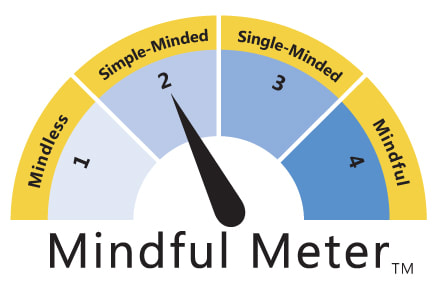
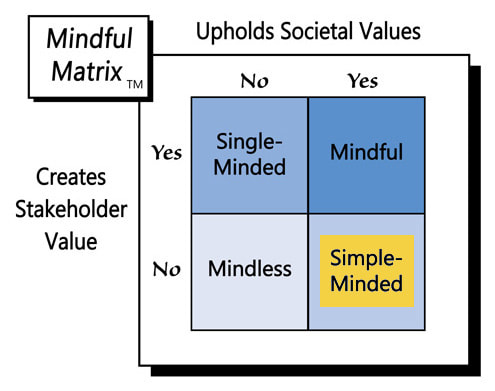
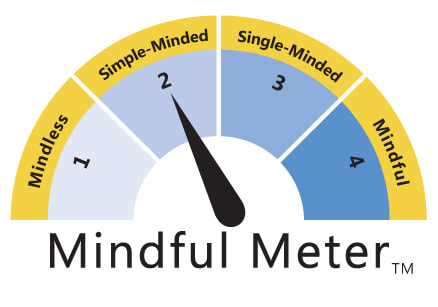
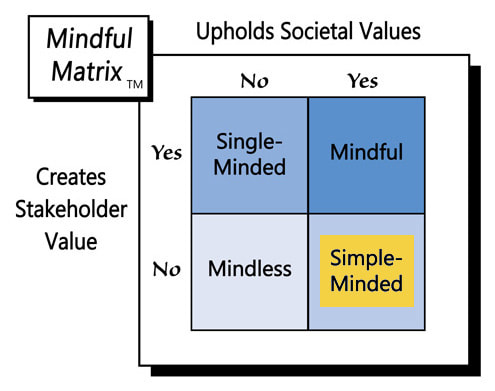
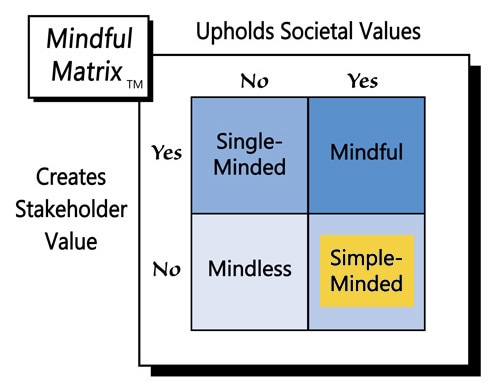
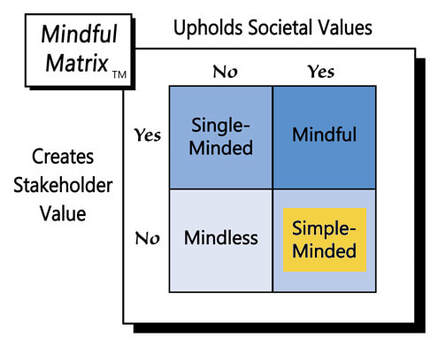
Apple’s unbundling was likely well-intended, but the reality of little environmental impact and negative consumer reaction, makes the strategy a case of “Simple-Minded Marketing.”
​
Picture
Subscribe to Mindful Matters blog.
Learn more about the Mindful Matrix.
Check out Mindful Marketing Ads
 and Vote your Mind!
1 Comment

Capri Sun Practices Child’s Play

9/5/2020

32 Comments

 
Picture

by David Hagenbuch, founder of Mindful Marketing & author of Honorable Influence

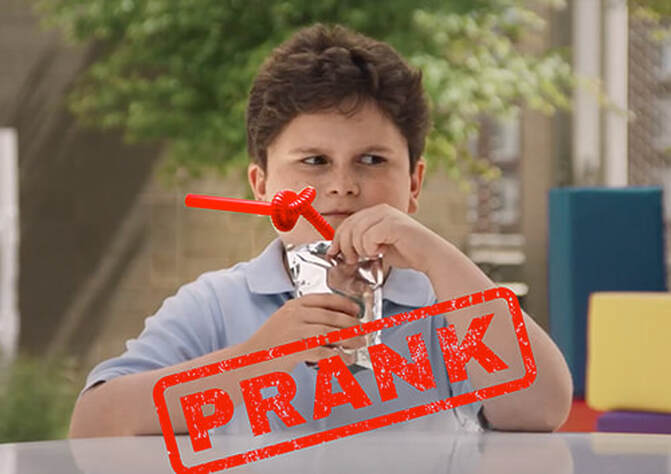
Have you ever been food pranked?  Someone gives you something to eat and “Yech!” it turns out to be much different than you expected—toothpaste inside an Oreo is a classic gag.  Kids love to prank each other, but should the maker of one of the world’s most popular kids’ drinks fool its biggest fans?  
 
Capri Sun, internationally-renowned producer of juice pouches, has decided to prank not just a few kids but a big portion of its target market by filling select silver packages with water.  The company filmed reactions of several pint-sized punk’d consumers, who were given unmarked pouches and asked to test “a new flavor” of juice.  It then edited the outtakes into a few video promotions.
 
Compared to most food pranks, which often elicit expressions of disgust, the responses to Capri Sun’s ruse were rather subdued.  Perplexed young taste testers made comments like, “It’s very plain,” “tastes a little bit bland,” and “it doesn’t have any flavor.” 
 
What made Carpi Sun’s prank poignant is that the company’s juice pouches are familiar to so many.  Since its introduction in Germany in 1969, the company has expanded distribution of its drinks to 119 countries.  According to its website, “ In 2014, our fans all over the world drank 6 billion pouches of Capri-Sun!” 
 
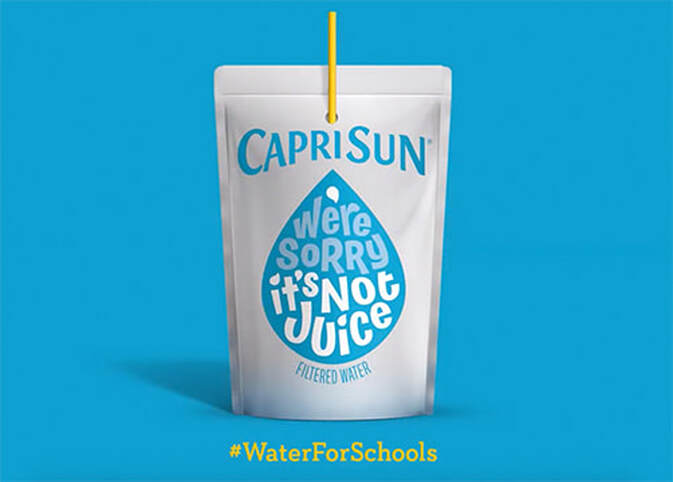
One significant serving of drink sales have come from the greater Chicago area, where Kraft Heinz acts as distributor and a newly-formed advertising firm, Mischief at No Fixed Address, produced the prank.  The campaign’s full scope includes distribution of five million filtered water pouches labeled, “We’re sorry it’s not juice,” to Chicagoland schools for free.  Also appearing prominently at the top of each package is “Capri Sun” in 70-point all capital letters.

Picture

Given the immense physical, mental, and financial stress the pandemic has placed on kids and their parents, it’s kind of Capri Sun to help schools, where fountains are shut down and children need other ways of getting water.  But, will the company’s corporate social responsibility really remedy that problem, and what’s likely to be the long-term impact on the brand?
 
According to the U.S. Census Bureau, the city of Chicago, not including the greater metropolitan area, has a population of 2.69 million, of which 21.2% are under the age of 18 and 6.5% are younger than five.  Those stats suggest that there are nearly 400k school-age children in Chicago (570,280 - 174,850 = 395,430).
 
Providing all of those children with a drink a day for a week would mean 1,977,150 water pouches.  A full month of water would entail a total of 7,908,600 (2.9 million more than Capri Sun’s pledge).  Keeping kids hydrated from September through December would require about 31,634,400 pouches.
 
Of course, no one company should be expected to satisfy so much demand for free.  Meeting massive public needs tends to take a team effort—collaboration among the public sector, for-profit companies, and other organizations.
 
Still, although it may seem cynical or even ungrateful, it’s reasonable to wonder whether the social impact of Capri Sun’s philanthropy is proportional to the promotional benefits the firm may receive:  Do a few drinks of water warrant the brand splash in front of hundreds of thousands of captive young consumers? 
 
When a company gives away something significant, it’s fair for its brand to benefit.  However, the amount of that benefit should be on par with the amount of social good done.  The rationale is analogous to a firm needing to ante up millions of dollars, not thousands, for naming rights to a building or stadium.
 
It’s hard to know Capri Sun’s costs in producing and distributing five million pouches of filtered water, but an estimate of .10 per packet would put the total cost at $500,000.  That’s a significant spend, but not that much for a firm with annual revenues of about a half billion dollars.  A few other issues further complicate the equation.
 
First, Capri Sun’s promotional benefits might be multiplied in that it seeks to put pouches with its name into the hands of the most impressionable of consumers—children.  Kids are understandably less discerning of promotional messages than are adults, which is why the Federal Trade Commission (FTC) prioritizes protecting children. 
 
Second, it seems that there should be some subtraction from the social good Capri Sun portends because of the message emblazoned on the foil pouches: “We’re sorry it’s not juice. [It’s just] Filtered Water.”
 
Is Capri Sun dissing in front of kids one of the most important substances for human existence?  Of course, the company is trying to be funny.  There is, however, the unhumorous reality that many children consume far too much sugar, much of it coming from sugary drinks. (1)  To its credit, Capri Sun Fruit Punch contains a relatively low 13 grams of sugar.  That’s not much compared to some drinks, but it is high compared to water.
 
Then, there’s an even more intriguing twist . . .
 
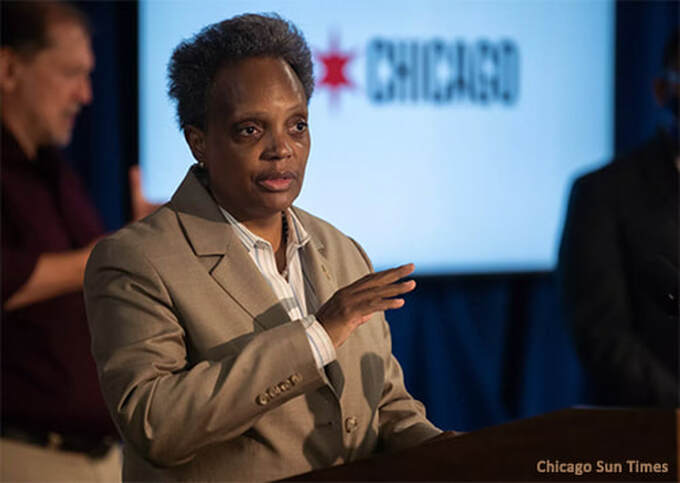
On August 5, the Chicago Sun Times announced major Lori Lightfoot’s decision to close Chicago Public Schools due to worsening coronavirus conditions—the city’s children will be learning online.  That news would seem to punch a hole in Capri Sun’s water pouch plans; however, over two weeks later, on August 21, an AdAge editor’s pick article described the campaign with no mention of the district’s pivot away from in-person education.
 
Picture

Maybe AdAge missed the mayor’s announcement, or perhaps Capri Sun has found another way to distribute the water without access to kids in classrooms.  Assuming the later, there’s still one more potentially serious flaw in Capri Sun’s ‘Got Juice?’ strategy:
 
By associating its iconic packaging with a less desirable drinking experience, the company risks leaving a bad taste in the mouth of young, impressionable consumers.
 
Can you imagine sipping a Starbuck’s coffee and discovering it was only warm water, or biting into a Hershey’s Bar and finding it was sans-sugar?  It’s doubtful either company would intentionally give even one consumer such an indelibly unpleasant experience, let alone broadcast the negative reaction for millions of others to see and learn from vicariously.
 
As suggested at the onset, a large part of Capri Sun’s food prank success was the fact that so many people, including children, recognize the straw-impaled drink packs and associate them with sweet refreshment and other pleasant sensations.  Those positive associations can be easily washed away, though, by even one unfavorable brand encounter that one experiences him/herself or sees others endure.
 
Of course, a natural retort is, “It was just a joke!”  That’s true, and the prank itself was kind of funny.  However, there are some things that food and drink companies just don’t joke about, a main one being the taste of their products.  Any such negative association is too risky.
 
It’s a little like when Watergate-embroiled president Richard Nixon infamously declared, “I am not a crook.”  Regrettably for him, many people forgot the words “I am not” and remembered Nixon and “crook.”  Any negative frame is inherently precarious, particularly when it involves food.
 
Advertising humor can be very effective, and who loves to laugh more than kids?  However, although Capri Sun’s water switcheroo may have been well-intended, the campaign threatens to spill much of the brand equity the drink maker has built over fifty-plus years, making “I’m sorry it’s not juice “Simple-Minded Marketing.”

Picture
Subscribe to Mindful Matters blog.
Learn more about the Mindful Matrix.
Check out Mindful Marketing Ads
 and Vote your Mind!
32 Comments

Does Using “Shuffle” Mean You’re Already ‘Stuffed Full’?

8/23/2020

29 Comments

 
Picture

by David Hagenbuch, founder of Mindful Marketing & author of Honorable Influence

“What do you want to watch?”
“I don’t know; what do you want to watch?”


That conversation must be happening in more homes than just mine, which probably inspired Netflix to introduce its new “Shuffle” feature, aimed at defeating this common viewing dilemma.  But, should people who have to ask their TVs to “play something” even be watching television?
 
This past July, the entertainment-streaming icon started testing a new “Shuffle Play” button, placing a familiar-looking shuffle icon on select users’ accounts.  Those who have the feature might find it below their user profile icon or on the left side of the home screen.  When Shuffle is selected, Netflix serves a chef’s choice of shows “based on viewing history, preferences, and playlists.” 
 
Problem solved:  No more aimless scrolling and probably fewer arguments began by “Anything but that.”  It’s nice to have choices.  It’s also nice when someone/thing helps identify them.
 
But, will Netflix’s Shuffle keep people too tied to their iPads and cemented to their sofas?  Does imploring one’s device to “play something . . . anything” signal digital drunkenness and suggest that the streaming service should stop serving? 
 
In the midst of the pandemic, Netflix has been a hero for the homebound, keeping many a step away from wit’s end with easy access to inexpensive entertainment and even educational content.  In the second quarter of 2020, the streaming service added an impressive 10 million new subscribers, bringing its worldwide total to about 193 million.
 
With so many customers already contently streaming, why does Netflix even need to add a new feature?  Well, like any successful organization, it wants to keep its value proposition fresh and exciting.  As a Netflix spokesperson says, “We’re always looking for better ways to connect members with shows and films that they will love.”
 
The company also needs to keep pace with competitors’ offerings, like HBO Max’s recommendation engine and NBCUniversal’s random play on Peacock.  Likewise, Comcast’s Xfinity has integrated creative voice commands, such as “Surprise Me” and “Happy Stuff” in order to serve up spontaneous and hopefully stimulating shows.
 
Picture

In varied marketing roles, I’ve come across a couple of closely related psychological concepts that help describe the consumer itch Netflix and its competitors seem to be trying to scratch:
  • Satiation effect: people eventually grow tired of things they initially liked.
  • Variety-seeking behavior: enjoyment often increases with different experiences.
 
So, Shuffle might pull Netflix users out of their streaming ruts by providing them with an endless array of custom-curated and personally-satisfying program choices.
 
However, whether it’s taking excessive vitamin C or bingeing The Office, too much of even a good thing is too much.  At some point, people need to turn off their TVs, put down their iPads, and move on to other things.  The question, then, becomes:  Does a shuffle feature make streaming too tempting and difficult to deny?
 
Pulling oneself away from an interesting program can be hard, which I experienced firsthand earlier today.  In order to do some “research” for this piece, I turned on our TV to check out Xfinity’s voice commands.  The channel happened to be on a high-diving competition, held on a beautiful stone bridge, over a river somewhere in Europe.  I sat memorized for at least 10 minutes before returning to my senses and remembering why I was sitting there.   
 
The bottom-line, though, is that I was able to break free from the screen without any extraordinary effort.  Most people can muster at least the same amount of resolve, even when specially-selected programs are shuffled at them.
 
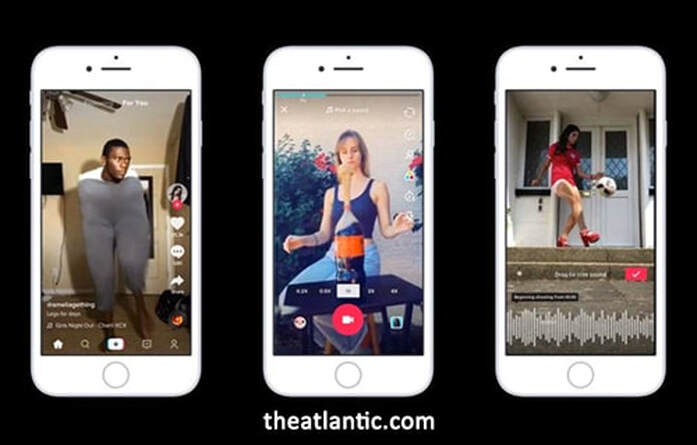
Speaking of resolve, I recently wrote an article that asked whether TikTok is addictive.  The conclusion (spoiler alert) was “No.”  When compared to commonly accepted addictions like alcohol and gambling, the app is not addictive in any scientific sense. 
 
Picture
 
TikTok’s screen-swiping and Netflix’s Shuffle are similar in that both deliver virtually infinite, individualized video content.  However, 15-second smartphone clips from ordinary people are much different than 2.5-hour professional-produced films.  Is one spontaneous selection harder to resist than the other?
 
There should be a study, but it seems that TikTok's bite-sized content could be harder to forgo—like eating potato chips versus stuffed baked potatoes.  Both are good, but eating an additional stuffed baked potato is a big commitment, whereas popping one more potato chip, then another, is easy to start and sustain.  So, if longer programs have even less allure for consuming ‘one more,’ it seems that neither Netflix nor TikTok is truly addictive.
 
Having cleared the ethical hurdle, there’s still one more important consideration—effectiveness:  Will people really want to use Netflix’s Shuffle?  So far, reviews of the feature appear tepid; for instance, some have tweeted:
  • “Interesting new feature @netflix ... but what kind of insane person just says, “yolo, let’s spin the Netflix wheel of fortune”? (@TurnerLevison)
  • “they been testing this for months on mine and it’s trash, they put two things on your recently watched and if u shuffle again it’s just Netflix Originals.” (@BlondDaya)
 
Unfortunately, Netflix didn’t include me in its test market, so I haven’t been able to try the feature, but I have a hard time seeing many people using it.  First, Netflix already curates at least somewhat customized selections that users can see at a glance on their home screens.  Second, it may be frustrating or even mildly offensive to receive specific recommendations that make one wonder, “Why are they suggesting that for me?!”
 
To that point, after I stopped watching high-diving, I asked Xfinity to “Surprise Me.”  It suggested Hallmark Channel’s “Tulips in Spring.”  I had no problem declining that recommendation, which must have been meant for someone else in this house.
 
Given TikTok’s ‘swiping’ success, it wasn’t a bad idea for Netflix to test a ‘surprise me’ feature for its streaming service.  It seems unlikely, though, that the same consumption behavior will transfer to considerably longer program content, which makes Shuffle Play a fitting selection for “Simple-Minded Marketing.” 


Picture
Subscribe to Mindful Matters blog.
Learn more about the Mindful Matrix.
Check out Mindful Marketing Ads
 and Vote your Mind!
29 Comments

The Impossible 'to Stomach' Whopper

2/22/2020

27 Comments

 
Picture

by David Hagenbuch, founder of Mindful Marketing & author of Honorable Influence

Green bumps, black specks, white fuzz.  You saw the telltale signs when a piece of once fresh fruit or an edible vegetable fell to the back of a refrigerator drawer where it laid low for a few months.  It took a deep breath and all the courage you could muster to pick up the nauseating produce and pitch it into the trash.  So, why would one of the world’s leading fast food restaurants want consumers to see its most iconic menu item in a similarly sickening state?
 
Few food companies have the mettle to play with such fire, but one known for flame-broiling and often flagrant marketing does:  Burger King.  The fast food icon recently launched a “global, integrated advertising campaign showing its iconic Whopper® sandwich covered in mold.”
 
A video from the company begins with the staging of a very attractive Whopper.  Then, against a music bed of “What a difference a day makes,” filming turns to a rapid time lapse and the burger ages abhorrently before our eyes.
 
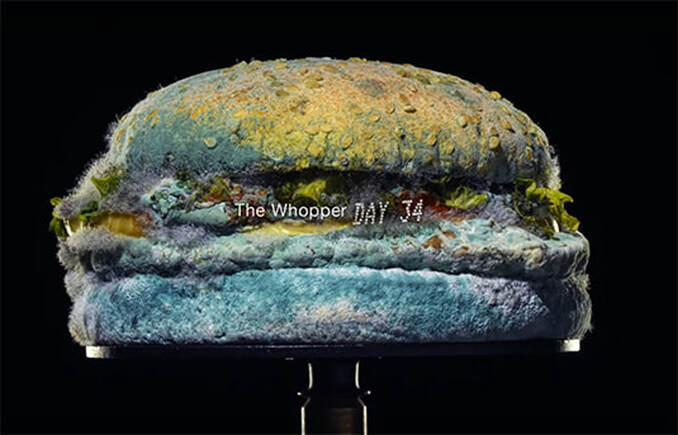
First, the lettuce starts to wither.  Then the bun sags and mayonnaise melts.  Before we can look away, white fuzz flows over the beef patty and a green/blue ‘foam’ appears, making a cross-section closeup look like a storm at sea.  Thankfully, the camera pans out, but only to show a bun enveloped in mold with some black substance oozing from the burger’s epicenter.
 
The visual agony eventually ends as a text overlay briefly appears: “The Whopper DAY 34.”  The grotesque burger vanishes into an all-black screen that frames the tagline “THE BEAUTY OF NO ARTIFICIAL PRESERVATIVES,” followed by an all-white Burger King logo.
 

Picture

Most organizations agonize over advertisements, trying to ensure that their products are presented in the most positive light.  Those in food industries seem especially attuned to their ads’ optical appeal, and for good reason: Studies have found that visual stimuli such as color, evenness, and shape “exert cognitive top-down influences that can and sometimes do alter assessments of taste and flavor.”  In other words, there is truth to the old adage: ‘We eat with our eyes.’

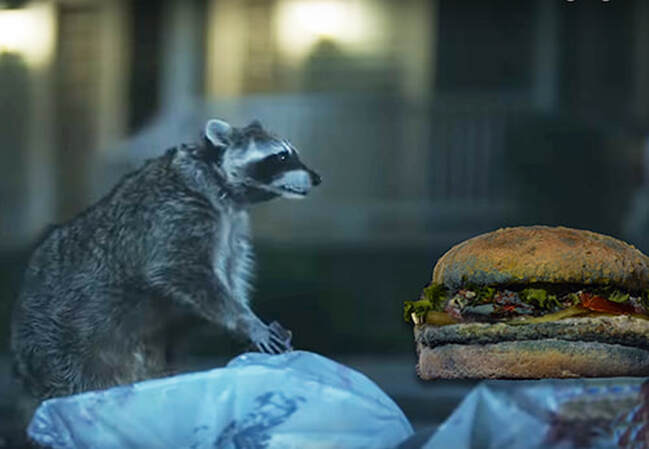
So, why would Burger King flame-broil conventional wisdom by plating a burger that could make the Geico racoons retch?
 
The main reason stems from the spot’s tagline, “The beauty of no artificial preservatives.”  The company wants consumers to realize that it has made a clean-break from past practice and it no longer uses nonorganic life-extenders, at least not in “most European countries and select markets in the United States.”  Furthermore, according to Christopher Finazzo, Burger King’s Americas President:
 
“The Burger King® brand is currently rolling out the Whopper® sandwich with no preservatives, colors, or flavors from artificial sources in the U.S. The product is already available in more than 400 restaurants in the country and will reach all restaurants throughout the year.”
 
Unfortunately, in terms of touting “real food,” Burger is painfully late to the game.  Chipotle, Panera, and a crowd of fast-casual restaurants have been making that claim for a few decades.  Even many processed food manufacturers, like General Mills, have kept better pace with consumer desires for healthier food.  The company has already removed artificial ingredients from most of its cereals.
 
So, maybe Burger King needed to do something shocking to grab the attention of a populace likely to overlook or be unimpressed by what is an increasingly common change.  The promotion certainly has gained the company free media exposure and gotten marketers like me talking about it.
 
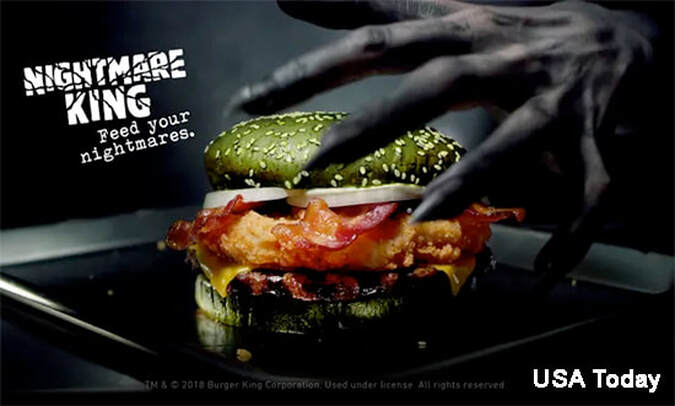
A similar tact also must have worked, at least somewhat, when the firm unearthed its Halloween-inspired “Nightmare King” in the fall of 2018.  Although it never seemed that the green-bun burger was a big seller, it did grab headlines and likely helped keep the restaurant top-of-mind among those who frequent fast food.
 

Picture

It’s also possible that the Moldy Whopper promo resonates with Gen Zs and Millennials, who are used to unconventional advertising and who demand transparency from the brands they buy.  These age cohorts might uniquely appreciate the combination of candor and irreverence.
 
Still, the avant-garde ad campaign takes an extraordinary and nearly unprecedented risk by essentially forgoing the Maslow-level-one appeal of appetizing food.  Maybe having “no artificial preservatives” hits a higher tier of the hierarchy, such as safety or self-esteem, but according to the theory, people’s desires will never ascend to those upper levels if their hunger is unsatisfied.
 
Burger King apparently is banking on viewers remembering the pristine burger that appears at the beginning of the ad for a few seconds, rather than the progressively repulsive Whopper that fills the other forty-five seconds.  “Negativity bias,” however, upends that hope:  Our brains are “simply built with a greater sensitivity to unpleasant news.”  Said another way, there are some things we simply can’t ‘unsee’ and a mold-covered Whopper is probably one of them.
 
Although few organizations are so daring as to cast their products in a negative light, many do fall into the same general AIDA-defying trap:  In an all-out effort to grab attention and retain interest, they sacrifice desire and action.  As evidence, recall all the commercials you can from the last Super Bowl, then try to remember the companies responsible for each of them.
 
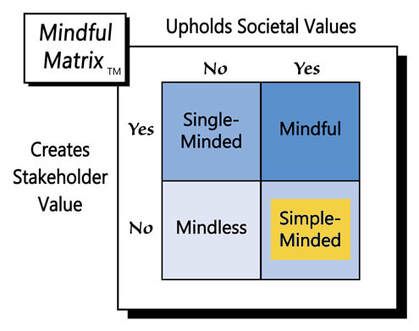
Like many other restaurants, Burger King is in an existential battle with all kinds of new competitors, especially those in the fast-casual space.  It’s great that the fast food icon has taken steps to make some of its menu items more user-friendly, but those health benefits will never accrue to people who are put off by what they see in the company’s stomach-turning promotion.  The new burger may be better for you, but etching the image of a moldy Whopper onto people's minds must be “Simple-Minded Marketing.”


Picture
Subscribe to Mindful Matters blog.
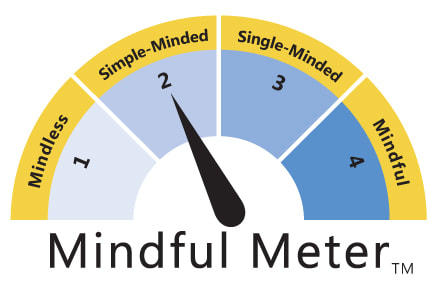
Learn more about the Mindful Matrix and Mindful Meter.
Check out Mindful Marketing Ads
 and Vote your Mind!
27 Comments

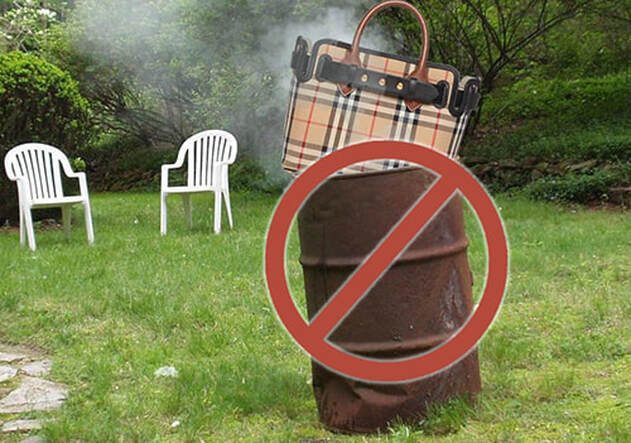
Burberry after its Burning Ban

12/28/2019

15 Comments

 
Picture

by David Hagenbuch, founder of Mindful Marketing & author of Honorable Influence

Did you give or receive clothing this holiday season?  You may not know that if that sweater, jacket, or hat hadn’t been purchased, it might have been burned.  In an age of increased environmental consciousness and frequent corporate cutbacks how can companies tolerate such waste?  It has to do with building brands.
 
In 2017, the upscale British fashion label Burberry destroyed over $38 million worth of its own clothing, perfume, and accessories.   BBC News says that over a five-year period, the brand scrapped products worth a total of about $121 million.  Fortunately, Burberry announced last year that it would stop the ‘self-destructive’ behavior; although, it hasn’t said how it will handle the excess product.  Unfortunately, Burberry isn’t the only brand known for trashing its own inventory.
 
According to Vox, other participants in the practice include luxury labels like Louis Vuitton, Michael Kors, and Cartier.  However, even basic brands such as Eddie Bauer, Nike, and H & M, have been cited for incinerating unsold merchandise.
 
Why would any company destroy products it spent valuable time and resources making?  Motives may vary for such a seemingly inexplicable practice, , but the main reason seems to be that high-end fashion brands, especially, need to preserve perceptions of exclusivity.

Some manufacturers, e.g., makers of snack foods and soft drinks, would like as much of their products sold as widely as possible.  Certain other brands, however, seek to create an air of exclusivity in one of three main ways, either by not making the products available: 1) all the time, or 2) everywhere, or 3) for everyone.
 
For instance, although McDonald’s Shamrock Shake is available all over at a price that most people can afford, the ice cream is only sold for a limited number of weeks each year.  Notwithstanding ever-increasing ticket prices, Disney positions its theme parks as entertainment for a very wide range of people, year-round, but it maintains ‘the magic’ by limiting the number of locations to just a few around the entire world. 
 
Upscale fashion brands like Burberry, in contrast, place no real time restrictions on purchase of their products.  Likewise, although they’re not as ubiquitous as MacDonald’s restaurants, these fashion retailers tend to have a decent number of brick-and-mortar locations.  Burberry has about 50 stores in the continental U.S. in addition to its easily-available online storefront.
 
The main difference is that Burberry and similar luxury fashion brands aim for exclusivity by positioning their lines as prestige products sold at premium prices.  For instance, a search for “all bags” on Burberry’s website returns a low price of $490 for a “Grainy Leather Card Case with Detachable Strap” to a high price of $2,750 for a “Medium Quilted Monogram Lambskin TB Bag.”
 
Of course, price alone excludes most people, who can’t afford to spend hundreds or thousands of dollars on a handbag, from buying Burberry; however, other positioning of the products also adds to their exclusive appeal: They’re not the purses we see shoppers carrying into the average supermarket.
 
‘Mousingover’ specific products on its website, reveals images of the kinds of people Burberry envisions owning its bags: ultra- stylish, impeccably-attired, young, affluent, runway-model types.  That description probably doesn’t apply to most people reading this blog, nor does it apply to the person writing it, but Burberry doesn’t mind.


Picture
 
While MacDonald’s considers it a win if hundreds of millions of people eat its hamburgers, and Disney is delighted to have an even wider variety of people visit its theme parks, Burberry and other luxury labels don’t covet consumption of their products by the masses.  Their brands’ allure is based largely on limiting availability to the relatively few people who can afford their products and who live the more lavish lifestyles associated with their use.
 
If somehow ‘average people’ began buying Burberry’s bags, the brand’s true target market would be turned off.  Though its loyal customers may not articulate it, one reason they like Burberry is because very few people own the brand.  Burberry banks on feelings of exclusivity, allowing its users to assert, "I own something that not everyone else has."
 
That brings us back to the issue of over-supply and what companies like Burberry should do when they’ve made too many handbags, hats, etc.  In the past, Burberry has justified burning excess inventory, saying that it captured the energy from the burning, making the annihilation environmentally-friendly.
 
Unfortunately, though, “the energy that is recouped from burning clothing doesn’t come anywhere near the energy that was used to create the garment.”  In addition, burning garments that contain polyester, which comprises about 60 percent of the fiber market, means the release into the air of harmful CO2, as well as chemicals often present in clothes.
 
Other ways firms have attempted to destroy unwanted products have included shredding and landfilling.  Of course, these methods carry their own negative environmental impacts and fail to qualify as sustainable solutions.
 
Some may wonder why excess clothing can’t be recycled or donated.  Mixed fiber cloth, from which many woven clothes are now made, makes recycling especially challenging, as do buttons and zippers, whose removal is very labor-intensive.
 
Others may ask “Why can’t surplus clothing simply be donated or sold at a discount?”  For many companies, such product disposition ‘makes cents’ (pun intended), but not for high-end fashion labels.  These brands can afford to take a hit on their enormous markups, but as mentioned above, they can’t accept dilution of their brands’ images, which occurs if their products fall into the hands of the less-than-modish masses.
 
So, what can fix this problem that pits environmental stewardship against brand equity?  Unfortunately, there doesn’t appear to be a clear solution.  In a 2018 interview with Vox, Timo Rissanen, an associate dean at Parsons School of Design and a professor of fashion design and sustainability at the school’s Tishman Environment and Design Center, provided a thorough analysis of firms’ destruction of excess product, but in the end, the best solutions he offered were for consumers to avoid impulse-buying and to instead purchase secondhand products.
 
Those are valid recommendations for you and me, but unfortunately they don’t really address prevention of the problem, i.e., what companies can and should do.  I’m no fashion expert, and the following thoughts are admittedly undeveloped, but I’ll offer two possible ways to decrease the production of excess goods:
  1. Implement quick response processes:  Fashion lead-times are often three months or more, making it challenging to match supply and demand.  Spanish retailer Zara, however, has developed ultra-responsive production processes that allow it to move from product conception to consumer within a few weeks.  If more brands would ‘follow suit’ (pun again intended), it might help to close the gap between what’s made and what consumers want to buy.
  2. Use artificial intelligence:  Firms have employed data-based demand forecasting for decades, but even more accurate prediction is now possible through artificial intelligence in which machines learn from past experience and use algorithms to very accurately estimate future consumption.  Such technology holds great promise for synchronizing supply and demand. 
 
Burberry’s decision of over a year ago to stop burning its unsold clothes was certainly laudable and might be considered Mindful Marketing if the company were to implement some of the strategies mentioned above or take other consequential action.  However, in the absence of a clearly conceived and communicated plan for managing excess inventory, Burberry’s announcement now seems like “Simple-Minded Marketing.”


Picture
Subscribe to Mindful Matters blog.
Learn more about the Mindful Matrix and Mindful Meter.
Check out Mindful Marketing Ads
 and Vote your Mind!
15 Comments

Pizza Protection

6/29/2019

7 Comments

 
Picture

by David Hagenbuch, founder of Mindful Marketing & author of Honorable Influence

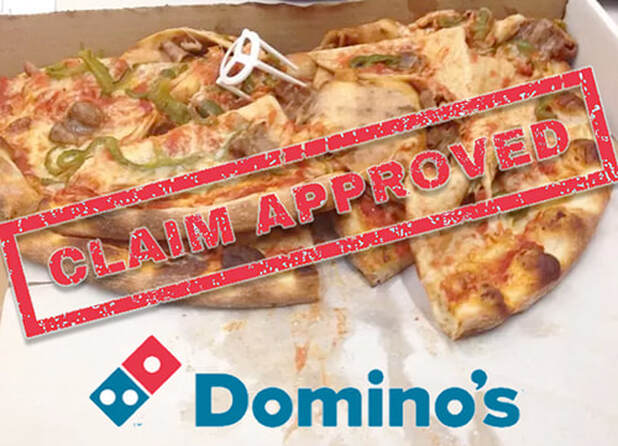
Unfortunately, there are accidents in life.  Cars collide.  Homes flood.  People break bones.  Insurance lessens the impact of such events, but what about damage to pizza?  Well, Domino’s now offers protection for even that unexpected occurrence.
 
The nation’s pizza deliver leader is very good at getting its products from its stores to our doors, but it seems less confident about our ability to do the same.  For that reason, the company recently introduced “carryout insurance.”
 
Domino’s now promises: “If damage occurs to your carryout order after you leave the store, just bring it back and we’ll remake it for free.”  The firm lists a few reasonable provisos:  The order must be uneaten, with nothing missing, in its original packaging, and accompanied by a receipt. The firm also offers examples of accidents that qualify for a claim like slipping and falling, "my kid sat on it," and "a stranger sneezed on it."  In other words, it seems like the company will cover just about any claim consumers make.
 
How much does the pizza insurance cost?  According to Domino’s it’s “free for all customers.”  Some may be thinking, “But, there are no free [pizza] lunches,”—customers must be paying for the insurance indirectly.  That may be true; however, Domino’s doesn’t appear to have increased its prices.  The company needs to be careful that the costs of its pies stay in-line with those of Papa John’s and Pizza Hut in the highly competitive pizza market.
 
It’s also likely that pizza insurance claims haven’t taken a significant bite out of the firm’s bottom-line, which raises a key question, “Do people really need pizza insurance?”
 
Let’s say that someone spends $30 on a pizza pickup order, then drops it while taking it out of their car.  The accident may ruin their day, but it probably wouldn’t pose any significant financial hardship.  People who can afford to spend $30 on takeout food generally can afford to lose $30 worth of takeout food.
 
Contrast that loss to a serious car accident, a home fire, or the death of a family’s primary breadwinner.  Those events could prove financially devastating, if not insured.
 
Such scenarios remind me of advice my dad once gave me: Insure the big things that could break you; don’t bother to insure littler things like electronics and lawn mowers.  Even though they may be somewhat costly to replace, it’s worth the risk because replacement wouldn’t be financial catastrophic.  I also liked the line my Dad said to salespeople who tried to pressure him to insure small items: “All your talk of insurance is making me wonder about the quality of this product and whether I should be buying it.”
 
My father’s insurance advice is similar to that of Todd Erkis, a professor of finance and risk management at Saint Joseph’s University, who says that “Insurance is key to protecting yourself against financial ruin.”  Consistent with that view, Erkis suggests that new college graduates should buy just four types of insurance in order to hedge against possible financial hardship: health, long-term disability, renter’s, and car insurance.
 
Writing for Mint Life, Nicholas Pell adds just two other types of insurance to buy: home owner’s, which is analogous to renter’s, and life insurance.  New college graduates often don’t have dependents and, therefore, don’t really need life insurance, but those who do should use insurance to protect their survivors from poverty.
 
All this to say, people don’t need pizza insurance, even if it’s “free.”  So, what is Domino’s doing?  In the very crowded market for restaurant pizza, Domino’s is probably trying to gain a little bit of perceptual separation from its closest competitors.  Papa John’s and Pizza Hut don’t offer carryout insurance, which makes Domino’s distinct.
 
However, while Domino’s may have created a difference, the insurance doesn't deliver any real competitive advantage.  Again, people don’t need the insurance, so it probably won’t sway many purchase decisions.  Furthermore, who ever thinks they might drop their pizzas?  In sum, the insurance just doesn’t offer any measurable improvement to Domino ’s value proposition.
 
Still, Domino’s has savvy marketers.  The company wouldn’t be so successful if it didn’t.  The firm’s marketing team probably intends carryout insurance as more of a promotional strategy than a product enhancement.  In other words, it doesn’t matter if the insurance causes people to buy more pizzas, as long as publicity and word-of-mouth about the unusual offering helps keep Domino’s top-of-mind.  That added exposure, in turn, should lead to more pizza purchases.
 
But would the firm really go to such lengths just for promotion?  It's done so before.
 
Prior to carryout insurance, the company’s “Paving for Pizza” campaign represented a similar strategy.  Domino’s promised to patch potholes around the country so the road hazards wouldn’t wreck pizza deliveries.  Of course, a company as far-flung as Domino’s could never repair enough roads to actually make a significant delivery difference in most of its locations.  However, the notion of a pizza company patching roads was so novel it captured press attention, as well as created some community goodwill.  In short, the program seemed to be a very effective, albeit unconventional, means of pizza promotion.
 
Will carryout insurance, work as well for Domino’s?  I doubt it.  Despite the fact that I’m writing about it now and you’re reading about it, I don’t believe the company’s newest ploy will capture the interest or hearts of people like the paving program did.
 
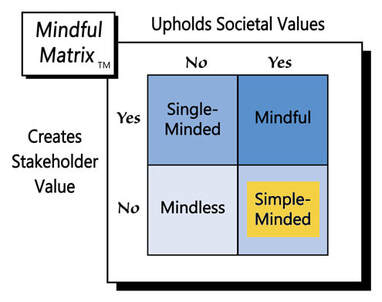
There’s nothing wrong with Domino’s promising extra protection for pizzas; in fact, it’s a nice extra benefit, if anyone ever needs it.  However, that lack of real consumer value, teamed with minimal promotional impact, places carryout insurance in the box of “Simple-Minded Marketing.”


Picture
Subscribe to Mindful Matters blog.
Learn more about the Mindful Matrix and Mindful Meter.
Check out Mindful Marketing Ads
 and Vote your Mind!
7 Comments

Just Divided over Nike's New Ad

9/9/2018

43 Comments

 
Picture

by David Hagenbuch, founder of Mindful Marketing & author of Honorable Influence

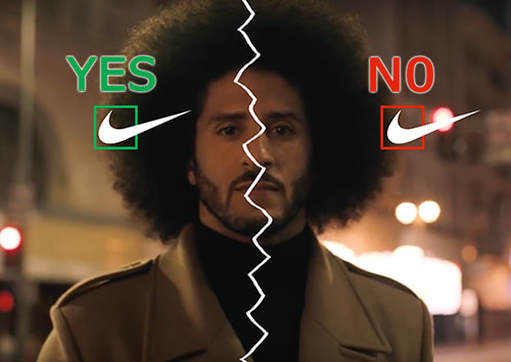
Nike just aired a new commercial that has quickly become entangled in controversy.  The two-minute “Dream Crazy” ad is a well-produced spot that features footage of inspiring amateur athletes, as well as a couple of the brand’s superstar spokespeople.  Surprisingly, the source of conflict is the ad’s narrator, who people seem either to admire or revile, which makes marketing analysts ask, “What did Nike just do?”
 
Marking the 30th anniversary of the company’s iconic “Just Do It” campaign, Nike’s new ad uses narration from NFL-quarterback-turned-activist Colin Kaepernick, who also appears briefly in the spot to urge viewers to, among other things, “Believe in something, even if it means sacrificing everything.”
 
If you’re not familiar with Kaepernick, he was one of the first professional football players to choose to kneel during the national anthem as a sign of protest against what many believe has been growing racial injustice in America.  The last game he played was in January of 2017, but Kaepernick has since become the face and voice of a movement that extends well beyond professional sports.

Of course, not everyone has appreciated Kaepernick’s activism.  Some resent that his example has encouraged others to kneel during the national anthem, which they believe is either unfounded protest or a misplaced act that disrespects the flag and demonstrates a lack of patriotism.  Anthem protests have since become a point of contention for many NFL fans, causing some to swear off the league entirely.
 
In short, whether right or wrong, Nike’s use of Kaepernick has struck a raw nerve in a nation deeply divided.
 
Before going further, I need to say that I really didn’t want to write about this ad.  Maybe it’s my Swiss heritage that makes me lean toward neutrality and dislike discord, especially political.  It’s not fun for me to tackle an ad that arouses such strong social division.  However, after much debate and several stops and starts, I still felt compelled to address the ad and so decided to “just do it.”
 
The first step in this Mindful Marketing analysis is ethics: Does Nike’s ad uphold societal values?  Given the sometimes-ambiguous nature of “societal values,” that question is inherently hard to answer, but the circumstances surrounding the Nike commercial make this inquiry especially difficult.
 
The ad’s ‘dream big’ theme is positive and hopeful and probably not something with which many people would take issue.  Instead, the debate seems to  fall squarely on the company’s use of Kaepernick and whether what he represents is decent, fair, honest, respectful, and responsible (the five core values Mindful Marketing seeks to uphold).
 
Unfortunately, for those like me trying to make a moral judgment, both sides can make a compelling case based on the same principles.  People who oppose Kaepernick can argue, for instance, that his activism unfairly characterizes police officers who are honest and considerate of others.  His opponents also may contend that the anthem protests dishonor members of the armed forces who risk their lives to protect the freedoms the flag represents.
 
On the other hand, those who support Kaepernick can claim that the social justice movement he signifies is fundamentally about showing everyone respect.  Similarly, this side shares that its aim is to ensure the fair treatment of all people.
 
Admittedly, the issues are more complicated than what I am presenting here; however, the point is that both sides have strong countervailing points that are difficult to adjudicate.  For sake of argument, therefore, let’s give the ad the benefit of the doubt and assume that it does support societal values.
 
The second question, then, considers the ad’s effectiveness, which is also very difficult to discern.  After the ad was released online this past Monday, several of the first news reports were of anger.  Some consumers vowed to boycott Nike products, while others took more immediate and drastic action by burning their Nike shoes and socks.
 
Newer reports, however, have been that after the ad was released, Nike’s sales “grew 31% from the Sunday of Labor Day weekend through Tuesday, as compared with a 17% gain recorded for the same period of 2017, according to San Francisco–based Edison Trends.”
 
On the other hand, Nike’s stock (NKE), which had closed at $82.18 a share on Friday, August 31, closed at $80.30 a share this past Friday, September 7.
 
So, does Nike really know what it’s doing with the Kaepernick ad?  A recent Washington Post article makes a convincing case that Nike does.  Columnist Sally Jenkins maintains that the commercial positions Nike well in national and global contexts that are increasingly multicultural.  She also argues that young shoppers, who are especially important to sneaker makers, want to buy products from companies that support social causes.
 
Public opinion is not so clear.  This past Friday morning, September 7, Apex Marketing Group reported that the ad had produced $220 million in publicity for Nike: $69 million positive, $67 million negative, and $83 million neutral.  Apex also noted that the percentage of positive publicity had fallen by 9 percentage points from Thursday to Friday.
 
Some may argue that any publicity is good publicity.  That assertion, however, seems to be a myth, especially after considering organizational examples like Volkswagen and individual ones like Harvey Weinstein.
 
Public favor for the ad also might wane as people take more time to process the financial context surrounding Nike’s and Kaepernick’s participation in the promotion.  For a few years, Kaepernick was a very good NFL quarterback, who even played in a Super Bowl.  Before he began his anthem protest, he had been demoted to backup status.
 
Kaepernick made a total of $43 million as an NFL quarterback, of which he has donated over $1 million to a variety of social justice causes.  It’s difficult to know how much, if any, money he has made as an activist, but sports agents estimate that his new Nike endorsement could be worth “millions of dollars per year.”
 
For these reasons, some have taken issue with the ad’s suggestion that Kaepernick ‘sacrificed everything,’ especially when compared to individuals who have given their lives in service to their country.
 
Kaepernick may not be serving as a Nike spokesman for the money, but it’s hard to imagine that Nike’s choice of Kaepernick was without consideration of its bottom-line, given that it’s a for-profit company that must answer to shareholders in an increasingly competitive marketplace.  Not surprising, some have accused the company of “commercializing activism,” i.e., profiting from a social cause.
 
Another concern for Nike should be its relationship with the NFL.  This past March, the NFL announced that Nike would continue to be its official supplier of uniforms and sideline gear through 2028.  It’s not known how much these rights cost Nike, but it’s likely the company paid more than the $1.1 billion it reportedly invested for similar exclusivity in 2012.
 
The anthem protests that Kaepernick initiated continue to be a thorn in the side of the NFL.  What’s more, Kaepernick has sued the NFL, claiming that the league has colluded to keep him off the field since he last played.  All this to say, there are probably few people the NFL would rather not see exalted in a commercial than Kaepernick.  Talk about biting the hand that feeds you.
 
Nevertheless, the league has tried to put on a good face about the ad.  NFL executive vice president of communications and public affairs Jocelyn Moore offered the following:
 
“The National Football League believes in dialogue, understanding and unity. We embrace the role and responsibility of everyone involved with this game to promote meaningful, positive change in our communities.”  “The social justice issues that Colin and other professional athletes have raised deserve our attention and action.”
 
Despite Moore’s conciliatory tone, one has to imagine that the ad places a significant strain on the relationship between the league and Nike that will only be exacerbated if there are further defections of NFL fans.  Although her response makes it seem unlikely that the NFL is considering the commercial to be any kind of contractual breach, the ad will at a minimum cause the league to think more carefully about Nike and future sponsorships.   
 
Like the ethical analysis, assessment of the commercial’s likely effectiveness has also been complicated.  In the short-term,  people may continue to applaud Nike for its social conscience.  The ad and Kaepernick’s lawsuit, however, must be straining its relationship with the NFL.
 
Moreover, the ad’s theme of “sacrificing everything,” coming from a multimillionaire and a Fortune 100 company, will increasingly ring hollow with people, especially those working two jobs to make ends meet, or mourning loved ones who truly sacrificed everything in service to their country or community. 
 
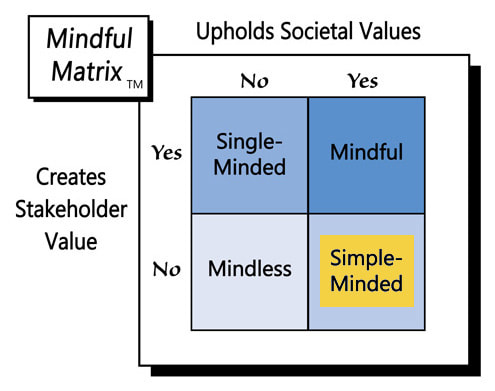
Credible cases can be made for placing Nike’s Kaepernick commercial in any one of the four Mindful Marketing quadrants, particularly given the ad’s multifaceted social implications.  The ad’s effectiveness is also debatable.  However, given the strained relationship with the NFL and a likely increase in public disaffect, there’s good reason for calling the commercial “Simple-Minded Marketing.”


Picture
Picture
Subscribe to Mindful Matters blog.
Learn more about the Mindful Matrix and Mindful Meter.
Check out Mindful Marketing Ads
 and Vote your Mind!
43 Comments

Can Happy Be Healthy?

3/19/2018

6 Comments

 
Picture

by David Hagenbuch, founder of Mindful Marketing & author of Honorable Influence

It can be hard to remember what we ate for lunch yesterday, let alone when we were kids, but many of us can recall the unique childhood experience of a Happy Meal.  Children may like McDonald’s food, but for most it’s all about the toy tucked inside the red and yellow box.  So, why does the fast food icon want to tinker with a nearly 40-year-old recipe that’s been as golden as its arches?
 
Happy Meals were the brainchild of McDonald’s St. Louis regional advertising manager Dick Brams.  When the kid-focused combo first hit the market in 1979, each box contained a burger, fries, cookies, soda, and a toy like a “McWrist” wallet or a “McDoodler” stencil.  While the toys regularly varied, the food remained pretty much fixed until 1983, when chicken nuggets became an entrée option.
 
One of the biggest Happy Meal happenings took place in 1987, when McDonald’s began partnering with Disney.  Well over a hundred different Disney characters have since appeared inside the boxes, including Mickey, Aladdin, and Nemo.  Moreover, this commercial collaboration opened the floodgates for all manner of other cobranding with the likes of Legos, Transformers, Hello Kitty, and one of the most popular product premiums ever: Ty Teenie Beanie Babies.  The small, squishy creatures first appeared in 1997 and were reprised in 2009 for the Happy Meal’s 25th anniversary.
 
Fast-forward to the present and perhaps the biggest Happy Meal change ever: McDonald’s has decided to remove cheeseburgers from the Happy Meal menu.  Why would the company with a name that’s synonymous with burgers and renown for “billions and billions served” make a move analogous to Dunkin’ ditching donuts or Little Caesar’s shelving pizza?  It’s all about trying to be healthier.
 
Most of us recognize that Happy Meals aren’t the most nutrition things kids could be eating.  To put McDonald’s dilemma into perspective, a cheeseburger Happy Meal with small fries and a 1% chocolate milk has 700 calories, 27 g of fat, and 1,060 mg of sodium.  Those are high levels for young children who are the primary consumers of happy meals and who need as few as 1,000 calories per day.
 
So, as the biggest restaurant chain in the U.S. by revenue (over $36 billion), McDonald’s is a natural target for concerns about childhood obesity, which has become a national epidemic.  The Obesity Action Coalition states: “Pediatric overweight and obesity now affects more than 30 percent of children, making it the most common chronic disease of childhood.”  Furthermore, the Centers for Disease Control and Prevention reports that fast food consumption “has been linked to weight gain in adults” and is “associated with higher caloric intake and poorer diet quality in children.”
 
Not surprising, this isn’t the first time McDonald’s has moved toward healthier Happy Meal options.  In the early 2000s, the company introduced juice boxes, 1% milk, and apples with low-fat caramel dip.  It reduced the size of Happy Meal fries to 1.1 ounces in 2011 and announced plans to limit added sodium and sugar in certain other items.  In 2013, McDonald’s promised to more seriously promote sides of fruits and vegetables and to change the default beverage option from soda.  The company also introduced a new brand of lower-sugar orange juice last fall.
 
As part of the latest round of Happy Meal makeovers, McDonald’s plans to serve a smaller size of fries with the six-piece Chicken McNuggets, make bottled water a featured beverage option, and reduce the added-sugar in its chocolate milk.  Cheeseburgers will no longer be among listed Happy Meal options; however, customers will still be able to receive them upon request.
 
All of these changes are part of the company’s longer-term goal, which is to have at least half of all Happy Meals come in under 600 calories, with less than 10% of those calories from saturated fat or added sugar, and with under 650 mg of sodium.
 
Some people with unique insight into health-related matters believe McDonald’s plan is a good one:
 
“We think McDonald’s is raising the bar,” said Howell Wechsler, the chief executive of Alliance for a Healthier Generation, which advised the chain on the menu changes.
 
“This is an important step in the right direction,” commented Nancy Brown, CEO of the American Heart Association.
 
There is some precedent for such changes having a positive impact.  McDonald’s reports that orders of soda fell by 14% after the item was removed from the Happy Meal menu.  Meanwhile, the chain saw a corresponding increase in meals purchased with water, juice, or milk.
 
McDonald’s actions also appear to influence its competitors.  Burger King, Dairy Queen, and Wendy’s followed McDonald’s lead by replacing soda as the default drink in their kids’ meals.  McDonald’s reportedly receives more business from families with children than does the competition, but its peer impact is certainly not negligible.
 
Not everyone, however, is happy about the Happy Meal changes.  Corporate Accountability, a national nonprofit and frequent critic of the restaurant chain maintains that a 600-calorie meal is still more than many young children need.  Furthermore, spokesperson Alexa Kaczmarski suggests that McDonald’s actions are simply aimed at getting kids addicted to junk food for life.
 
New York University professor of food studies Marion Nestle offers a more moderate but still critical analysis of the restaurant’s moves, calling them “tweaking” and saying “it’s hard to convert junk foods to health foods in any meaningful way.”
 
Jennifer Harris of the University of Connecticut's Rudd Center for Food Policy and Obesity echoes these concerns as she describes the reality of what often occurs inside a fast food restaurant:
 
“If you're in a restaurant and your child smells french fries and sees the soda, it’s very difficult for kids to get the healthier choices . . . If you're a parent, do you risk having a meltdown or do you get your child what’s most appealing to them?"
 
Harris’ point is a compelling one:  It’s one thing to offer healthy options, it’s another thing for a target market of kids, with understandably few health concerns, to choose such options, especially when all kinds of other food looks and smells more appealing.    
 
Add onto that temptation the likelihood that the children’s parents aren’t eating very healthily either.  Sure, some people go to McDonald’s and order salads, but the vast majority of parents probably sit across the table from their kids eating their own Quarter Pounder with Cheese and fries.  So, even if dad orders chicken nuggets and a side of apple slices for Junior, Junior is already planning what he’ll eat when he’s old enough to order for himself.
 
People will always want some indulgences, but given trends toward healthy eating and better-quality options, the long-term future of fast food doesn’t look particularly promising.  As I interact with members of Generation Z, most tell me they’d definitely prefer to eat at Panera or Chipotle, rather than the typical fast food restaurant.  That preference doesn’t bode well for McDonald’s now, and it’s not likely to get better over the coming 5-15 years, as this next generation of young parents will have even less motivation to buy their kids Happy Meals.
 
McDonald’s is, in many ways, trying to chart a new path.  That’s a tall order, however, even for one of the world’s most successful companies when its brand has been tied for so long to largely unhealthy food.  I’m glad that McDonald’s continues to make menu changes, especially ones that may positively affect children.  Unfortunately, it’s doubtful that the net impact will be proportionate to the company’s influence.  It’s a tough call, but healthier Happy Meals still seem like “Simple-Minded Marketing.”

Picture
Picture
Subscribe to Mindful Matters blog.
Learn more about the Mindful Matrix and Mindful Meter.
Check out Mindful Marketing Ads
 and Vote your Mind!
6 Comments

Mindless to Mindful:  Super Bowl LII Ads

2/9/2018

14 Comments

 
Picture

by David Hagenbuch, founder of Mindful Marketing & author of Honorable Influence

The latest NFL championship was one for the ages.  The football was exciting, and the ads were pretty good too.  How did the spots stack up in terms of Mindfulness?  There was at least one commercial for every category of the Mindful Matrix.

Given the weighty issues facing our nation and our world, it’s not surprising that a variety of spots took on important social concerns like diversity, overcoming physical limitations, and the role of families.  These ads gave us a warm hug and put a smile on our face.

However, a few days later, do we even remember the companies that paid $5 million for a 30-second spot.  For instance, which firm showcased a variety of people serving others while an audio clip of Dr. Martin Luther King Jr. played in the background?  The answer--Dodge Ram.

Dodge did attempt to make a reasonable connection between its trucks and the ad’s theme (“Built to Serve”), but most of the video footage had nothing to do with pickups (e.g., a pregnant woman having an ultrasound).  Meanwhile a few very short clips of Dodge trucks were overshadowed by all of the ad’s other visual and audio activity.  I doubt I would have remembered that the spot was for Dodge had I not been keeping track of every ad.
 
It was kind for Dodge to spend millions of dollars to extol service, but will one 60-second spot make people any more inclined to serve, and will they associate Dodge with that call to action?  Two likely “No’s” make this ad and most of the game’s other social cause spots “Simple-Minded Marketing.”


Speaking of ambiguous advertising, there was also an ad that featured actor Keanu Reeves motorcycle surfing.  Even as I wrote this paragraph, I remembered the ad, but couldn’t recall to whom it belonged until I checked my list and saw it was for the online website creation software Squarespace.

However, the fact that the commercial had no discernable connection to web design was not the ad's only problem.  One can imagine that the stunt, which Reeves preformed himself, was extremely dangerous for him and other drivers, like the one in the pickup truck that flashes through the scene going the opposite direction about seven seconds into the ad.

The Los Angeles Times reports that 103.4 million people watched the latest Super Bowl, which represents every age demographic from toddlers to senior citizens and unfortunately includes any number of daredevils who need little encouragement to attempt Reeve’s stunt.  The Tide Pod Challenge, which has killed at least eight people, is a tragic reminder of the power media has to spur irrational imitation.  It’s irresponsible for Squarespace to glamorize another dangerous act, which makes its Super Bowl ad “Mindless Marketing.”


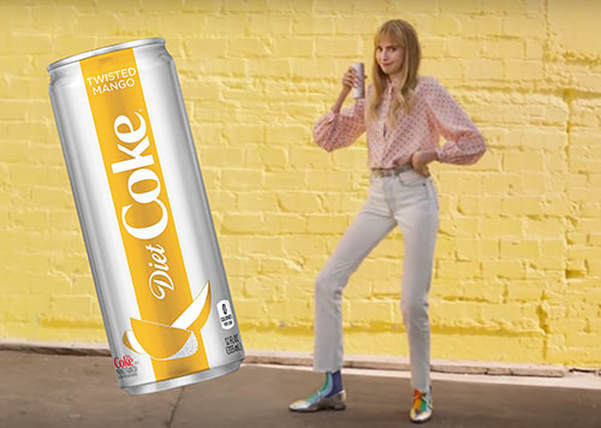
Thankfully there were also commercials for which it was very easy to identify the advertiser.  Diet Coke’s Twisted Mango spot was one of those ads.  The commercial is pretty simple in terms of its creative execution.  A girl with short bangs and long legs mentions the name of the beverage and starts dancing.  Could anything be wrong with that ad?  Well . . . yes.

The dance gets a little “sexier” near the end, but that’s not the main concern.  The potential issue is that the actress in the ad is extremely thin.  Skinny people deserve to feel good about their bodies like everyone else, but this young woman looks emaciated, skeletal.  In other product/ad contexts, such a body image might not be as problematic, but this commercial is for Diet Coke.

When people talk about dieting, it almost always means they’re trying to lose weight.  About 30 million people in the U.S., or a little less than 10% of the population, suffer from eating disorders, which “have the highest mortality rate of any mental illness.”  It’s reckless for the Coca-Cola Company to use an actress whose body type can easily become a dangerous aspiration for people already thinking about dieting.  Diet Coke’s ad will likely help sell soda, but it’s “Single-Minded Marketing.”


There were many ads from the latest Super Bowl that both created stakeholder value and upheld societal values.  One of the best of the lot was for Pringles snack chips.  The Kellogg Company’s iconic chips-in-a-can have been around for over 50 years, during which time there have been some new flavors, but little else has changed.  How, then, could the company get enough bang for the buck from a Super Bowl spot?

Kellogg’s rose to the occasion by using its ad to suggest a very simple yet intriguing concept: stacking different types of Pringles to create unique flavor combinations, for instance, jalapeño-barbeque-pizza.  Such palette-pleasing options are probably especially appealing to Gen Z and Millennials, who likely are the biggest consumers of these types of snacks.
 
Two other things going for the ad were its use of comedian/actor Bill Hader, well known for his work on Saturday Night Live and recognizable to many young people.  Also, TV viewers consume a significant number of snacks, especially while watching the Super Bowl.  That relevant context makes remembering snack food ads easier, and all of the above make Pringle’s commercial “Mindful Marketing.”


Picture
Picture
Subscribe to Mindful Matters blog.
Learn more about the Mindful Matrix and Mindful Meter.
Check out Mindful Marketing Ads
 and Vote your Mind!
14 Comments

Silencing the Slurp

11/17/2017

15 Comments

 
Picture

by David Hagenbuch, founder of Mindful Marketing & author of Honorable Influence

What do you like most about your favorite food: the enticing appearance, the alluring smell, the delicious taste?  How about the intriguing noise?  Of course, most foods don’t make significant sounds when eaten, and if they do, they’re generally not pleasing ones.  Such a sound problem, however, is exactly what a Japanese company has purposed to fix for one of its nation’s staple foods.
 
Japan is a country of great cuisine that includes sushi, tempura seafood, miso soup, and ramen noodles.  So, what Japanese fare is responsible for emitting unpleasant sounds?  The noise is in the noodles.

The world is home to all kinds of pasta and noodle-eating techniques from twirling, to stabbing, to scooping.  In Japan, the preferred method is slurping, which basically means using chopsticks to start the noodles into one’s mouth, then inhaling.
 
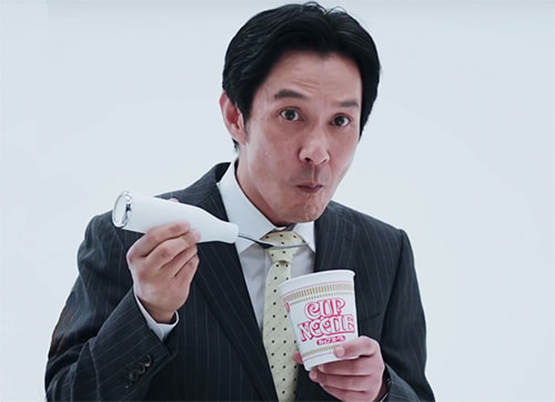
That approach works well, both in terms of eating efficiency and enjoyment—many Japanese believe slurping is the best way to appreciate the full flavor of the noodles.  With slurping, however, comes sounds that some people, namely Westerners, find unsavory.  That’s where Nissin’s “noise-cancelling” fork comes in.
 
That’s right, this Japanese company has developed a piece of flatware, called Otohiko, that aims to eliminate the noise of slurping noodles.  How is it possible to silence such a sound?  Well, the fork has a highly directional microphone inside its electric toothbrush-looking handle that senses the slurping, then signals an app-connected smartphone to play “a loud, electronic noise that sounds like waves washing ashore combined with futuristic space sounds.”

But, does this technique really eliminate the slurping noise, or does it just cover it up, the way some people try to mask their post-workout pungency with a few swipes of a deodorant stick?  As Nissin’s video shows, it’s a little bit of both.  Apparently, the company has conducted extensive research of slurps, which has led to the creation of the aforementioned sounds that strategically conceal the slurping beneath the louder swooshes and swishes of the app.

It’s not surprising that a firm found in a nation known for its technological leadership would identify an electronic answer to an ancient eating issue.  One might wonder, though, whether the problem is significant enough to warrant such a sophisticated and expensive solution, not to mention whether it really works.
 
Nissin expects each utensil to retail for 14,800 yen, or $130, which certainly isn’t cheap compared to most flatware.  The fork will not be found in any stores, however, unless the company hits a goal of 5,000 pre-orders.  Only then will manufacturing begin.

On one hand, Nissin can be commended for its broad cultural sensitivity.  Here’s a Japanese company that’s trying to respect the sound sensibilities of Westerners, while allowing its own citizens to enjoy one of their favorite foods to the fullest.  The intentions seem noble.
 
Of course, we also know “the road to . . . is paved with . . .”  That’s not to suggest that anything about Nissin’s product is immoral, but rather that consumers’ response to the fork may not be as favorable as the company would hope.  Here are three questions that suggest concern about the product’s mass market potential:

1)  Will users of the fork be satisfied with a sound cover-up?  True, those within earshot, will no longer discern the slurping, but they’ll hear other noises that may also be irritating.  Plus, if one connects the new noises to the slurping, ala Pavlov’s classical conditioning, suddenly the manufactured sounds carry the same negative associations.

2)  Is the fork a practical solution?  Most people don’t want to carry around their own utensils, especially one as big as an electronic toothbrush, to restaurants, etc.  Transporting becomes an even greater inconvenience after the fork has been used.  Where do you stash a dirty fork?  There’s also the issue that if the user’s phone, which generates the camouflaging sounds, is going to be heard, it needs to be placed in the open, with volume turned up, which adds unexpected phone calls and text messages to the list of possible dining distractions.
 
3)  Is the product worth the price?  One hundred and thirty dollars is considerable cash to plunk down on an implement that may get very little use.  Along those lines, one also might suspect that the same Japanese consumers who prefer to slurp their noodles may want to eat them with chopsticks, not a fork.  Maybe, then, Nissin should make noise-cancelling chopsticks instead.
 
It’s great when people care enough about others to alter their own behavior in order to make someone from another culture feel more comfortable.  Nissin certainly seems to have that intent, but unfortunately it’s unlikely that its innovative flatware with find significant success.  For that reason, the firm’s noise-canceling fork should be considered “Simple-Minded Marketing.”


Picture
Picture
Subscribe to Mindful Matters blog.
Learn more about the Mindful Matrix and Mindful Meter.
Check out Mindful Marketing Ads
 and Vote your Mind!
15 Comments
<<Previous
Forward>>
    Subscribe to receive this blog by email

    Editor

    David Hagenbuch,
    founder of
    Mindful Marketing  and author of Honorable Influence
    and
    ​Mindful Marketing: Business Ethics that Stick

    Archives

    May 2026
    April 2026
    March 2026
    February 2026
    January 2026
    December 2025
    November 2025
    October 2025
    September 2025
    August 2025
    July 2025
    June 2025
    May 2025
    April 2025
    March 2025
    February 2025
    January 2025
    December 2024
    November 2024
    October 2024
    September 2024
    August 2024
    June 2024
    May 2024
    April 2024
    March 2024
    February 2024
    January 2024
    December 2023
    November 2023
    October 2023
    September 2023
    August 2023
    July 2023
    June 2023
    May 2023
    April 2023
    March 2023
    February 2023
    January 2023
    December 2022
    November 2022
    October 2022
    September 2022
    August 2022
    July 2022
    June 2022
    May 2022
    April 2022
    March 2022
    February 2022
    January 2022
    December 2021
    November 2021
    October 2021
    September 2021
    August 2021
    July 2021
    June 2021
    May 2021
    April 2021
    March 2021
    February 2021
    January 2021
    December 2020
    November 2020
    October 2020
    September 2020
    August 2020
    July 2020
    June 2020
    May 2020
    April 2020
    March 2020
    February 2020
    January 2020
    December 2019
    November 2019
    October 2019
    September 2019
    August 2019
    July 2019
    June 2019
    May 2019
    April 2019
    March 2019
    February 2019
    January 2019
    December 2018
    November 2018
    October 2018
    September 2018
    August 2018
    July 2018
    June 2018
    May 2018
    April 2018
    March 2018
    February 2018
    January 2018
    December 2017
    November 2017
    October 2017
    September 2017
    August 2017
    July 2017
    June 2017
    May 2017
    April 2017
    March 2017
    February 2017
    January 2017
    December 2016
    November 2016
    October 2016
    September 2016
    August 2016
    July 2016
    June 2016
    May 2016
    April 2016
    March 2016
    February 2016
    January 2016
    December 2015
    November 2015
    October 2015
    September 2015
    August 2015
    July 2015
    June 2015
    May 2015
    April 2015
    March 2015
    February 2015
    January 2015
    December 2014
    November 2014
    October 2014
    September 2014

    Categories

    All
    + Decency
    + Fairness
    Honesty7883a9b09e
    * Mindful
    Mindless33703c5669
    > Place
    Price5d70aa2269
    > Product
    Promotion37eb4ea826
    Respect170bbeec51
    Simple Minded
    Single Minded2c3169a786
    + Stewardship

    RSS Feed

    Share this blog:

    Subscribe to
    Mindful Matters
    blog by email

    Illuminating
    ​Marketing Ethics ​

    Encouraging
    ​Ethical Marketing  ​


    Copyright 2025
    David Hagenbuch

Proudly powered by Weebly