
Mindful Marketing
  • Home
    • Ethics Challenge
  • About
    • Mission
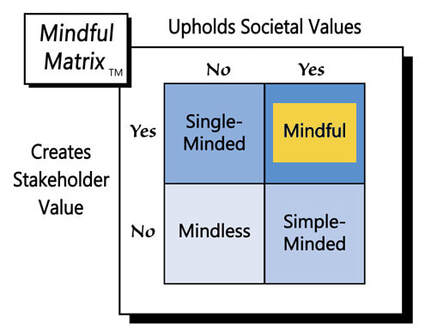
    • Mindful Matrix
    • Leadership
  • Mindful Matters Blog
  • Mindful Marketing Book
  • Mindful Ads?
  • Contact

Getting Marketing Decency Done

3/3/2024

20 Comments

 
Picture

by David Hagenbuch - professor of marketing at Messiah University -
​author of 
Honorable Influence - founder of Mindful Marketing 

“When is it okay to swear in an ad?”  This headline from one of my favorite marketing publications surprised me as I thought, ‘Isn’t the answer obvious?’  The article’s lead-in question was a quick reminder, though, that everyone’s not on the same page for many communication tactics, including the use of profanity, which may spell trouble for marketers and many others.
 
Discussions of ethics sometimes identify actions considered blatant wrongs, e.g., it’s never right to murder or rape.  Other actions like lying and stealing elicit less unanimity, mainly because it’s possible to point to circumstances in which they might be okay, for instance:
  • Lying to protect a friend from physical harm
  • Stealing food to save starving family members
 
There probably always have been diverse perspectives about swearing; however, over the past several years, maybe because of social media or other factors, opinions about cursing appear to be coalescing:  More people seem okay with the use of profane language.
 
One prominent recent example reflecting a broadening tolerance of curse words is the edgy slogan adopted by Pennsylvania Governor Josh Shapiro:  “Get sh_t done.”  Shapiro certainly is not the first politician to employ profanity; although, his formalization of it as a political slogan is rather unique.
 
Politicians are far from the only professionals who have seen their vocabulary become more curse-word-inclusive.  A 2016 study found that compared to other industries, healthcare workers used the most expletives.  Also surprising, another study identified individuals in accounting, banking, and finance as the most foul-mouthed professionals.
 
Maybe the saying, ‘swears like a sailor’ will give way to ‘cusses like a comptroller.’
 
A 2023 study that surveyed 1,500 residents of the 30 largest metropolitan areas about their swearing habits found that respondents swore an average of 21 times a day, with men swearing more than women, Gen Zs swearing more than Baby Boomers, and people in Columbus, OH swearing more than those in any other U.S. city.
 
These studies and their statistics are eye-opening for me.  I don’t encounter much swearing in my day-to-day, but I’m realizing that many other people do.  From a recent personal experience, I also know the field of marketing isn’t immune.
 
I was meeting with a group of marketing professionals who wanted to create an attention-grabbing title for a coming event.  As we brainstormed ideas, someone suggested a full-out profanity approach:  “Get the f-ing most out of your marketing.”  The suggestion, which was somewhat serious, received brief consideration from the group before dismissing it as too edgy and risky for branding.
 
So, it shouldn’t be surprising that a marketer would write an article asking when it is and isn’t okay to swear in an ad.
 
Over the years, I’ve taken a rather hard stance against the use of profanity in marketing, arguing back in 2017 that swearing can damage one’s personal brand and in 2021 that it can be harmful to others’ mental health.
 
Given the study statistics and findings referenced above and other signs of increased swearing, my hot take on the use of crude language hasn’t aged well!  Still, I’m not ready to back down.

 
​
Picture

Like most people, I’ve said and written things that in retrospect I’d retract or reframe; however, those two articles aren’t among them.  After rereading each piece, I believe their arguments are still sound, and I encourage others to read them.
 
I can't add a lot more to my case for countering cursing, but I would like to introduce one additional thought by asking a question:
 
What will be the cumulative effect of increased profanity and its ultimate impact?
 
To try to answer that question, a metaphor may help.  A few years ago my wife and I decided to try eating more vegetables and less meat, which unexpectedly turned into vegetarianism.  When people ask why I’ve chosen such a diet, I tell them that while I appreciate other reasons, the main one driving my eating behavior is sustainability.
 
From the documentaries I’ve watched and articles I’ve read, it’s very difficult for our world to support current levels of livestock and poultry production, and it’s impossible for our planet to provide a meat-centric diet to billions more people.  Such a future is not sustainable.
 
Does one person eating black bean burgers instead of beef burgers make a difference?  Not really, but it’s about offering a small contribution to the cumulative positive effect.  An individual eating more vegetables and less meat alongside similar diets of millions or billions of other humans does make a difference and will produce a positive impact for our world. 
 
I have to admit, suggesting that swearing is unsustainable sounds kind of silly at first.  After all, all words, including curse words, are in infinite supply.  However, projecting forward the trend of ever-increasing cursing, it's not hard to imagine some pretty unpalatable norms, for instance:
  • Doctors and patients swearing at each other during healthcare visits
  • Profane language becoming common at graduations, wedding ceremonies, and funeral services.
  • Three and four-year-olds using the f-word in conversations with their parents and others
 
For some, a loss of decency and decorum may not matter.  Some might even prefer a culture characterized by crudeness.
 
Others might rationalize that normalizing swear words would be a good thing because then they’d no longer be offensive.  It is true that over time some words once considered bad, like “bloody” and “bugger,” stop being shunned, but new swear words always emerge. Moreover, there’s another potentially greater problem.
 
Individuals who suggest benefits of cursing tend to offer two basic arguments: 1) it helps the swearer in some way (e.g., by allowing them to off steam), and 2) it builds social bonds between the swearer and others (e.g., by showing their real self to others).
 
Perhaps there’s some truth to these arguments, but they probably only hold true if it’s swearing about something and not swearing at someone.  Anecdotal evidence suggests that the first use easily leads to the second, and when people start cursing at others, situations rapidly degenerate. 
 
Think of social media altercations, sports fights, and road rage.  Most of us have probably heard or read of situations in which conflicts intensified then went off the rails after one person swore at another or otherwise flipped them off.
 
Are people capable of compartmentalizing their cursing and swearing about things that happen to them but not swear at others?  Most people probably can.  However, in a world that desperately needs to dial back both individual and organizational conflicts, is it worth the risk to further normalize the behavior?
 
Advertising is one of the world’s most pervasive and influential forms of communication.  One ad with a single curse word won’t make much difference, but like one person eating less meat and more vegetables, it’s about the cumulative effect:  If more and more advertising includes curse words, more people will follow suit, and some will not separate swearing about things from swearing at people.
 
In short, profanity-laced promotion is not sustainable.
 
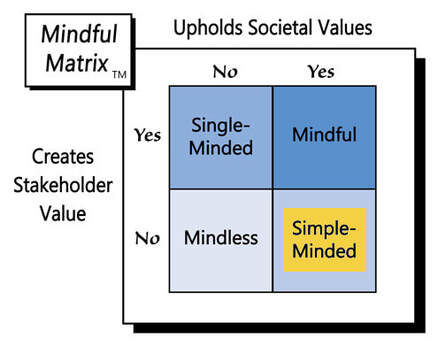
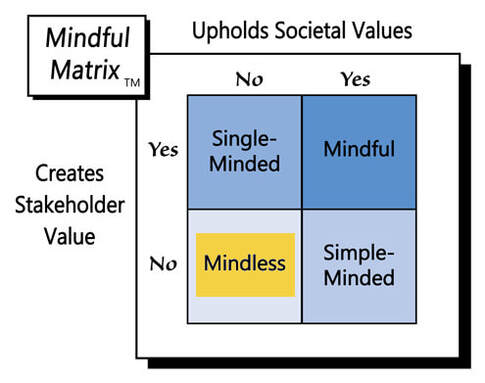
Those who work in advertising are some of the brightest and most creative people on the planet.  Most are very capable of crafting engaging and effective strategies that don’t use swear words, which is why including profanity in ads is “Mindless Marketing.”
​
Picture
Subscribe to Mindful Matters blog.
Learn more about the Mindful Matrix.
Check out Mindful Marketing Ads
 and Vote your Mind!
20 Comments

Should Highway Signs be Hilarious?

2/4/2024

 
Picture

by David Hagenbuch - professor of marketing at Messiah University -
​author of 
Honorable Influence - founder of Mindful Marketing 

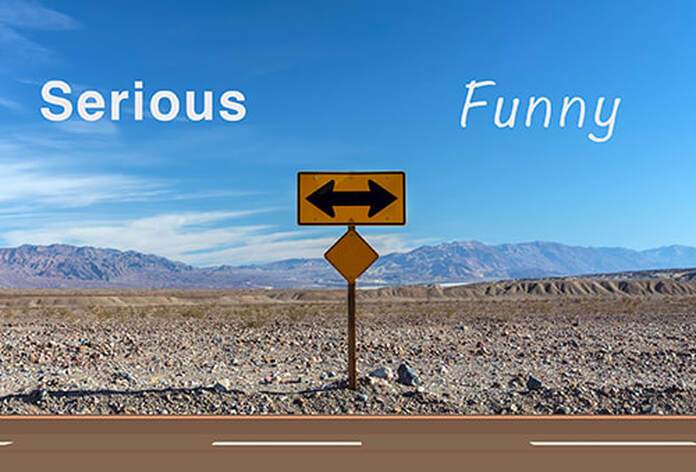
Where do you go for a good laugh – TikTok, a favorite podcast, late-night TV monologues?  How about highway signs?  Some states have turned to wisecracking signage to engage drivers with traffic messages, but not everyone is laughing.
 
You might think that those who manage and maintain the nation's roads and highways have little need for marketing, but they do.  Although they may not be exchanging physical products, they want drivers to embrace ideas that might influence their actions, including messages with important information like:
  • Vehicle crashes
  • Road closures and detours
  • Inclement weather warnings
  • Dangerous road conditions
  • Safety recommendations
  • Amber/Silver Alerts
 
Unfortunately, whether people are sitting on a sofa or driving in an SUV, they often ignore and or/dismiss all kinds of promotional messages, which is why many advertisers go to great creative lengths to make their ads stand out.  Some creators of highway signs have adopted a similar strategy.
 
There’s not much that can be done creatively with boxy LED letters on a black background, but humor is one amendable approach.  Here are examples of highway signs aimed at hilarity:
 
  • Visiting in-laws?  Slow down, get there late
  • Four I’s in Mississippi.  Two eyes on the road
  • 100 is the temperature not the speed limit
  • Slow down you must.  May the fourth be with you
  • Hocus pocus, drive with focus
  • Buckle up.  Windshields hurt
  • Jingle bells, speeding kills, buckle up today
  • Don’t be a grinch, let them merge
  • You’re not a firework.  Don’t drive lit
  • Use Yah Blinkah
 
Such signs make many people chuckle, but one organization standing for seriousness is the Federal Highway Administration (FHWA), the U.S. Department of Transportation agency that “provides stewardship over the construction, maintenance and preservation of the nation's highways, bridges and tunnels” while also helping state and local governments enhance mobility, safety, and innovation.
 
This past December, the FHWA published the 11th edition of its “Manual on Uniform Traffic Control Devices for Streets and Highways.” In Section 2L.07, page 519 of the 1161-page compendium, the agency outlined a variety of specific ways aimed at making traffic messages safer:
 
“A CMS [changeable message sign] should not be used to display a traffic safety campaign message if doing so could adversely affect respect for the sign.  Messages with obscure or secondary meanings, such as those with popular culture references, unconventional sign legend syntax, or that are intended to be humorous, should not be used as they might be misunderstood or understood only by a limited segment of road users and require greater time to process and understand.”
 
The FHWA has good reason for wanting serious signs.  Given that most people casually assume their safety on roadways, it doesn’t hurt to be reminded of driving’s inherent danger, including that a person is much more likely be killed in a car accident than in a commercial airline accident. 
 
The National Highway Traffic Safety Administration estimated that 42,795 people died in motor vehicle traffic crashes in 2022.  Furthermore, a leading cause of traffic accidents is distracted driving, which could result from many things, including roadside signage.
 
Despite my decades of driving experience, I’m no expert on road signs, so I reached out to a few people in my home state of Pennsylvania who are well-qualified to address the FHWA’s new guidelines.  Together their agencies wield significant influence over the roads and highways in the nation’s fifth most populous state.
 
It’s hard to consider roadways in the commonwealth without including the Pennsylvania Turnpike, “America’s first superhighway.” Responsible for operating and improving its more than 550 miles of roadway is the Pennsylvania Turnpike Commission (PTC).  Two of its key leaders, CEO Mark Compton and Director of Traffic Engineering & Operations Tom Macchione, shared with me the PTC’s priorities related to roadside signage.
 
The FHWA’s new sign guidelines should pose little difficulty for the PTC, which already adheres closely to the Manual on Uniform Traffic Control Devices (MUTCD) for CMS.  More specifically, the PTC upholds Section 1D.01, p. 31 of the manual’s 11th edition, which requires that traffic control devices:
  • Fulfill a need
  • Command attention
  • Convey a clear, simple meaning
  • Command respect from road users
  • Give adequate time for proper response
 
Although the PTC realizes that unconventional messages on CMS may be well-intentioned, it holds that they do not meet the preceding criteria, and adds:
 
“It has been shown that inappropriate or excessive use of a traffic control device such as a CMS can diminish its effectiveness.  There is no objective evidence that the use of unconventional messages on CMS have any greater effect on driver behavior than conventional sign messages.  Additionally, the use of unconventional messages have the potential to result in additional time and attention on the message when not understood by the driver, resulting in an increased safety risk.”
 ​
Picture

For these reasons, the PTC avoids humorous CMS messages and instead uses standard MUTCD-approved traffic safety messages.  Consistency is a priority for the PTC, which works hard to comply with both federal and state requirements for signs.  The source of the latter guidelines is mainly the Pennsylvania Department of Transportation, or PennDOT.
 
I reached out to PennDOT Safety Press Officer Fritzi Schreffler, who was happy to weigh in on the recent roadway signage debate.  She prefaced that she’d share her personal perspective, which veered somewhat from a more conventional approach.
 
Schreffler has long been a vocal advocate for nonstandard messages on road signs, as over the years she’s seen many examples of drivers not noticing or ignoring routine signage even after passing it repeatedly.  In contrast, she believes humorous messages like “Use ya blinkah” can be effective. 
 
One such PennDOT safety message she identified, “Don't drive star-spangled hammered,” generated significant buzz (no pun intended) across the state.  Schreffler suggested there’s great value in messages like that one that stay top-of-mind for drivers, as she reasoned, “If people are talking about the signs, isn’t that a good thing?”
 
Perhaps the group of people that deals most often and directly with drivers’ reactions to roadway signs is the Pennsylvania State Police (PSP).  Although the PSP does not create or maintain CMS signs, its troopers see the signs’ impact firsthand.
 
A member of the PSP since 2006, Lieutenant Adam Reed is the PSP’s Communications Office Director.  Like Schreffler, Reed was glad to offer his personal perspective on roadway signs.  He said he’s found that people sometimes do respond to non-traffic control messages, such as “Buckle-Up.”  However, he cautioned about giving drivers multiple things to process, and for that reason he appreciates the FHWA’s desire to keep messages simple.
 
Reed suggested that such simplicity is especially important during inclement weather when drivers have even more to manage and reaction time is especially critical:  “Less information to process is usually better and safer.”
 
However, Reed also recognizes that humor in messages sometimes makes them easier to remember, consequently, he can understand agencies wanting to lean into levity.  He added that messages about not driving impaired or distracted can be very helpful, provided that people remember them, and that the PSP is always interested in effective messages.
 
It’s interesting that among these four very knowledgeable individuals who represent three highly vested stakeholder groups there doesn’t appear to be a clear consensus about content for roadside signage; rather their perspectives touched many points on the spectrum from CMS being simple and direct to signs being humorous and perhaps more memorable.
 
At first glance, this disparity of opinion may be disconcerting, as some may reason that there will be a breakdown in driving in PA if these influential people are not on exactly the same page.  However, the fact that these individuals have some differences in perspectives may be a very good thing.
 
One big benefit of such diversity of opinion is that it can avoid groupthink, or “reaching a consensus without critical reasoning or evaluation of the consequences or alternatives.”  Each individual I interviewed held their own well-reasoned  perspective that they clearly articulated for me, and I’m sure they would do the same for others.
 
At the same time and perhaps even more important, all of these key stakeholders recognized that others have different opinions that also have certain merit, and even if they disagree with those perspectives, they can still respect them and dialogue civilly about the differences.
 
These two attributes are integral to most successful organizations:  It’s very helpful to have individuals and departments that bring different perspectives, including creative vision and risk assessment.  It’s also important that the disparate groups can, despite their differences, work together toward a common goal.  Marketing firms can especially benefit from this kind of healthy dissidence.
 
Of course, at some point, decisions need to be made and actions taken, which is what the FHWA’s new manual has done.  The consistency it provides for signage within and across state lines should be helpful, even if there are some differences in interpretation and implementation of those guidelines.
 
Having been fortunate to engage in the conversations above, my own opinion on CMS content is still evolving.  Just during the time I’ve been writing this article, I encountered one sign with the straightforward weather-related message: “Dense fog ahead. Use caution.”  I was glad that I and other drivers could see that warning.
 
Meanwhile, as a marketing professor who has studied playful teasing in advertising and who often uses humor in teaching, I appreciate how effective humor can be in gaining attention and boosting memory. 
 
It may be idealistic, but my hope is that the debate about FHWA’s new road sign guidelines will lead to the formation of a ‘middle lane’ that has room for both types of messages without sacrificing driver safety.  With so many smart and creative people attuned to this issue, someone will likely find a solution that integrates both sets of benefits.
 
Clear, singular direction is nice when it’s available.  Sometimes, however, life presents competing options, each with attractive features.  In such situations, it’s possible that two different approaches both can be “Mindful Marketing.” 
​
Picture
Subscribe to Mindful Matters blog.
Learn more about the Mindful Matrix.
Check out Mindful Marketing Ads
 and Vote your Mind!

What a Mouse Can Teach Us About Morality

1/8/2024

11 Comments

 
Picture

by David Hagenbuch - professor of marketing at Messiah University -
​author of 
Honorable Influence - founder of Mindful Marketing 

It’s interesting that among the billions of people born into this world, most seem to learn the same first words:  “Mommy,” “Daddy,” “No,” and “Mine!”  Protecting one’s own property and respecting others’ property are crucial for a functioning society, so when a near century old copyright expires on a cartoon mouse, should anyone be free to use it however they want?
 
Steamboat Wille, the 1928 animated short film by Disney founder and namesake Walt Disney and animator/cartoonist Ub Iwerks, entered the public domain this past January 1, which means that after 95 years, the earliest version of Mickey Mouse is now “free for all to copy, share, and build upon.”
 
It’s no surprise that on a planet full of creative and entrepreneurial people, wheels were already turning before public domain day 2024 toward ways of monetizing the newly liberated mouse.  Some of those ways would probably make Walt shudder.
 
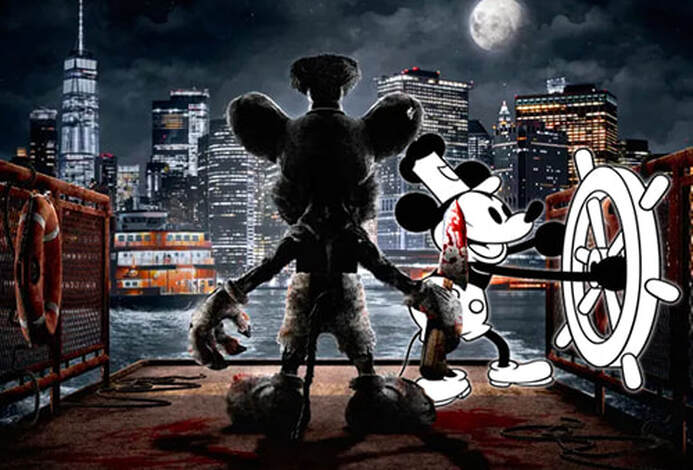
One company has announced a violence-filled video game featuring Mickey, while a movie producer/director is planning a Steamboat Willie horror film. Both beg the question:
 
Is it right to turn Mickey Mouse into a slasher?
 
Such as question may make some wonder – Doesn’t the Walt Disney Company have a say in this?  Can’t the “happiest place on earth” stop someone from making a maniacal Mickey?
 
To understand Disney’s control over Mickey Mouse, it’s important to distinguish two related but sometimes conflated intellectual property terms:  copyrights and trademarks.


Copyrights – Protect “original works of authorship as soon as an author fixes the work in a tangible form of expression,” which means in a fairly permanent way, such as by writing it down, recording it, or taking a picture of it.  To be protected, works must possess some minimal amount of creativity.  Included are things like poems, musical compositions, books, photos, paintings, blog posts, computer programs, and movies.
 
The length of copyright protection varies.  In general, works created before January 1, 1978, have protection for 95 years, while those created on or after the same date are protected for the lifetime of the author/creator plus 70 years. 

 
Like other works created in 1928, Steamboat Willie’s copyright expired after 95 years and entered the public domain on January 1, 2024.


Trademarks – Are words, phrases, designs, symbols, or some combination thereof, used to differentiate one company’s goods from others in the same category.  The more creative and unique a trademark, the better protection it affords. 
 
Anyone can place a “TM” next to a special graphic or phrase they’re using to identify their unique product.  To gain more complete legal protection, firms can register their trademark with the Patent and Trademark Office (PTO) and if approved, the unique identifier can be paired with the ® symbol, indicating that it is a registered trademark.
 
Unlike copyrights, registered trademarks never expire, but to keep them active, firms must continue to use their trademarks in commerce as well as “file certain documents at regular intervals” to show that they’re continuing to use them.
 
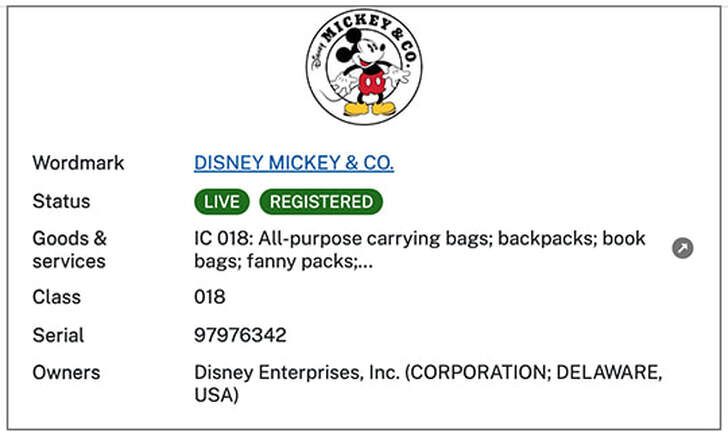
The PTO has a trademark search tool on its site that allows anyone interested to search the Office’s extensive database of “live” (active) and “dead” (inactive) trademarks.  A search for “Mickey Mouse” yields over 49,600 results, some alive and some dead trademarks.
 
​
Picture
 
The Walt Disney Company and Disney Enterprises, Inc. are responsible for many of the Mickey Mouse registrations, each of which tends to be specific to a particular category of products, such as:
  • Jewelry; watches
  • Action figures and accessories
  • Bathing suits; dresses; gloves; hats; caps; jackets; pajamas
  • Balloons; Christmas tree decorations
  • Plush toys and jigsaw puzzles.
 
In short, Disney has a registered trademark for just about any product on which it would likely want to place the words “Mickey Mouse.”  The company also has many live and pending trademarks for “Disney Mickey & Co.,” which include a contemporary Mickey Mouse graphic.  It would seem, therefore, that Disney is at little risk of losing rights to its heavily trademarked modern Mickey. 
 
In contrast, Steamboat Willie and a few of Walt’s other short films featuring the first Mickey Mouse were protected by copyright, but the early Mickey apparently was not trademarked.  So, legally it’s possible to create a violent video game and a horror film with Steamboat Willie.
 
As evidence, a very similar situation unfolded just two years ago on January 1, 2022, when the characters from A.A. Milne’s 1926 classic “Winnie-the-Pooh” entered the public domain.  The next year, writer/director Rhys Frake-Waterfield made the slasher film “Winnie the Pooh: Blood and Honey.”  What’s more, a sequel is due to be released later this year.  Ironically, the owner of the copyrights to the Pooh characters is/was . . . the Disney corporation.
 
Cases like these are good reminders that just because something is legal doesn’t necessarily mean it’s ethical.  Historic examples of misalignment between legality and morality include the state-sponsored persecution of Jews in Nazi Germany and laws that promoted racial segregation in the United States before the Civil Rights Movement.
 
So, even if law allows, should Steamboat Willie be cast as a video game or horror film slasher?  For people who don’t appreciate those genres, the easy answer is “no,” but what if Willie were made into a short-selling stockbroker, a hard-nose football coach, a doctor with curt bedside manner, an aggressive trial lawyer, etc.?
 
Although most people probably would not regard those roles as being as blatantly bad as a horror film slasher, they’re still big departures from the whimsical, fun-loving mouse that Walt Disney and Ub Iwerks created, that's the ancestor of the brand character that represents wholesomeness and joy for many, and that serves as a strong connection to fond memories with family and friends.
 
So, the question about creative works no longer covered by copyright law is this:
 
Even if law allows for their free use, is it right for others to use them in ways that denigrate, disparage, misrepresent, or malign what the original author intended and, in many cases, invested considerable time and talent to create conceptually then tangibly?
 
Certainly, the work’s author and their heirs are one very important stakeholder group to consider.  Although the author will be deceased by the time their work enters the public domain, their legacy lives on and doesn’t deserve to be tarnished.
 
Another primary group of stakeholders are the people who enjoy the work.  They would like to continue to appreciate it, if not in its original form, then in one that honors and extends its positive perceptions.
 
There’s also the notion of respecting the work for its own sake.  Just like most would consider it wrong to shout during an orchestra performance, deface a painting, litter a pristine landscape, or talk on a cellphone during a play, it also might be considered poor taste to pejoratively alter a creative work.
 
Human beings are unique in their capacity to create.  The creative process is almost always a collective endeavor – if individuals are not working together directly, then they are sharing/borrowing ideas and gaining inspiration from others across distance and time.
 
It’s good to accept and contribute to the collective nature of the creative process.  It’s also important to respect what others create by not deprecating their work in material ways that might produce a lasting negative impact.
 
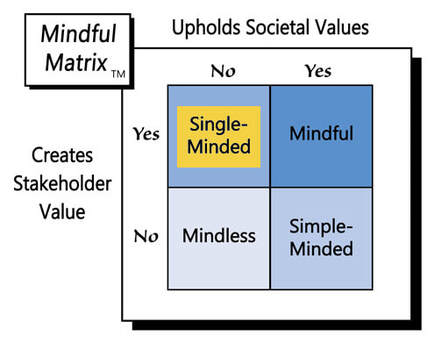
Casting Steamboat Willie as a serial killer may be legal, but morally it’s gross degradation of a time-honored creative work that’s closely connected to a trusted brand, which makes the projected horror film and violent videogame strategies “Single-Minded Marketing.”
​
Picture
Subscribe to Mindful Matters blog.
Learn more about the Mindful Matrix.
Check out Mindful Marketing Ads
 and Vote your Mind!
11 Comments

A Case for Marketing Ethics

12/20/2023

8 Comments

 
Picture

by David Hagenbuch - professor of marketing at Messiah University -
​author of 
Honorable Influence - founder of Mindful Marketing 

When students approach me after class it’s often because they missed a quiz, have a question about an assignment, or want to chat about a topic of mutual interest.  So, I was surprised recently when a student waited until others had left, then said, “Hey, Dr. Hagenbuch, I have a question about an ethical issue.”
 
The inquiry wasn’t entirely unexpected.  We discuss ethical issues often in my classes, and sometimes students ask my opinion about questionable strategies they’ve seen in the news or that they imagine companies might use.  However, this question wasn’t hypothetical.
 
Grant (not his real name) had been working for several months as an intern with a company that sold the products of various manufacturers in a particular business-to-business industry.  He provided the firm different forms of marketing support, including help with social media.
 
Now the company wanted to share in social media specific consumer questions and its responses, which would highlight as solutions specific manufactures’ products, but there was one problem: The company had no actual consumer questions along the lines of what it wanted, so some in the firm decided it would be easiest to create not just the questions but also imaginary consumers to ask them.
 
Grant didn’t wonder whether what his company was considering was unethical; he knew it was wrong.  It probably helped him, however, to hear me validate his concern.  His question to me was more about what he might do or say.
 
As we talked about the issue, one of the first things that came to my mind was Sports Illustrated’s recent moral lapse.  The iconic magazine about all things athletic ran afoul of public opinion on a viral scale when it apparently used artificial intelligence to write articles that it attributed to human beings.
 
First off, the articles appeared fake; for instance, one suggested that volleyball can be hard to play without a ball.  Second, the authors seemed contrived.  One writer, Drew Ortiz, had no publishing history or social media presence, all while a website that sells AI-generated headshots was offering for sale the same suspicious-looking profile picture that Sports Illustrated used for him on its site.
 
Unfortunately, Sports Illustrated isn’t the only organization faking it.  A recent Wall Street Journal article revealed that phony product reviews, especially on Amazon, are more rampant than most of us ever would imagine.
 
Grant understood and rejected such deception.  He could tell his coworkers that it's unethical to deceive and that creating fake customers would represent that very infraction.  However, his colleagues might not be receptive to such a blunt rebuke and indictment of their character, particularly not from an intern.
 
So, I suggested that he mention the Sports Illustrated example and delicately suggest that things could turn out badly for their own company if they followed a similar tack and their strategy were exposed.
 
I felt for Grant in this predicament, but I also was very glad that he not only recognized there was an ethical issue, he was conflicted enough by it that he wanted to talk about it.  For me those two things represented a moral victory.
 
Having worked in business for about a decade and having taught ethics in higher education for a couple more, my strong sense is that many moral issues in business are either not recognized, or they’re rationalized away, or they’re simply ignored.  Grant cleared each of those moral hurdles.  He then went a step further by talking with me.
 
Picture
 
Why don’t more marketers and others do what Grant did?  That’s a difficult question to answer short of some formal research.  Maybe I’ll conduct such a study sometime, but in the meantime, I asked Grant to reflect on his decision process and actions, which he graciously did.
 
I first asked Grant how he came to see the tactic as a potential ethical issue.  He responded: 
 
“In the project proposal my manager asked me to make fake client profiles on our website and have them send messages to our Product Advisor Channel. We would then take each fake question and make an Instagram style reel answering it. These Q&A reels would be used to promote partnered manufacturers and create a new style of content for our media channels.” 
 
“I questioned the ethics of this project because we would be claiming to have organic questions coming from clients, and our company would be giving advice and solving problems when the questions weren’t being asked by actual clients. In my mind this comes across as lying to our customers to get engagement, benefit our company, and our manufacture partners.”
 
However, Grant also showed discernment in recognizing the multifaceted nature of the issue:
 
“I also saw how doing this could benefit clients. If we were posing questions that were legitimate and providing truthful answers, I can see how it would benefit the community. There could be advice given by our professionals that could help clients, even if it was from an account that we claimed to be organic, when in actuality they were our own.”
 
Many ethical issues involve legitimate competing considerations, which is one of the things that makes them so challenging.  If they were easy, we wouldn’t have dilemmas.
 
Second, I asked Grant why he decided to mention his moral concern to me.  He replied:
 
“The reason I mentioned it to you was because I know that you are passionate about going about marketing the right way. More and more I feel like the lines between legal and ethical are being blurred. We see a lot of marketers that are not concerned with the ethics of their marketing or in some cases don’t even realize that they are being unethical in their practices. I know that you have experience in marketing and because of this I sought out your advice.”
 
I was glad that Grant thought of me as someone who cared about ethics and could act as a helpful sounding board.  I’ve often benefited by having people in my life to turn to for opinions and advice.  I was happy to offer the same to him.
 
Reflecting on this experience with Grant has made me think of factors that should influence a person’s ethical decision making.  There are surely more, but Grant’s actions in this instance  have led me to identify three very important considerations:
 
1. Recognition:  Conventional wisdom has long held that the first step in overcoming a problem is to admit having one. Similarly, good managers know it’s ineffective to discuss strategies before identifying the underlying challenges.  Moral decision-making should follow the same approach.
 
It’s likely that many people wouldn't bat an eye if they received the same request that Grant got from his boss.  The directive didn’t set well with Grant, probably because of his upbringing and deep-rooted beliefs and perhaps also because of the priority marketing ethics have received during his college education.
 
2. Regard:  Just because someone recognizes an issue doesn’t necessarily mean they think it’s a meaningful one.  Some needs are naturally more important than others, which is why discernment is critical and with it genuine concern.
 
Occasionally, an unrepentant offender will say, “I knew it was wrong, but I did it anyway.”  Even very smart people are capable of abhorrent things if they don’t care.  Thankfully, Grant cared.
 
3. Recommendations:  No one has all the answers.  Instead of relying just on our own ideas and instincts to guide our actions, our outcomes will usually improve when we ask others for their input.
 
In deciding moral issues, it’s especially helpful to gain the advice of someone objective who doesn’t have a direct interest in the outcome but who also has insight into the type of issue at hand.  Grant happened to ask me, but the most important thing is that he sought a second opinion from someone who could offer an unbiased and informed one.
 
Whether Grant decides to refuse his boss’s request or honor it, perhaps with some caveats, his recognition of the problem, genuine regard for the outcome, and request for another’s recommendation place his moral decision-making ahead of that of most others.  Grant’s actions also suggest that even before graduating college, he’s a practitioner of “Mindful Marketing.”
​
Picture
Subscribe to Mindful Matters blog.
Learn more about the Mindful Matrix.
Check out Mindful Marketing Ads
 and Vote your Mind!
8 Comments

Dos and Don'ts of Personal Branding with AI

11/18/2023

32 Comments

 
Picture

by David Hagenbuch - professor of marketing at Messiah University -
​author of 
Honorable Influence - founder of Mindful Marketing 

AI’s meteoric rise has encouraged companies to quickly embrace the transformative technology while countries have raced to erect guardrails on the all-powerful algorithms.  These strategies are critical, yet such collective actions are often a function of individuals’ attitudes, which prompts the question:  What's a personal approach for ethical use of AI?
 
If your newsfeed is like mine, it overflows with articles describing organizations’ creative and sometimes controversial use of artificial intelligence; for instance, recent news stories have included:
  • A Beatles song made with AI
  • Results showing that ChatGTP makes up things 3% of the time
  • Tom Hanks disavowing a deepfake dental ad video
  • Empathetic AI helping to heal broken office relationships

By now, AI has touched most industries in more ways than one, which is part of the reason the U.S. government and those of several other nations are taking more active and deliberate approaches to support AI development.  By doing so countries can gain competitive advantage, enhance national security, and reduce negative impacts on their citizens.
 
On a personal level, parallel goals should motivate individuals’ use of AI.  I’m not a tech expert or an authority on artificial intelligence, but several years ago I suggested a simple model for personal branding that might also serve as a useful guide for individual AI use.  The 3Cs of personal branding – competencies, character, and communication can help frame how individuals should and shouldn’t use AI.
 
1. Competencies:  What a person can do well; their skills, talents, and aptitudes.
 
The ability to use AI is already a competency that many employers want and that many more will demand over the coming months and years.  However, experience alone with AI won't suffice.  Competent users of AI should be able to:
  • Choose the right AI tool – since the rapid ascension of ChatGPT, a variety of other chatbots and AI tools have emerged, some of which are tailored to particular types of information, e.g., Jasper for business and marketers and Chatsonic for news content creators.
  • Ask AI the right questions – ones that effectively and efficiently enable the chosen chatbot to locate the right information and offer truly helpful responses
  • Identify errors – those that use AI often mention times when the technology makes mistakes, sometimes retrieving the wrong information and other times even fabricating facts.
 
2. Character:  The kind of person someone is – Are they decent, fair, and honest?  Do they show others respect and demonstrate social responsibility?
 
Picture

While personal branding for AI competency primarily involves what people should do, AI-related character largely describes things that individuals shouldn’t do, such as:
  • Suggest that work is one’s own when it was created largely or entirely by AI
  • Fail to give proper attribution, or credit, to others whose work AI appropriated
  • Forward AI results not checked for accuracy or that contain known mistakes
  • Share indecent content such as profane language, crude pictures, or other offensive subject matter generated by AI
 
3. Communication:  How a person informs, persuades, or reminds others about their brand
 
There’s a growing number of AI products that can help users communicate more effectively.  In a recent LinkedIn article,  James Lusk highlighted several of the tools.  The ones that seem best suited for positive personal branding are:
  • Grammarly – to improve one’s writing mechanics.  But users shouldn't use it to write substantial content then claim authorship.
  • Zoom.ai – to manage communication tasks, including scheduling meetings and sending reminders.  The tool also can be used to draft emails, so again, users should be careful to not give the impression they’ve written something they haven’t
  • Chorus.ai – to improve communication skills by analyzing one’s communication style, including  interruptions, tone, and speaking pace
 
AI users also should be careful not to give others a false impression of what they’re like physically or otherwise, which can happen when using apps such as  AI face enhancers.
 
Like other technology, AI is tool that can be used in good ways and in bad ways.  As its rapid evolution continues, there’s no guarantee that AI will hold itself to any compelling moral standards.  More likely, it will be individuals who accept personal ethical accountability and model it for others, thereby guiding AI's “Mindful Marketing.”


Picture
Subscribe to Mindful Matters blog.
Learn more about the Mindful Matrix.
Check out Mindful Marketing Ads
 and Vote your Mind!
32 Comments

No Shorts, No Sunglasses, No Service

10/4/2023

4 Comments

 
Picture

by David Hagenbuch - professor of marketing at Messiah University -
​author of 
Honorable Influence - founder of Mindful Marketing 

We’ve all heard that our nonverbal communication conveys more than the words we speak.  That saying is easy to embrace in principle, but it can become harder to accept when senators and sports legends seem to suggest otherwise.  How might marketing, the banner carrier for image-building, inform the current debate of what people wear at work?  
 
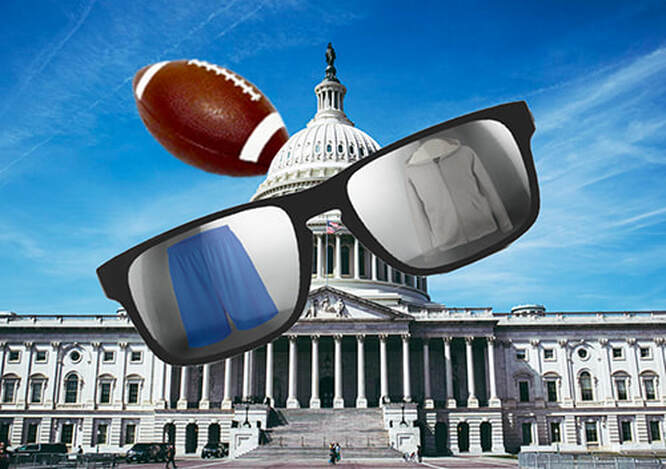
In his first year of service from Pennsylvania, U.S. Senator John Fetterman’s casual attire (sweatshirt, shorts, sneakers) was the apparent impetus for Majority Leader Chuck Schumer’s decision to relax the chamber’s formal dress code.  However, that choice was negated a week later when the Senate passed a resolution that formalized the requirement for business attire on the chamber floor.
 
Meanwhile, Deion Sanders, former MLB player, NFL Hall of Famer, and head football coach of the University of Colorado, has grabbed headlines with his trademark attire, specifically his shades.  His propensity to continually wear sunglasses, even during interviews caused Colorado State football coach Jay Norvell to comment, “When I talk to grown-ups, I take my hat and my glasses off. That's what my mother taught me.”
 
At first glance, Fetterman spurring the Senate to button up its dress code and Sanders sporting sunglasses during interviews have little to do with each other.  However, both headlines are case studies in nonverbal communication – People’s clothes and how they wear them often portend their personalities and purposes; similarly, individuals’ eyes often signal what they’re thinking and feeling.
 
Still, what do a couple of guys wearing shorts and sunglasses to work have to do with marketing?  They’re relevant to the field in at least two ways:
  • Internal marketing:  Organizations market to their employees by trying to meet their needs, which can involve the policies they set and the procedures they follow, including ones related to work attire.
  • Personal branding: Each person has a unique brand, or identity, which is based on their character and competencies and is communicated to others through their words and actions, including what they wear.
 
Although I feel like I know something about nonverbal communication from my business, teaching, and life experiences, I wanted to talk to someone who is truly an expert, so I reached out to Mike True, a former coworker of mine who is an internationally renowned authority on career development and an in-demand speaker on many related topics, including professional etiquette.
 
When I asked for his thoughts on the U.S. Senate’s dress code decision, the main word that came to his mind was “decorum,” or setting high standards in specific settings.  He continued that in the senate setting, professional business attire “speaks of order, neatness, and structure,” while very casual dress “speaks of a breakdown in respect for order, neatness, and structure – It speaks of lower standards.”
 
Knowing the high standards True sets for himself and encourages for others, his response about Senate attire was not unexpected.  However, his analysis of Sanders’ sunglasses surprised me:
 
“Sunglasses are part of Deion’s persona and have been for many years. He has an eyewear deal with Blenders Eyewear, so it's a ‘product placement’ gig for which he is paid. The non-verbal here seems to be practical (protecting his eyes from the sun in outdoor practices and games, and from camera flashes and bright lights in interviews) and a brand of sorts. He is Coach Prime, and as such he seeks to project ‘coolness’ for himself, his players, and the whole Colorado football program. It's working!”
 
I wasn’t surprised that True knows marketing and recognized successful branding and product placement.  He’s a student of business and surely read of how within one day of announcing its collaboration with Sanders, Benders “received $1.2 million in pre-orders.”
 
I thought, though, that he might take exception with the eye contact that Sanders’ dark sunglasses eliminate.  As the saying goes, the eyes are the window to the soul. When our eyes widen and our pupils dilate, we communicate interest and excitement, whereas a furrowed brow can suggest worry or concern.
 
However, having enjoyed True’s etiquette dinners and other events in which he detailed appropriate professional behavior from handshakes to table conversation, I know he would never advocate wearing sunglasses to a job interview or networking event.  So, why the apparent double standard?  Similarly, why doesn’t he cut some slack for Fetterman or other senators who might feel more comfortable in more casual attire?


Picture
 
First, True did identify practical reasons why Sanders might want to wear glasses to shield his eyes from bright light, while also suggesting they’re not the only reasons.  In short, as True alludes, Sanders’ personal brand, even for a coach at a major college football program, is a very unique one that dates back 35+ years when he first earned the nickname “Prime Time” for his exciting play and exuberant personality at Florida State University.
 
As I'm sure True would never advise emerging or seasoned business professionals to emulate Sanders’ dark shades in their interpersonal dealings, the standards for Sanders’ nonverbal communication are in many ways are a category of one.
 
Then, why doesn’t Fetterman, who probably has a more compelling reason for wearing sweats and sneakers, get a similar pass?  After all, his battle with clinical depression led him to seek treatment at Walter Reed National Military Medical Center.  There may be a few reasons for a different standard:
 
  • No slight on college football, but the business of the U.S. Senate is more important: nation- if not world-shaping policies vs. recreation or entertainment.
  • Attire often reflects expectations for the level of quality of work.  Even in a football game, if players wear worn-out or mismatched uniforms, fans will take them less seriously, and the players may start to feel the same way about themselves.
  • Clothing needs to fit the setting and related cultural norms.  People wear bathing suits on beaches not in boardrooms.  People who work in and around football, like many sports, are accustomed to very casual attire.   
  • Dress that’s deemed inappropriate in a given situation can become a distraction.  It also could be offensive if the attire reveals body parts that others don’t care to see but can’t avoid looking at when interacting with the person.
 
So, the U.S. Senate does have reasons for maintaining a dress code that aren’t easily transferrable to football.  However, that doesn’t mean that the policies must stay the same forever:  Almost two-and-a-half centuries ago, powered wigs and ruffled shirts were the style.  Any organization’s dress code needs to evolve with the times.
 
Having a dress code also doesn’t mean that special accommodations can’t be made for specific individuals who warrant them.  Those individuals and the policy also might meet somewhere in the middle, e.g., instead of shorts, full-length open-leg sweatpants, and instead of sneakers, very comfortable, sneaker-like shoes.
 
As has happened for me many times in writing this blog, the assumptions I had at the outset of this piece are not the same ones I have at the end, which leads me to two key takeaways that extend beyond best practices in nonverbal communication:
  1. Although there are certainly generalizations that can be made for personal branding, everyone’s brand is unique and there can be special circumstances that warrant some people acting differently than others.
  2. Make your brand a malleable one, or more specifically, allow knowledgeable others to inform your beliefs such that when fitting, you are willing to adapt judgments.
 
Understanding and employing effective nonverbal communication is important whether you’re calling plays or proposing national policy.  Just as important is the ability to understand others’ perspectives and learn from them.  Both life skills are critical inputs for “Mindful Marketing.”
​
Picture
Subscribe to Mindful Matters blog.
Learn more about the Mindful Matrix.
Check out Mindful Marketing Ads
 and Vote your Mind!
4 Comments

What's to Like about Twitter's Rebrand

8/6/2023

13 Comments

 
Picture

by David Hagenbuch - professor of marketing at Messiah University -
​author of 
Honorable Influence - founder of Mindful Marketing 

“There’s nothing I like about it,” said a family member after seeing a large brown sun sail I bought to shade our backyard patio.  I actually appreciated the blunt assessment because I also had misgivings about the tarp-looking sail, which fortunately was easy to return.  Many have similarly bemoaned Twitter’s unexpected rebranding, which won’t be as easy as the unappealing patio shade to retract, but are there actually things to like about “X”?
 
Like a quick-moving summer thunderstorm that seems to emerge from nowhere, Twitter’s announcement that it was replacing its acclaimed name and famous bird with the moniker/graphic “X” seemed to catch even the most astute business analysts by surprise.
 
In reality, the curious move was several months, if not years in the making.  This past April new-owner Elon Musk formally changed the company’s legal name to X Corp.  He also had gained ownership of X.com six years earlier, which makes one think that the rebrand was more of a long-term plan than a knee-jerk reaction to Musk-revival and Meta founder Mark Zuckerberg’s recent launch of Threads.
 
Regardless the timing or the reason, to say the response to Twitter’s rebrand has been critical is certainly an understatement.  Some of the criticism has included:
 
  • ‘”Completely irrational’: By changing Twitter’s name, Elon Musk is wiping out $4 billion to $20 billion in brand value” – Fortune
 
  • “This sudden transformation poses a significant obstacle for marketers who had been relying on the platform as part of their social media strategies.” – Digiday
 
  • “It’s rare for corporate brands to become so intertwined with everyday conversation that they become verbs. It’s rarer still for the owner of such a brand to announce plans to intentionally destroy it.” – AdAge
 
  • “I am concerned that Musk will continue to make random changes to the platform, either alienating more casual users of the service who tend to be people my company would market to, or change the advertising tools that allow us to target users.” – Brian Chevalier-Jordan, CMO at National Business Capital
 
All of the above seem like valid criticisms; however, the last one appears to have forgotten the remarkable number of successful business innovations Musk has to his credit: 
  • The Boring Company
  • Neuralink
  • PayPal
  • Tesla
  • SpaceX
In addition, Musk founded OpenAI in 2015, and more recently he launched a new AI company xAI.
 
All this to say, Musk and those who work with him are likely extremely competent people.  You can’t build the world’s leading brand of electric vehicle and launch people into space without having significant engineering and business acumen.
 
​
Picture
 
Given Musk’s elite team members and track record, maybe the rebrand from Twitter to X is some kind of marketing rocket science that’s beyond the ability of casual observers and even most marketing professionals to understand.
 
I have no inside information on Musk’s strategy, but here are a few considerations that may have gone into the surprising decision:


1) Appeal to Gen Z:  Overtime, virtually every brand loses followers simply because its core demographic’s wants and needs change as it gets older and those consumers age out of the market.  So, companies constantly need to be making inroads with the next generation, which is about to age into the market.  
​
As someone who works with many Gen Zs, my sense is that Twitter has been falling out of favor with them, not unlike Facebook has with this young age cohort.  Maybe a younger, hipper feeling brand would help them reconsider.


2) Restore Relevance:  Even consumers whose needs haven’t changed can grow tired of a brand over time.  Most of us experience this kind of satiation effect whether it’s with the music we listen to or the food we eat.  

To avoid stagnation or worse, customers switching to other firms’ products, brands sometimes will attempt a refresh so they’re perceived as new and exciting, like Jell-O did recently for the first time in ten years.
 
Aside for some minor tweaks, it didn’t seem like Twitter had changed much over the last decade, so maybe a major brand refresh was in order, not just for Gen Zs but for every user who was growing bored with the brand.


3) Regain Attention:  Brands want to be top-of-mind, which helps in their ongoing efforts to retain and grow business.  When consumers stop hearing about them, they may stop thinking about them and purchasing from them.  

Simply slipping  out of the news cycle is bad enough; it’s even worse to be replaced by a competitor, which is what happened to Twitter thanks to Meta’s new Threads.
 
These three are realistic reasons for Twitter to consider rebranding, but as the earlier criticisms implied:  Was this refresh worth the very high costs?
 
Perhaps no cost loomed larger than this one AdAge and others identified:  Abandoning the verb to “tweet.”  Very, very few organizations are ever so fortunate as to have their brands turned into verbs, e.g., Google, Photoshop.
 
Of course, firms need to be careful that their brand names aren’t used generically to represent the entire product category (e.g., calling any brand of tissue a Kleenex), which can lead to a firm losing its legal trademark protection.

Still, there is tremendous value to having so much mindshare with consumers that they turn the noun of a company into an action.  It’s hard to imagine that any or all of the three refresh reasons would warrant Twitter abandoning that extremely unique competitive advantage.
​
There’s also a perceptual disconnect between what social media typically stands for and the psychological meaning of “X.”  Social media such as Twitter, tend to be about connecting people and having conversations, whereas “X” often represents the opposite.  For instance, an “X” is often a person with whom one no longer associates, e.g., X-spouse, X-roommate, etc. 
 
Ironically, “X” is also the tiny symbol that people often click on to close a webpage or an app.  In fact, if someone says, “X out of that,” we know they’re giving a command to close something digital.  In short, changing people’s existing interpretations of “X” from negative to positive is a very tall order.
 
Musk is among the most talented entrepreneurs of this generation, and he may deserve to be counted among humanity’s most innovative thinkers, but even business savants sometimes make mistakes, for instance:
  • Henry Ford’s first automobile firm, the Detroit Automobile Company, failed miserably, leading him to bankruptcy.
  • Walt Disney was fired from his job at a newspaper because he “lacked imagination and had no good ideas.”
  • Steve Jobs was kicked out of Apple, the company he co-founded.
 
Perhaps hindsight will prove 20/20, and history will exonerate the Twitter/X rebrand a few years or more from now.  Now, though, it looks like it may go down as one of Musk’s bigger mistakes and an unfortunate instance of “Simple-Minded Marketing.”
​
Picture
Subscribe to Mindful Matters blog.
Learn more about the Mindful Matrix.
Check out Mindful Marketing Ads
 and Vote your Mind!

13 Comments

A 3D Approach to Corporate Social Media Responsibility

6/6/2023

24 Comments

 
Picture

by David Hagenbuch - professor of marketing at Messiah University -
​author of 
Honorable Influence - founder of Mindful Marketing 

Most of us receive warnings during our lives whether they’re about talking in class, highway speeding, or forgetting to pay a bill.  When the U.S. surgeon general issues a warning, it’s a serious admonition for everyone, usually about some potential physical harm.  So, when the physician in chief warns about the dangers of social media, what should the organizations that use it do?
 
The New York Times has called U.S. Surgeon General Dr. Vivek Murthy’s most recent warning “an extraordinary public advisory,” which is saying something since warnings from the nation’s top doctor are uncommon and have included some grave concerns like AIDS, drunk-driving, obesity, video game violence, gun violence, and, of course, cigarettes.
 
How could social media possibly warrant the same level of concern?
 
Gen Z uses Instagram to share fun videos, parents turn to Facebook to celebrate family milestones, and professionals leverage LinkedIn to post and find job opportunities, all of which seem like positive and productive things.  Unfortunately, though, most of us also have read about, if not experienced, social media’s negative impact.
 
I teach about sociological and psychological influences on behavior, but I don’t use social media much, so I’d like to believe I’m above its affirmation-seeking lure.  However, I have to admit, there are times I’m disappointed that my posts don’t receive the numbers of likes and shares that those of others do.
 
Putting too much weight on other people’s reactions can be problematic, but it’s just one of social media’s potential pitfalls.  As the following two lists suggest, misuse of social media can impact individuals’ well-being mentally (M), physically (P), and socially (S) in many different ways.
 
First, Entrepreneur identifies four other pitfalls in its list of five social media dangers:
  1. Real-life interaction is replaced if you allow it (M, P, S)
  2. Feelings of envy emerge based on fabricated lives (M, S)
  3. Moments are missed and memorable experiences are diluted (M)
  4. Addiction (M, P, S)
  5. It can ruin your sleep, impacting your physical health (P)
 
Picture
 
Still, others suggest many more potential perils.  For instance, McMillen Health identifies 15 social media dangers:
  1. Sedentary behavior (P)
  2. Less sleep (P)
  3. Social Media addiction (M, P, S)
  4. Cyberbullying (M, S)
  5. Missing out on face-to-face relationships (S)
  6. Less time for other activities (M, P, S)
  7. Social comparisons (M, S)
  8. Affecting self-image (M)
  9. Damaging online reputation (M, S)
  10. Harmful to mental well-being (M)
  11. Misleading information (M, S)
  12. Scams (M, P)
  13. Normalizing risk-taking behaviors (P)
  14. Misleading marketing (M, P)
  15. Inappropriate content (M, P, S)
 
Although anyone can be negatively impacted in these ways, children and adolescents tend to feel social media’s impacts most acutely, partly because they’re heavy users of the platforms but mainly because individuals’ formative years are ones in which they often look to others for validation, and they more easily feel ostracized from their peers.
 
Mayo Clinic cites many studies that found evidence of adverse effects of social media on teens, including the following:
  • 12- to 15-year-olds in the U.S. who used social media for more than three hours a day were at greater risk of mental health problems.
  • For 13- to 16-year-olds in the U.K., using social media more than three times a day was associated with poor mental health and well-being.
  • Various studies have found links between social media use and symptoms of depression and anxiety.
 
Even with this evidence, it’s important to note that social media is not inherently bad.  As suggested at the onset of this piece, platforms like Facebook, Instagram, LinkedIn, and others provide very worthwhile services that range from connecting people, to offering entertainment, to delivering education.
 
It also bears emphasizing that ultimately people are responsible for their own social media use.  Even in the case of so-called ‘addictive’ apps, like TikTok, people have the ability to stop using them without experiencing physical withdrawal symptoms associated with trying to stop smoking or doing drugs like cocaine and heroin.
 
One qualification, however, is that parents share some responsibility for the social media use of their children, especially younger ones.  Unlike adults, children can’t necessarily comprehend the potential risks because they lack life experience and knowledge of social  and psychological phenomenon.  It’s up to parents to help moderate their children’s social media use.
 
Notwithstanding the preceding points, if companies care about their own consumers and people in general, they should want to contribute to their well-being and help them avoid harm.

Here are three “Ds” every organization should do to make their social media use more responsible.
 
1. Discourage divisive content:  This is understandably a difficult phenomenon to police, but companies from the largest social media platforms to the smallest should work to eliminate content that unnecessarily pits people against each other.
 
While social media platforms shouldn’t be in the business of monetizing such content, all businesses should model civil dialogue and discourage polarizing posts.
 
2. Don’t allow abusive behavior:  The social media communication that likely weighs heaviest on young people’s mental health is the communication that involves bullying and/or shaming.  Yes, freedom of speech is important, but it shouldn’t mean that anything goes, particularly when that anything involves demeaning dialogue and personal attacks.
 
Smaller companies also can monitor their social media pages for abusive posts, removing them as they see them and banning users who make them.
 
3. Decrease overuse:  Bars stop serving patrons who have had too much to drink.  Social media platforms can at a minimum notify users of their time on the platform, similar to Apple’s screentime notifications.  Beyond that, platforms could also ask people to set their own time limits, before they start using the app, when they’re still thinking about their use rationally and objectively.
 
Of course, most business that use social media aren’t platforms or major apps.  Still, even small businesses can discourage social media overuse by limiting their posts to reasonable numbers, e.g., one or two a day versus four or five, which communicates to followers that they can and should have lives outside of their interactions with a single business.
 
Companies don’t need to stop using social media because of the U.S. surgeon general’s warning, but they should reassess how their use may be impacting people.  The three Ds described above don’t represent a comprehensive plan for responsible social media use, but they are important steps toward more “Mindful Marketing.”


Picture
Subscribe to Mindful Matters blog.
Learn more about the Mindful Matrix.
Check out Mindful Marketing Ads
 and Vote your Mind!

24 Comments

The Pros and Cons of Artificial Influencers

5/7/2023

10 Comments

 
Picture

by David Hagenbuch - professor of marketing at Messiah University -
​author of 
Honorable Influence - founder of Mindful Marketing 

Who would you ask for an important restaurant recommendation?  You might turn to someone who knows the local area well, eats out frequently, or has discerning taste.  What about asking someone who’s never been to a restaurant or ever eaten food?  That seems like a silly suggestion, but with companies increasingly offering advice through artificial endorsers, the notion of consulting a ‘tech expert’ has taken on a whole new meaning.
 
I recently received an email from OpenTable in which the well-known reservation app announced an innovative partnership with the suddenly famous AI bot ChatGPT:
 
“We’re collaborating with the internet’s favorite chatbot to make finding the perfect table as easy as texting your best friend.  Soon you can ask ChatGPT for restaurant recommendations for the perfect family brunch spot, a lively rooftop for a big group, or a romantic table for 2, and you’ll received recommendations with a direct link to book in seconds.”
 
It’s an intriguing proposition – asking a chatbot that doesn’t have tastebuds or emotions, let alone a significant other, to suggest a restaurant for a romantic dinner.
 
Virtual beings aren’t just recommending what to eat; they’re also suggesting what to wear.  The 170-year-old jeans maker Levi’s recently grabbed headlines when it announced plans to increase diversity in its advertising by employing AI clothing models.     
 
But wait, there’s more!  Marketing technology guru Shelly Palmer has compiled a list of companies using virtual influencers to build their brands, which includes many notables such as Alibaba, IKEA, League of Legends, Lux Shampoo, Pacsun, and Puma.  As the science and acceptance of AI continues to advance, all signs point to a baby boom of virtual brand endorsers.
 
Over the past few months, millions of people have turned to ChatGPT and some similar AI bots for answers, often to factual questions about:
  • general knowledge and information, such as definitions, historical events, and scientific facts
  • technology, such as how to use a particular software or troubleshoot a technical problem
  • health and medicine, such as symptoms, treatments, and side effects of various conditions
  • current events, such as news updates and breaking news
 
For those kinds of objective answers, it certainly makes sense to leverage machine learning, which can scour “a colossally large repository of text” and very quickly and adeptly “parse queries and produce fully-fleshed out answers and results based on most of the world's digitally-accessible text-based information.”
 
There’s a difference, though, between returning a list of “all fine-dining restaurants in Denver” and recommending a few that seem like the best fit for the particular diner’s occasion, palate, price range, and other personal preferences.
 
Picture
 
Companies wouldn’t use AI-powered artificial endorsers if they didn’t have advantages, but as this piece has already suggested, they also have disadvantages.  Here’s what this human marketer sees as the pros and cons of virtual spokespeople.
 
Pro 1 – Affordability:  Firms don’t have to pay artificial influencers, but they do need to pay for 3-D modeling which can be about $75,000 for a six-month contract.  That’s not cheap but it is cost-effective compared to the deals demanded by A-list celebrities like Taylor Swift ($26 million from Diet Coke) and David Beckham ($160 million lifetime from Adidas).
 
Con 1 – Apathy:  Jobs for humans are often an issue in conversations about AI.  Virtual spokespeople don’t care that they might be replacing people.    The companies that make and use the avatars may or may not feel conflicted, but at least some humans are needed to do the 3-D modeling and help manage the virtual endorsers.
 
Pro 2 – Adaptability:  Firms can program an artificial endorser to do and say anything they want, as well as look anyway they want.  These spokesbots will always deliver their lines perfectly, they’ll never cause PR headaches because of missteps in their social lives, and they’ll always maintain the ‘ideal’ weight, hair color, and skin tone.
 
Con 2 – Inauthenticity:  Because they’re nonautonomous beings that speak others’ words, virtual endorsers can’t be truly authentic.  One might argue that human spokespeople also parrot what they’re told to say , but at least they have a conscience and can decide, ‘The money is very attractive, but I can’t support this company/product.’
 
Pro 3 – Omniscience:  As suggested above, AI-powered applications can scan and assimilate incredible amounts of information.  Although they can’t literally know everything, and they sometimes make mistakes, their knowledge and accuracy will keep getting better and exceedingly surpass that of humans.
 
Con 3 – Inexperience:  Even as virtual endorsers may have unparalleled knowledge, they have no real experience.  As mentioned above, ChatGPT can’t eat food or wear jeans, so how can it really recommend restaurants or clothing? 
 
Pro 4 – Disclosure:  When we see ads with endorsers, whether they’re real people or digital beings, we instinctively know that they’re sharing a perspective that’s at least somewhat biased toward the advertised product.  In some ways, the presence of virtual beings, which are still relatively uncommon, makes it even clearer that the communication is not impartial.
 
Con 4 – Deception:  Although leading people to believe that their endorsement is unbiased is a possible problem for both human and animated beings, artificial endorsers hold greater potential to mislead, to the extent that their very life-like looks and mannerism make them seem real.  This realism ties back to the issue of inauthenticity (Con 2) and represents the greatest potential ethical issue for spokesbots.
 
As described above, their lack of volition means artificial endorsers can never really say what’s on their mind, or be totally truthful.  When people know a spokesperson isn’t human, they can account for that inauthenticity by raising their perceptual defenses and being more leery of what’s said.  However, if consumers believe a spokesbot is a real person, that added skepticism will never arise.
 
Right now, most artificial endorsers still appear fake, although some, like Puma’s Maya look and act incredibly real.  In fact, many have wondered if she is human, and some have even expressed a romantic interest in her.
 
As time goes on and technology advances, spokesbots will become more and more indistinguishable from real people.  Organizations that employ artificial endorsers should let the public know that their digital creations aren’t real through some kind of disclaimer (e.g., “Maya is a virtual person”).  Otherwise, consumers may give the bots’ communication more credence than it deserves since they’re not real humans who have genuinely judged companies’/products’ merits and made deliberate decisions that they are worthy of endorsement.
 
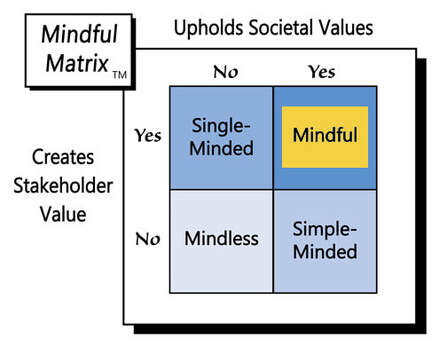
Over millennia of buying and selling products, people have known that it’s difficult for sellers to be truly objective about their wares, but buyers also know that spokespeople must make a conscious choice to endorse.  Organizations that attempt to sidestep those consumer perceptions by passing off their spokesbots as real, autonomous people are endorsing “Single-Minded Marketing.”
​
Picture
Subscribe to Mindful Matters blog.
Learn more about the Mindful Matrix.
Check out Mindful Marketing Ads
 and Vote your Mind!
10 Comments

Is it Time to Retire Roasting?

4/23/2023

18 Comments

 
Picture

by David Hagenbuch - professor of marketing at Messiah University -
​author of 
Honorable Influence - founder of Mindful Marketing 

Roasting is a nice way to bring out the natural flavors of things like meats, vegetables, and coffee, but does it bring out the best in people?  A well-known fast-food chain seems to think so, or at least it believes roasting others is a recipe for building its brand.
 
Given everyone likes to laugh, people tend to appreciate individuals and organizations that add humor to their lives.  Insurance companies like Aflac, Geico, and Progressive are well-known for luring consumers with levity via advertising slapstick, usually at the expense of their own corporate characters: Duck, Gecko, and Flo.
 
However, for five years, another company has taken a more aggressive comedic approach – Wendy’s, the ninth largest fast-food chain in America, has reasoned, ‘Why should we just laugh at ourselves, when we can laugh at you?’ 
 
To be fair, Wendy’s uses more than one type of humor.  Like the insurance companies, the fast-food chain has characters – actors pretending to be Wendy’s employees – doing and saying silly things in what are pretty appealing ads.  However, the company also uses comedy that very few organizations are bold enough to try – roasting others, even their own customers.
 
Wendy’s has long been known for using social media to spar with its burger competitors.  Typical of the trash talk that Wendy’s aims at McDonald’s is this tweet from a few years ago: “Hey @McDonalds, heard the news. Happy #NationalFrozenFoodDay to you for all the frozen beef that’s sticking around in your cheeseburgers.”
 
However, those periodic jabs pale in comparison to what Wendy’s did in 2018, when it created its only holiday of sorts, “National Roast Day,” during which it invites individual and organizations to volunteer themselves to be roasted by the restaurant.  Most recently, an animated version of its redhead, pigged-tailed namesake Wendy, the daughter of Founder Dave Thomas, imparts the insults.
 
Over the past few years, Twitter served as the platform of choice for most Roast Day putdowns, but this spring Wendy took her talents to TikTok and also tripled the length of the ribbing from one day to three.
 
A review of the video shorts shows that the roasts vary in their acrimony.  Some are pretty benign, for instance:
  • To a young woman wearing considerable eye makeup and applying lip gloss:  “Hey, it’s the girl that walked the track in Cookie Monster pajamas during gym class.”
  • To a young man who asks Wendy to roast his band’s music:  “I’d roast your music, but just like everyone else on earth, I’ve never heard it.”
 
Other roasts are more acerbic:
  • To a heavy-set young man: “I didn’t know someone without a neck could have a neck beard, but here we are.  You learn something new every day.” 
  • To a thin-framed young man who recalls Wendy’s once wrapping “underwhelming” single burger patties in foil:  “Should have expected a weak punchline from someone who looked like they’d lose an arm-wrestling match to a seven-year-old.” 
  • To a young man wearing sunglasses and a hat with a Pizza Planet logo, who speaks with a slight Southern accent:  “Kids, this is what happens when you’re born in a truck stop bathroom.” 
 
Of course, Wendy’s didn’t invent the roast.  For that starting place, some point to 1950, the New York Friars Club, and roasts of comedians Sam Levenson and Joe E. Lewis.  While the Friars Club has continued roasting one member a year since, others also have gotten into the act, namely Dean Martin’s celebrity roasts from 1974-1984, and Comedy Central.  From 2003 through 2019, the cable channel aired one or two roasts a year of musicians, actors, and comedians, including David Hasselhoff, Charlie Sheen, and Roseanne Barr.
 
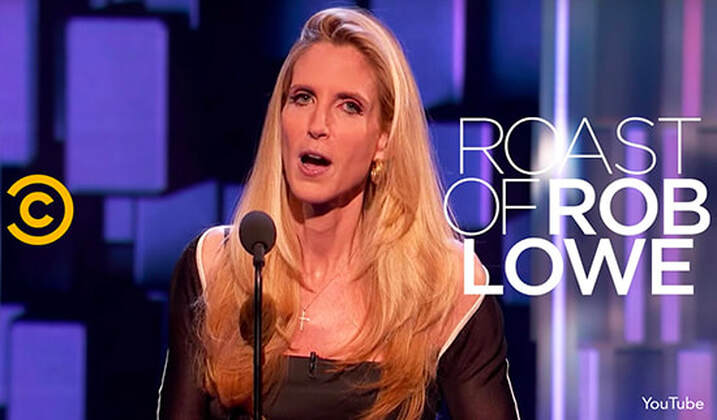
It’s unclear why Comedy Central stopped its roasts.  Some on social media claim COVID killed the biting humor, while others note that the frequency of the channel’s roasts already had started to decline. There also were several very awkward exchanges along the way, including a roast in 2016 when instead of belittling roastee Rob Lowe, many of the roasters heaped brutal insults on fellow roaster and conservative commentator Ann Coulter.  Retired NFL quarterback Peyton Manning compared her to a horse.


Picture

It might be naïve, but maybe Comedy Central’s cancellation of roasting had something to do with heightened sensibilities and introspection – i.e., What exactly are we doing here and what it’s greater social impact? 
 
Understandably, some would want to push back on such criticism of Comedy Central’s specials and Wendy’s National Roast Day with plausible arguments like:
  • Don’t take it so seriously; it’s comedy; it’s supposed to be funny!
  • Everyone needs to laugh at themselves.
  • Those people volunteered to be roasted.
 
Although each of those arguments has some merit, overall, they lack a good read of the room.  In other words, they miss the bigger picture of what’s happening in our world, the tenuous turn society has taken, and how roasting provides poor but enticingly imitable examples of how people might interact with each other.
 
Even a casual observer can see  that society has become increasingly divided ideologically and in other ways.  Although such schisms have likely always existed, what’s new is the freedom and numerous ways people now have to berate not only individuals who think differently but also those who fail to act and look like they do.
 
Of course, social media has been a main conduit for that verbal abuse, allowing people to unfurl personal attacks with the protection of partial, if not complete, anonymity and to do so at physically, psychologically, and socially safe distances, i.e., without meeting their ‘adversaries’ face-to-face, learning their stories, and truly understanding them.
 
Many young people, in particular, seek validation from social media, allowing their self-image to rise and fall based on likes, shares, and comments, often from people they don’t know.  Those fleeting rewards teach them what’s valued and motivate future behavior, often aimed at realizing similar temporary validation.
 
What’s more, people also learn social norms vicariously, or by observing others and seeing how society responds to their actions.  So, if caustic criticism of a person gains thousands of likes on social media, thousands of others may reason, ‘I’d like to receive that kind of response; I think I’ll try that.’ 
 
There-in lies the real danger of Wendy’s roasts:  They’re invitations to imitate derisive communication at a place and time when society is already deeply divided and young people feel stigmatized by social media.
 
Fortunately, some other organizations not only recognize these serious societal rifts, they’re trying to remedy them.  One such company is the global consumer goods producer Unilever.  In keeping with its aim to be “purpose-led,” its personal care brand Dove has taken special efforts to battle the culture of criticism by doing things such as:
  • Challenging TikTok’s bold glamour filter, which “sets unrealistic and harmful beauty expectations for girls and women.”
  • Pushing for legislation to protect kids’ self-esteem, given the rise in mental health issues associated with social media use.
 
As someone who uses humor generously in his classes, I probably should be one of last people to criticize anyone who seeks to leverage the very legitimate value of laughter.  However, roasting breaks the boundaries of what can be considered socially beneficial “playful teasing.”
 
From my 30+ years on the frontlines of customer interaction and college education, a little good-natured ribbing is not just tolerated, it’s often very desirable, provided the teaser:
  • Already has a good relationship with those being teased
  • Teases themself, or uses self-deprecating humor
  • Pays many more compliments than teases
  • Never teases about things that are sensitive or cannot be changed
  • Doesn’t focus the teasing on just one or two people
 
Regrettably, Wendy’s roasts fulfill few of these criteria.  Also, given the nasty nature of animated Wendy, the company’s website description of how its founder Thomas chose the logo is both ironic and sad:  “He felt that the logo of a smiling, whole-some little girl with the name ‘Wendy’s Old-Fashioned Hamburgers’ would be the place where you went for a hamburger the way you used to get them . . .”
 
Given the expansion of its self-made holiday, the fast-food chain’s burger sales must be benefiting; however, the butt of the joke is a society that shouldn’t have to tolerate more divisiveness or attacks on individuals’ self-esteem.  Wendy’s deserves kudos for wanting to make people laugh, but unfortunately it has cooked up a biggie serving of “Single-Minded Marketing.”
​
Picture
Subscribe to Mindful Matters blog.
Learn more about the Mindful Matrix.
Check out Mindful Marketing Ads
 and Vote your Mind!
18 Comments
<<Previous
Forward>>
    Subscribe to receive this blog by email

    Editor

    David Hagenbuch,
    founder of
    Mindful Marketing  and author of Honorable Influence
    and
    ​Mindful Marketing: Business Ethics that Stick

    Archives

    October 2026
    September 2026
    August 2026
    July 2026
    June 2026
    May 2026
    April 2026
    March 2026
    February 2026
    January 2026
    December 2025
    November 2025
    October 2025
    September 2025
    August 2025
    July 2025
    June 2025
    May 2025
    April 2025
    March 2025
    February 2025
    January 2025
    December 2024
    November 2024
    October 2024
    September 2024
    August 2024
    June 2024
    May 2024
    April 2024
    March 2024
    February 2024
    January 2024
    December 2023
    November 2023
    October 2023
    September 2023
    August 2023
    July 2023
    June 2023
    May 2023
    April 2023
    March 2023
    February 2023
    January 2023
    December 2022
    November 2022
    October 2022
    September 2022
    August 2022
    July 2022
    June 2022
    May 2022
    April 2022
    March 2022
    February 2022
    January 2022
    December 2021
    November 2021
    October 2021
    September 2021
    August 2021
    July 2021
    June 2021
    May 2021
    April 2021
    March 2021
    February 2021
    January 2021
    December 2020
    November 2020
    October 2020
    September 2020
    August 2020
    July 2020
    June 2020
    May 2020
    April 2020
    March 2020
    February 2020
    January 2020
    December 2019
    November 2019
    October 2019
    September 2019
    August 2019
    July 2019
    June 2019
    May 2019
    April 2019
    March 2019
    February 2019
    January 2019
    December 2018
    November 2018
    October 2018
    September 2018
    August 2018
    July 2018
    June 2018
    May 2018
    April 2018
    March 2018
    February 2018
    January 2018
    December 2017
    November 2017
    October 2017
    September 2017
    August 2017
    July 2017
    June 2017
    May 2017
    April 2017
    March 2017
    February 2017
    January 2017
    December 2016
    November 2016
    October 2016
    September 2016
    August 2016
    July 2016
    June 2016
    May 2016
    April 2016
    March 2016
    February 2016
    January 2016
    December 2015
    November 2015
    October 2015
    September 2015
    August 2015
    July 2015
    June 2015
    May 2015
    April 2015
    March 2015
    February 2015
    January 2015
    December 2014
    November 2014
    October 2014
    September 2014

    Categories

    All
    + Decency
    + Fairness
    Honesty7883a9b09e
    * Mindful
    Mindless33703c5669
    > Place
    Price5d70aa2269
    > Product
    Promotion37eb4ea826
    Respect170bbeec51
    Simple Minded
    Single Minded2c3169a786
    + Stewardship

    RSS Feed

    Share this blog:

    Subscribe to
    Mindful Matters
    blog by email

    Illuminating
    ​Marketing Ethics ​

    Encouraging
    ​Ethical Marketing  ​


    Copyright 2025
    David Hagenbuch

Proudly powered by Weebly